

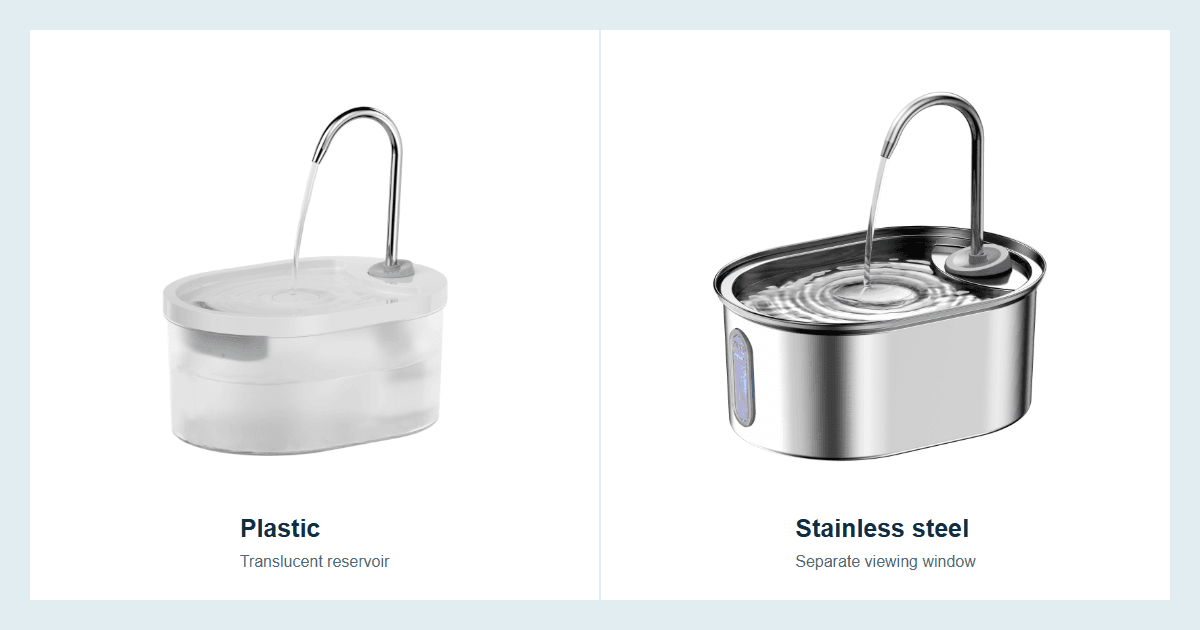
A silver drinking tray tells you very little about the reservoir underneath it. That is the first complication in a stainless steel vs plastic cat water fountain comparison: the material you see in the listing may describe only part of the water path. Lift the tray and the choice can look quite different.
Stainless steel is a useful starting point for a rigid metal body and resistance to everyday surface wear. Plastic offers lower weight, translucent reservoirs and more freedom in color and molded details. Material changes the trade-offs; product architecture still decides how the fountain works in real life.
I would start by identifying the wet parts, then work out how each one comes out for cleaning. Fountelio's standard steel range makes the distinction visible: the metal body has a separate PC water-level window. Even here, one material name cannot describe the whole fountain.
Is Stainless Steel Better Than Plastic for a Cat Water Fountain?
Not always. Stainless steel suits buyers who want a rigid metal surface and durable finish; plastic suits those who prioritize easier lifting, visible water levels or color options. Either can be a poor purchase if the pump is inaccessible or replacement parts are unavailable. Compare the complete assembly before choosing the housing material.
Start with steel for the metal finish, plastic for handling and molded features, and either for cleaning only after inspecting the wet parts. For the broader decision, including flow and power supply, see how to choose a cat water fountain.
How Do Stainless Steel and Plastic Cat Water Fountains Compare at a Glance?
Plastic generally offers more options for light, translucent or colored housings. Stainless steel offers a rigid metal finish with different forming constraints. The table describes typical starting points, not measured rankings of Fountelio models. Finished weight, cleaning effort and sound still need to be checked on the particular fountain.
| Factor | Plastic | Stainless steel |
|---|---|---|
| Product weight | Usually lighter at comparable size | Often heavier; wall thickness matters |
| Surface wear | May scratch or become cloudy | Generally resists everyday wear better; can still scratch |
| Color options | Color can be built into molded parts | Natural metal finish; other finishes require specification |
| Housing shape | Molded curves, ribs and attachment details | Multiple shapes within forming and tooling limits |
| Water visibility | Translucent reservoir is possible | Separate window, gauge or indicator needed |
| Metal presentation | A metal tray may be added | Metal housing appearance and feel |
| Residue inspection | Depends on color, clarity and access | Exposed metal is inspectable; shine does not prove hygiene |
| Sound character | Housing and mounting can affect vibration | Metal contact can change resonance; not necessarily louder |
| Packing weight | May reduce gross weight | May add weight; compare actual cartons |
| Retail positioning | Often value or mainstream | Often mainstream or premium |
| Battery and sensing | Flexible enclosure design | Possible with appropriately designed separate components |
| Cost position | Often lower for comparable established designs | Often higher; features and order volume can reverse this |
What Does “Stainless Steel Cat Water Fountain” Actually Mean?
The label may refer to the tray, reservoir or main housing. It does not establish the material of the pump, filter holder, seals, window or base. Some fountains combine a steel drinking surface with a plastic tank. Ask which component uses which material, and which of those components stays in contact with water.
Separate three claims: a steel surface where the cat drinks, a steel container where water is stored, and a decorative steel outer shell. They describe different areas. Changing the tray leaves the reservoir and return channel unchanged; changing an outer shell may leave the entire wet assembly unchanged. That is why two listings with the same material headline can require quite different maintenance.
Follow the water from the reservoir through the pump and outlet, across the tray and back through the filter assembly. Include concealed surfaces in that route. A photograph of the top cannot establish their materials, so an unanswered question should remain on the specification request rather than becoming an assumption.
Map the whole fountain before comparing materials
- Drinking surface
- Tray, rim and outlet: identify each material.
- Main housing
- Is the visible shell also the water container?
- Reservoir
- Check the inner walls and underside of the lid.
- Pump
- Request the wet-part specification and removal method.
- Filter housing
- Include the holder, cover and return channel.
- Seals
- Identify the elastomer and whether it is removable.
- Water-level window
- Check its material and the joint around it.
- Base
- Separate structural support from water-contact parts.
- Charging / electrical parts
- Locate the dry enclosure and permitted cleaning boundary.
In Fountelio's standard stainless steel range, the main body is specified as 304 stainless steel and the front window as PC, or polycarbonate. The pump, filtration and outlet assemblies include additional components. That is a more useful description than “all stainless.”
Which Is Easier to Clean: Stainless Steel or Plastic?
A smooth, open steel reservoir can be straightforward to wipe and inspect. A plastic reservoir with equally good access can also be practical to maintain. The difficult areas are often underneath: a narrow return channel, the back of a window, a filter seat or the pump chamber. Material alone does not tell you whether those areas are reachable.
Consider two reservoirs as a practical comparison. One has a broad opening and a removable return channel; the other has a polished interior but a passage you can only rinse through. The first gives you a way to inspect and physically clean more of the water path. The metal finish on the second does not solve the access problem. This is an inspection example, not a measured comparison of two models.
Disassembly also has to be manageable often enough to become routine. Count the parts that need removing, check whether a brush reaches both sides of the channel, and watch the reassembly. A small seal that is awkward to reseat can make a nominally washable design frustrating to maintain.
Material + geometry + access
- Material and condition
- Inspect the finish, wear, scratches and permitted cleaners.
- Geometry
- Follow corners, seams, ledges and water channels.
- Access
- Remove the tray; reach the reservoir, pump and intended impeller service parts.
Seeing the pump lifted out would leave me with another question: can its small service parts be cleaned as instructed? A hand reaching the pump proves access to the module. Opening its service parts is a separate check.
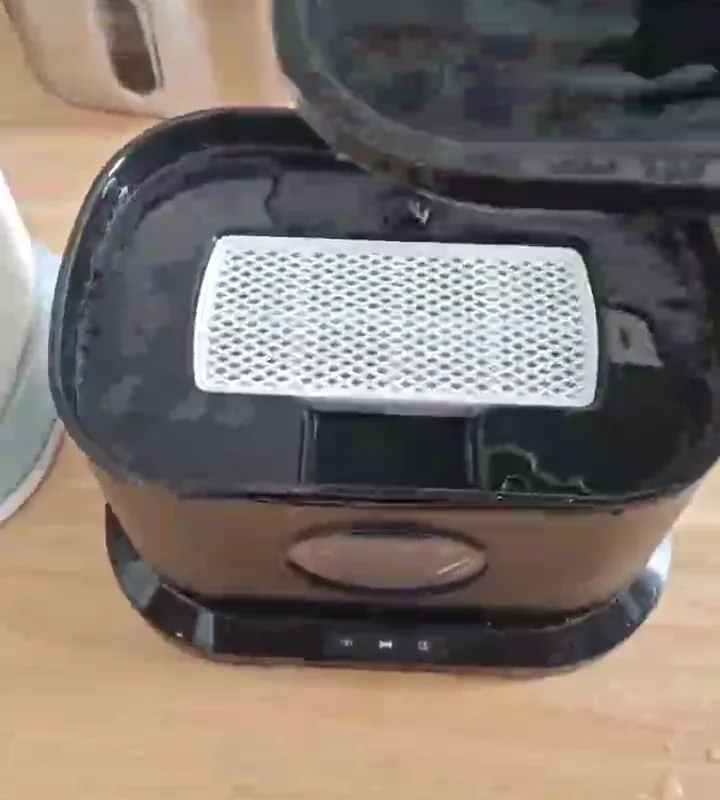
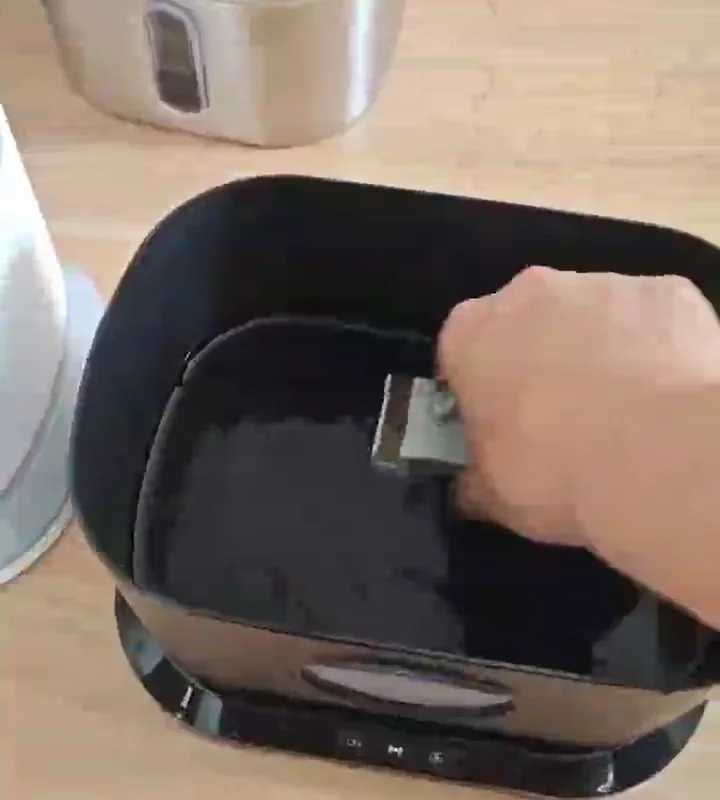
These assembly frames also appear in our main buying guide. They illustrate access, not a steel-versus-plastic cleaning test.
For both stainless steel cat fountain cleaning and plastic cat fountain cleaning, follow the model's instructions. Disconnect power before disassembly. A washable tank does not make the charging base immersible, and a dishwasher-safe tray does not make the assembled fountain dishwasher safe.
Do Scratches and Surface Finish Matter More Than the Material Name?
They can change the comparison, but there is no universal ranking that places scratches above material in every situation. Bacterial attachment and removal depend on the organism, surface condition and cleaning conditions as well as the material. An apparently smooth surface is useful to inspect; it is not evidence that bacteria are absent.
In Kim and colleagues' surface study, researchers compared stainless steel, glass, polypropylene and polyethylene, including smooth and scratched surfaces. Their tested sanitizers reduced Staphylococcus aureus more effectively on steel and glass than on the two plastics. Scratched surfaces with biofilms were the most resistant to sanitization.
A separate study of steel and polypropylene examined food-service isolates of S. aureus on small surfaces in meat-based broth at 7°C and 28°C. Biofilms formed on both materials. A biofilm is a community of microorganisms attached to a surface within a protective matrix.
These are food-contact laboratory studies, not clinical cat-fountain disease studies. Their organisms, nutrients and cleaning methods differ from a household fountain. They support attention to surfaces and cleaning; they do not justify a disease claim or copying laboratory sanitizer recipes into home care.
There is no contradiction between “both materials can support biofilm” and “one was easier to sanitize under particular conditions.” Attachment, growth and removal are different questions. A result about one organism after one treatment does not settle every stage of that process. Nor does a visibly scratched part tell you how many organisms it carries.
For a buyer, the useful distinction is between noticing wear and deciding whether a part remains maintainable. Inspect the wet face and joints after cleaning according to the instructions. Persistent residue in an unreachable groove deserves attention on either material; a cosmetic mark alone is not a diagnosis of contamination.
Use the cleaning tools approved for the part, inspect damage, and replace parts that can no longer be cleaned or fitted properly. Stainless steel is not self-cleaning. Plastic is not automatically unhygienic.
Which Material Holds Up Better to Daily Use?
Stainless steel generally offers better resistance to everyday surface wear, while plastic may show scratching or clouding depending on the resin, finish and handling. Neither gives the fountain a fixed lifespan. A lid joint, seal, pump or charging connection can need attention while the reservoir is still in good condition.
Daily use puts different demands on different parts. The reservoir is lifted and washed; a lid or clip is repeatedly removed; a pump has operating and service requirements of its own. A material that protects the large housing from surface wear cannot compensate for a weak connection elsewhere. Body thickness, the shape of the rim and how the lid is supported also affect the finished part.
During a sample review, it is useful to remove and refit the user-serviceable parts according to the instructions, then check alignment and stability. This can reveal an awkward fit, but it is not a lifetime test. For any durability claim, ask which component was evaluated, under what conditions, and what counted as failure.
A steel wall can dent, and a plastic clip can fatigue. Those are different failure modes. I would separate appearance from serviceability: ask whether a damaged lid or worn pump can be replaced without discarding a sound reservoir. A heavier body with no obtainable pump is not automatically the more durable purchase.
Which Material Makes the Water Level Easier to See?
Plastic makes a translucent reservoir possible, although dark colors and internal parts can obscure the view. Steel is opaque, so a closed steel tank needs a separate viewing window or indicator to show water information from outside. A low-water light is a threshold reminder; it does not necessarily show how much usable water remains.
There are two separate jobs here: checking the remaining level before leaving home and noticing that a refill is needed. A broad translucent wall can help with the first; a low-water light may only answer the second. Neither tells you usable capacity unless you also know the minimum operating level. Water still visible at the bottom may be below that limit.
A narrow window is worth checking from a normal standing position. If reading it requires turning the fountain or moving it out of a corner, its convenience is reduced. The Fountelio examples below show two ways of exposing the reservoir level. They do not establish which is easier to read in every room.
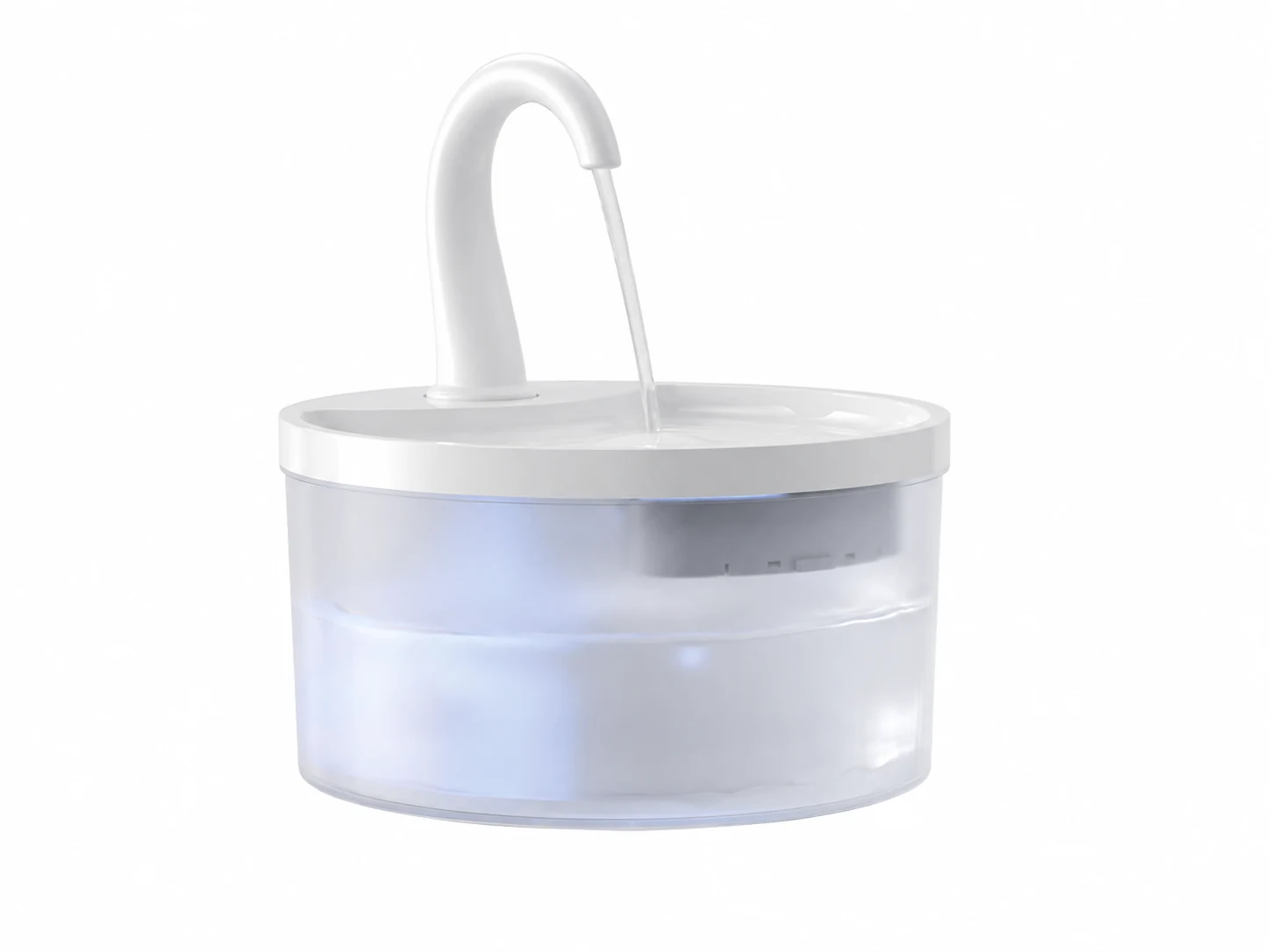
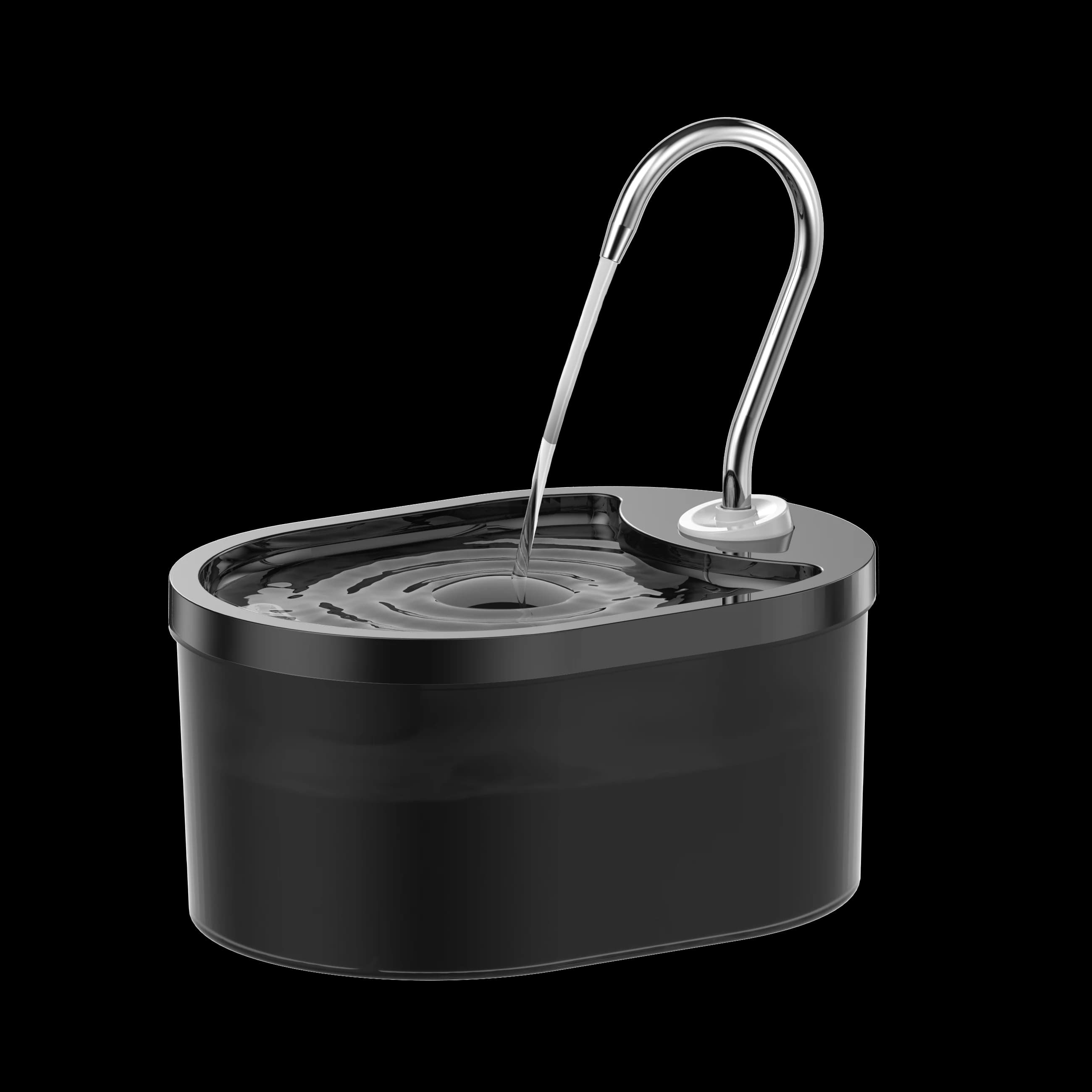
Round plastic body: the water line is visible through the reservoir wall.
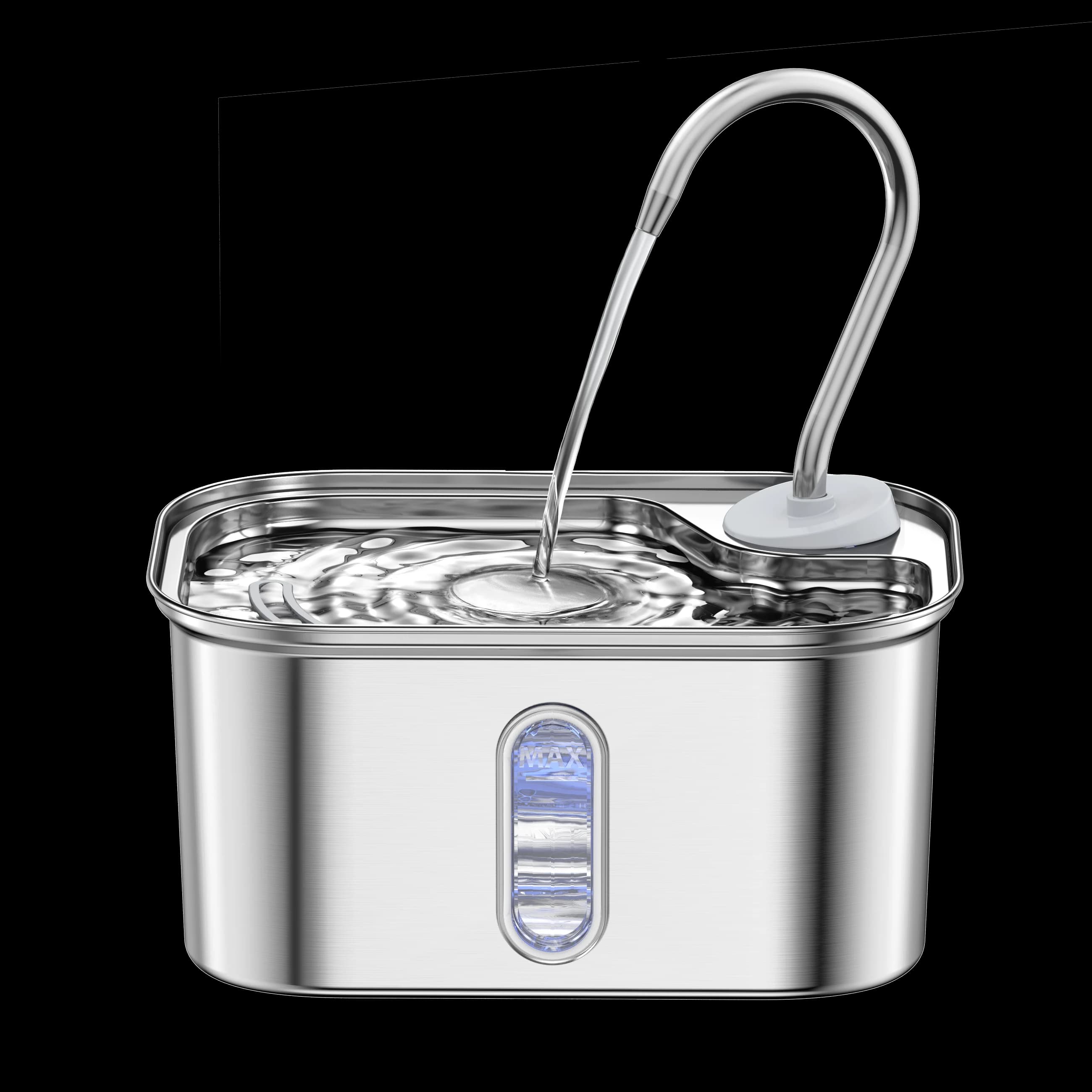
Rectangular steel body: the PC window provides a separate view into the tank.
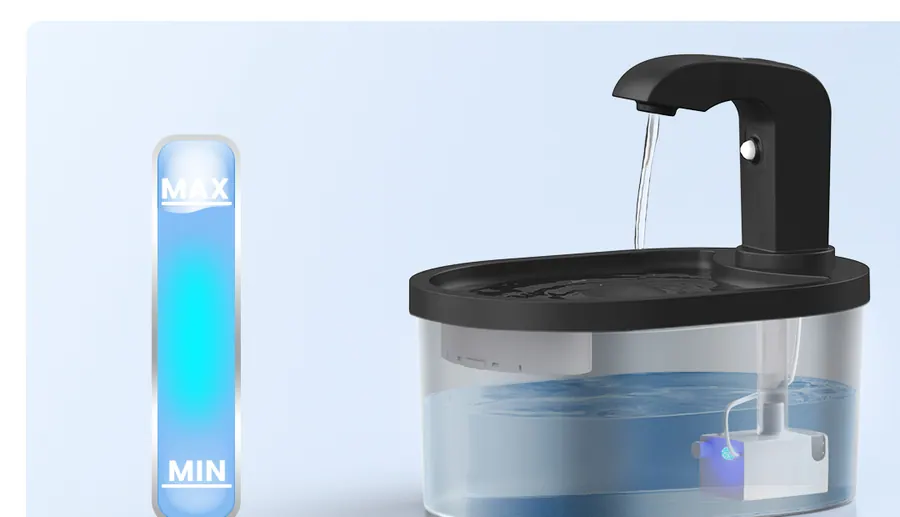 Blue · Normal water level
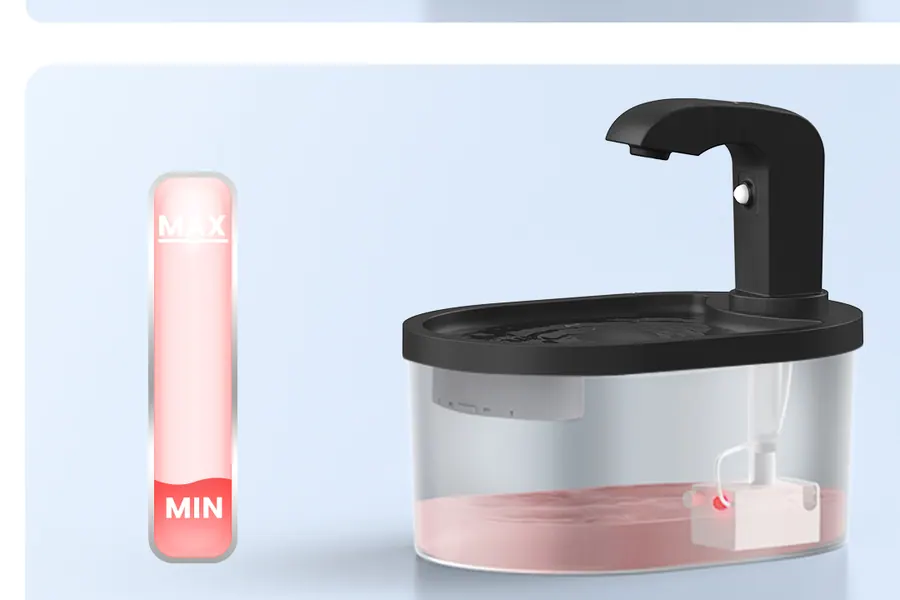 Red · Refill reminder
Cordless plastic example: the supplied illustration shows normal and low-water LED states, not an audible alarm or automatic shut-off.
Judge visibility from where the fountain will sit, rather than directly under studio lighting. Also look inside the window joint. A helpful viewing area still has a wet side that needs cleaning.
Which Material Gives More Freedom in Shape, Color, and Product Design?
Plastic usually offers more freedom to combine color, translucency, curves and molded attachment details. Steel can be formed into several housing shapes, but changing a metal body involves different tooling and finishing decisions. Neither route is unlimited: a visually simple change may affect wall thickness, part fit, drainage or the tools needed to manufacture it.
Protolabs' injection-molding overview describes how part geometry and complexity affect mold design. That freedom is useful for filter seats or sensor enclosures, but every added recess must still be considered during cleaning.
Molding can put an attachment point or shaped filter seat into the same part as a housing wall. That can reduce the need for separate brackets, but the extra detail may introduce a recess that needs cleaning. Plastic design freedom is valuable when it makes the assembly simpler to use; complexity on its own is not an advantage.
For metal housings, distinguish a change to the body from a change to the parts fitted above it. The six forms shown here demonstrate a real choice of footprints. They do not show that any outline, depth or outlet arrangement can be substituted without checking tooling and fit. A color change, a new tray and a new reservoir shape should therefore be treated as separate requests.
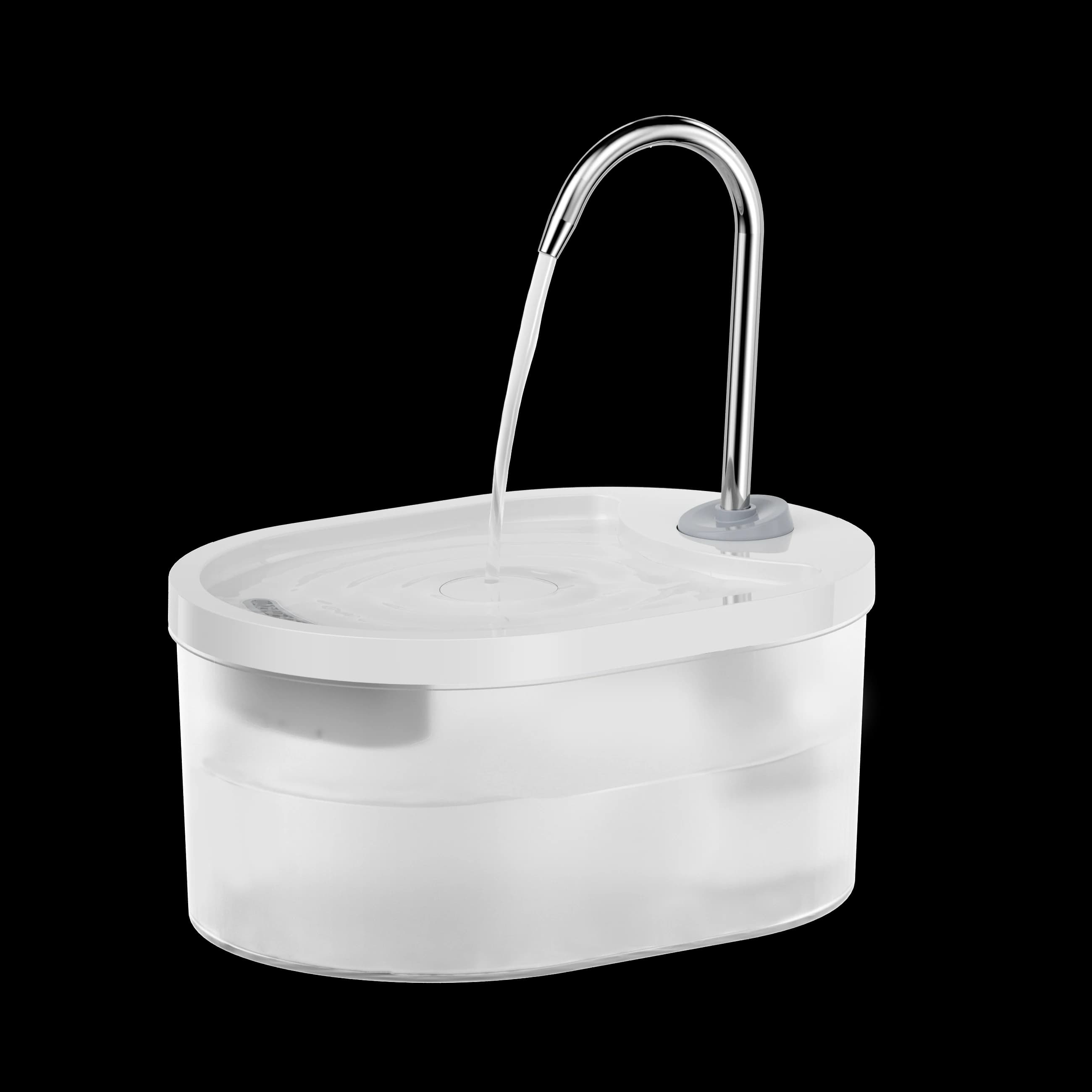
Steel is not limited to round bowls. Fountelio's product archive shows six formed housing shapes:
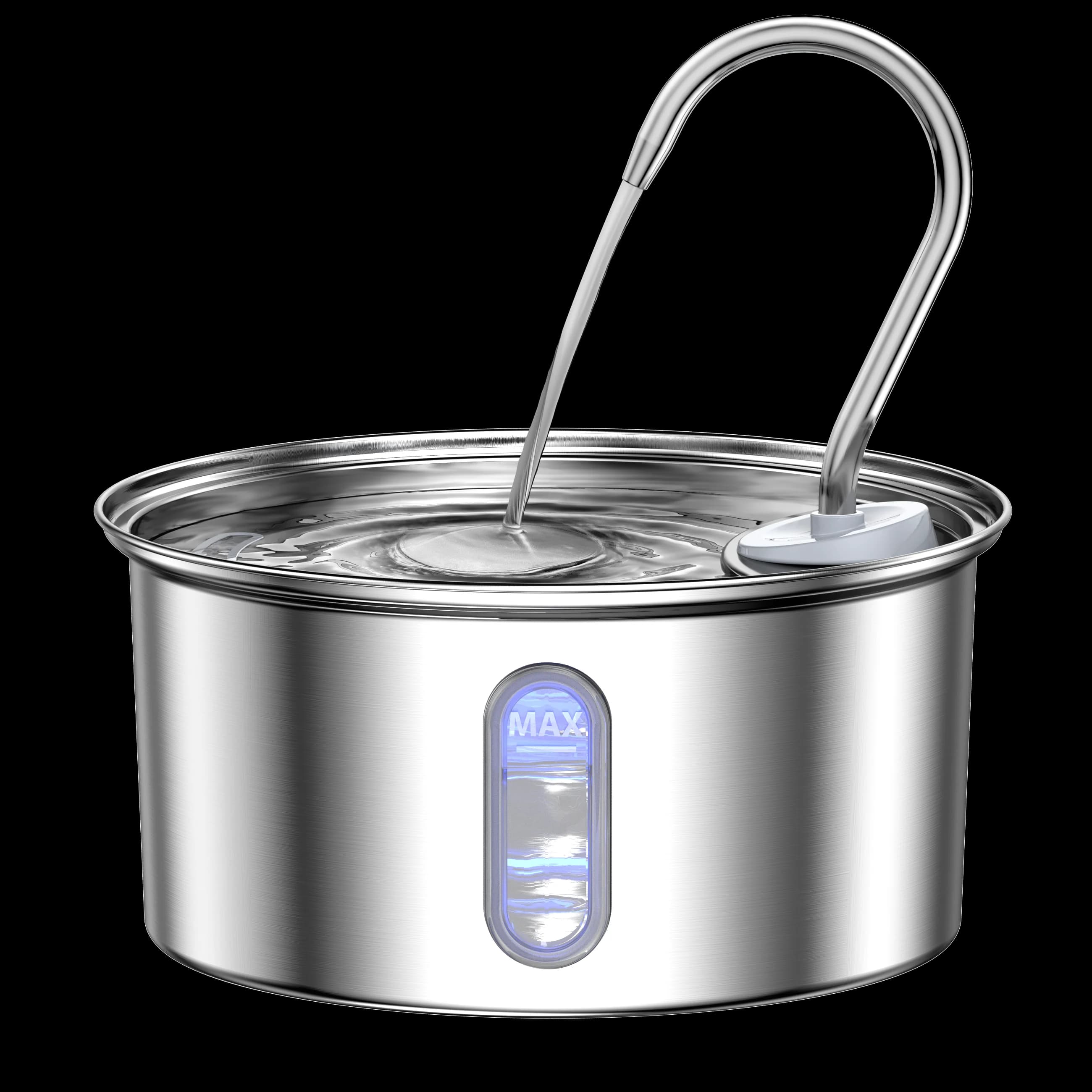
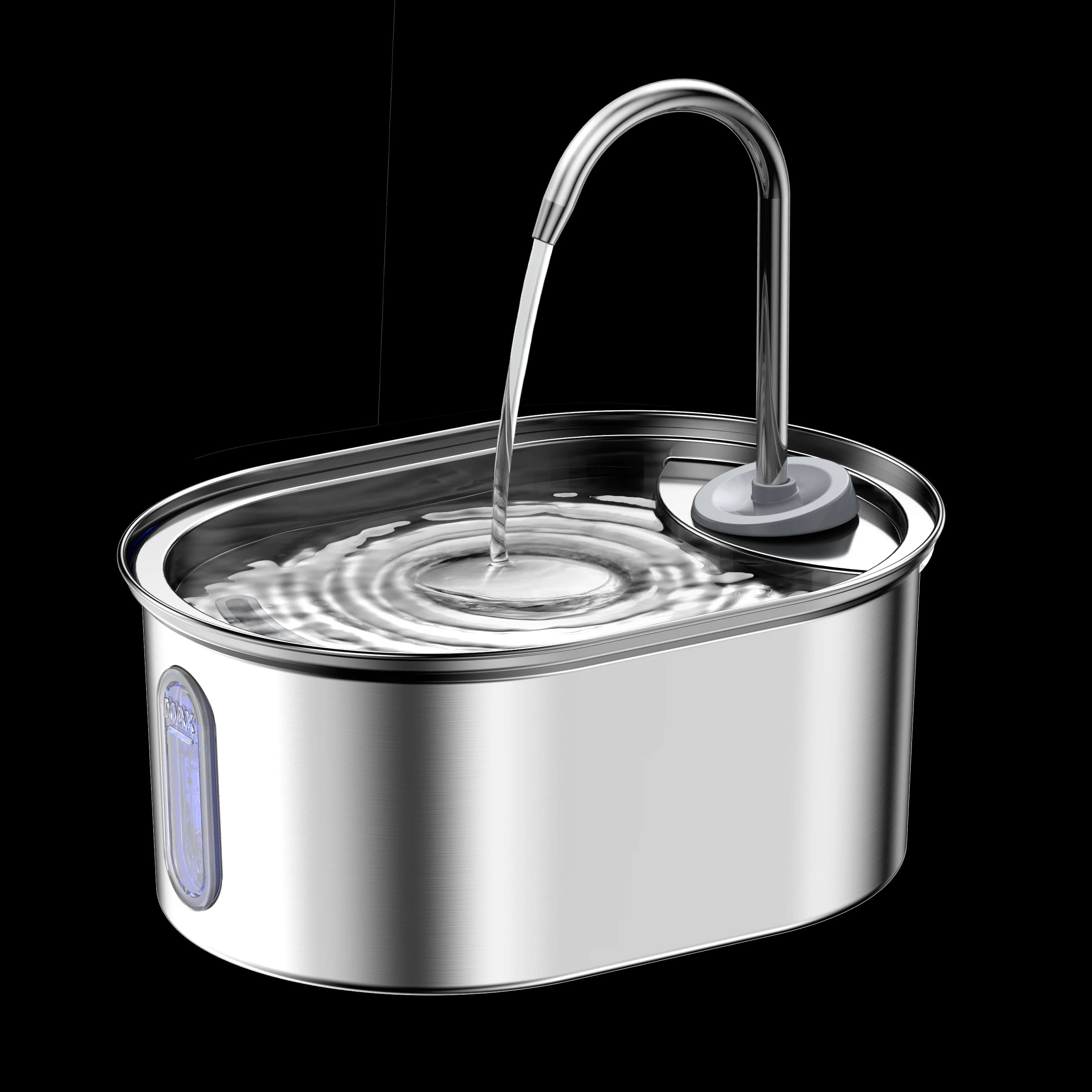
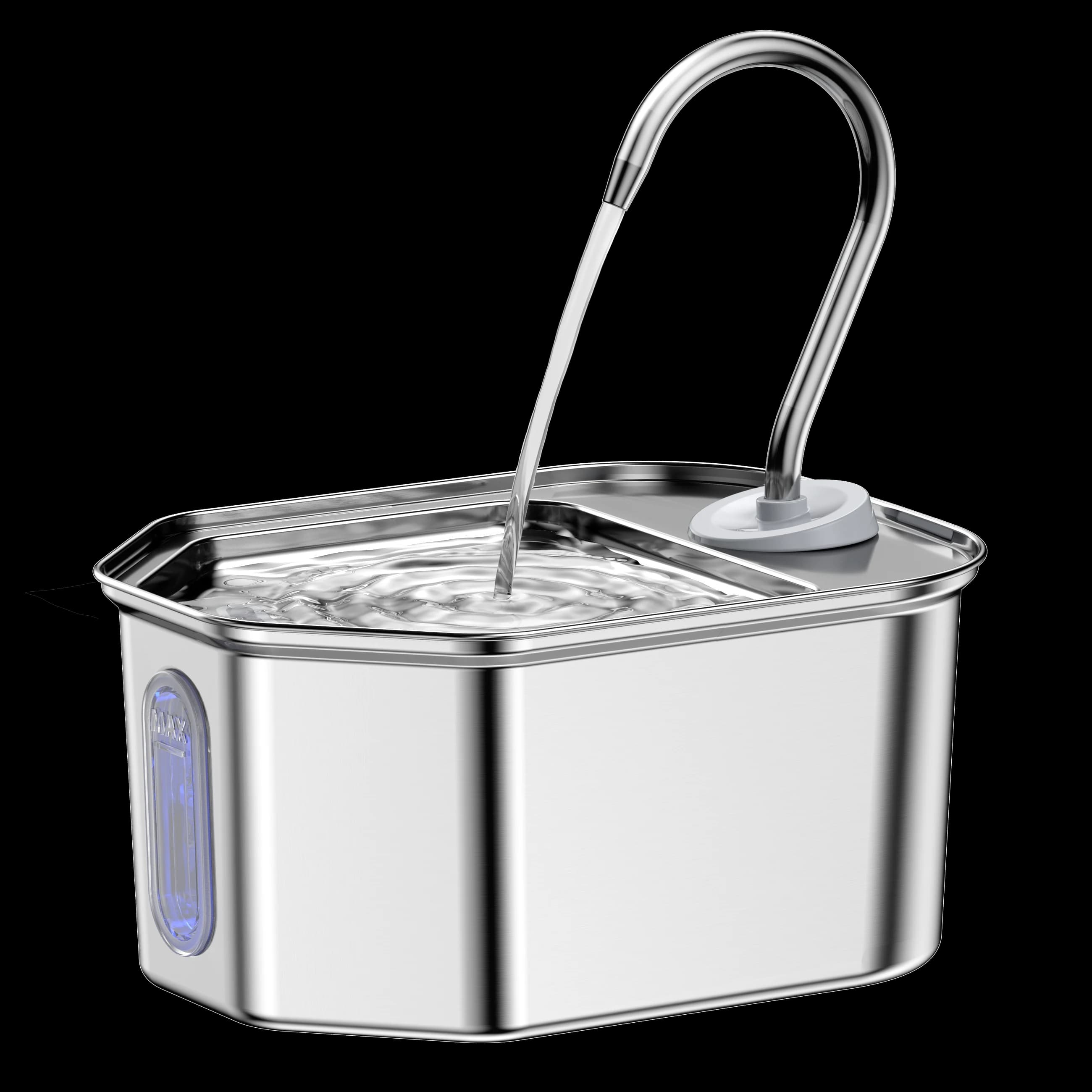
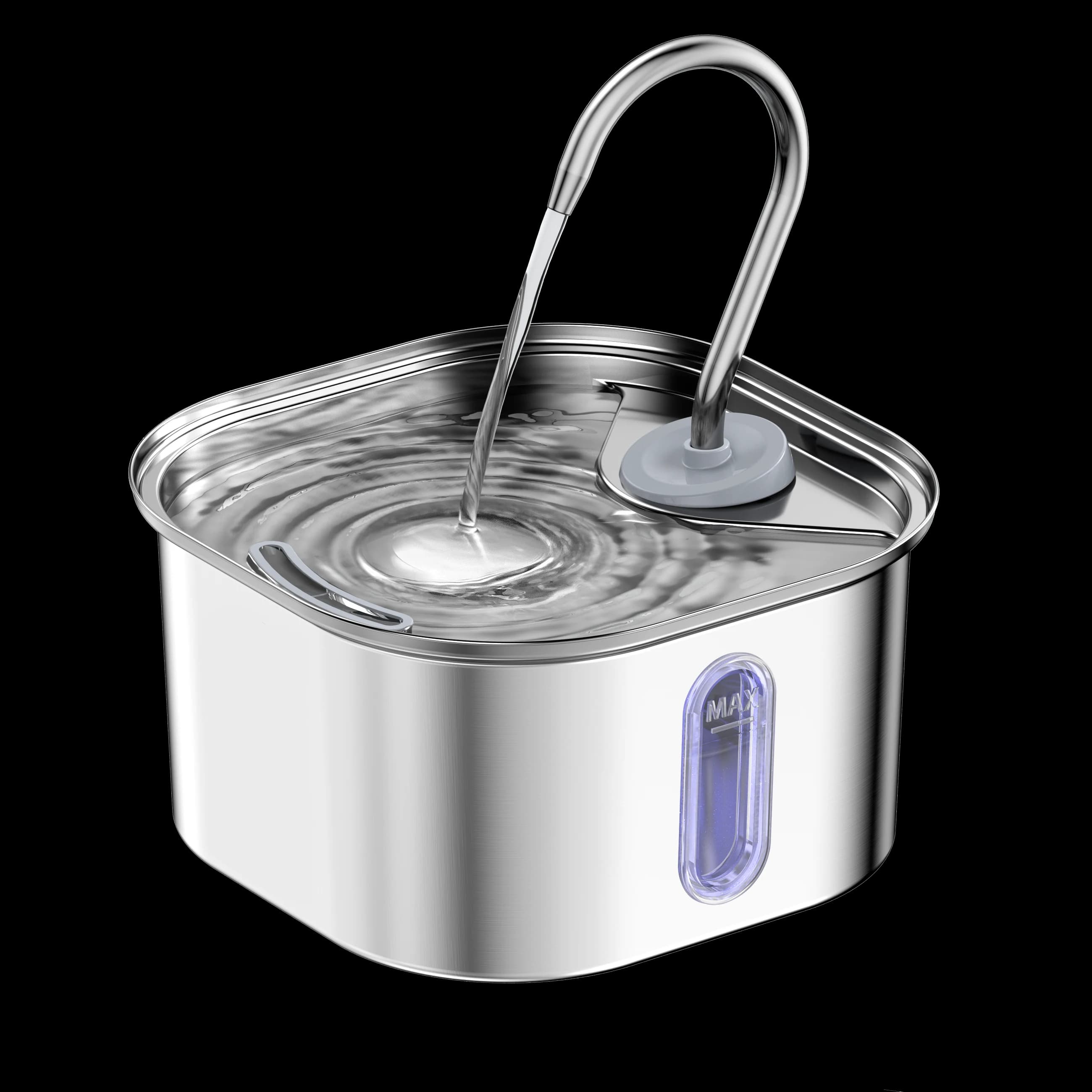
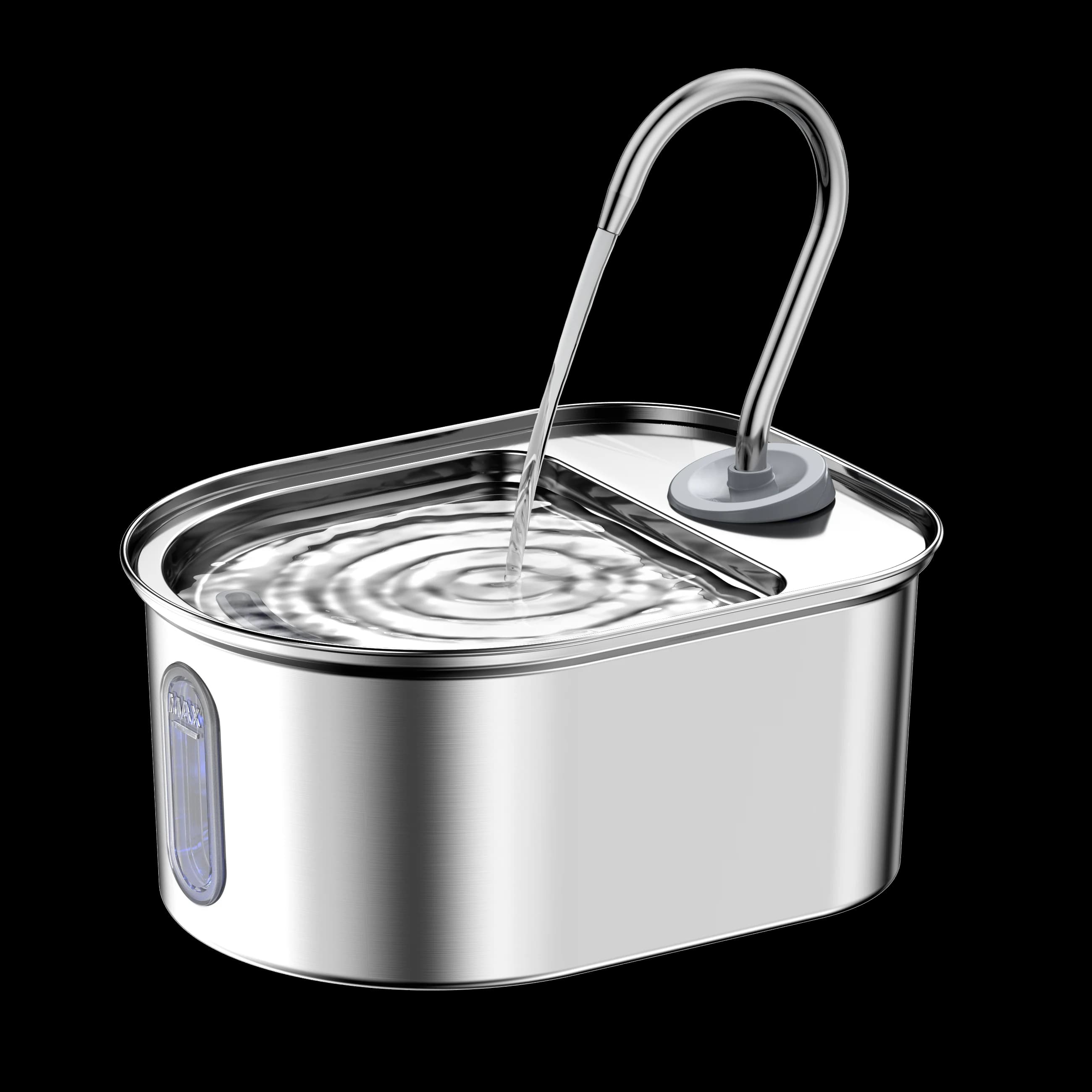
Before discussing a new color or shape, I'd ask whether it can use existing parts. An existing housing option and a new mold are very different projects. These product images show available forms, not equal capacities or identical internal assemblies.
Plastic cat water fountains · Stainless steel cat water fountains
Is a Stainless Steel Cat Fountain Louder Than a Plastic One?
Not necessarily. The housing affects how sound is transmitted, but the pump mounting, outlet height, water landing point and contact with the floor also matter. A loose part can rattle in either material. A material label cannot predict the final noise level, and separate promotional videos are not a controlled sound comparison.
It helps to separate the sound being generated from the path carrying it to your ears. Pump vibration can reach a housing through its mounting; falling water creates sound where it lands. Changing the body material may alter the character of a hum or rattle without fixing the pump contact or water drop that caused it.
This also explains why “quieter” needs a stated operating condition. A fountain demonstrated with a full reservoir may sound different as the water falls farther below the return opening. Compare those conditions within the permitted fill range, and listen for pump hum, splash and loose-part noise separately. One overall label hides which sound would actually bother you.
Trace the sound through the fountain
- Pump → mounting
- Hum can reach the body through the pump's contact points.
- Outlet → water landing
- Stream height and the receiving surface affect splash sound.
- Housing → floor
- Loose lids and contact with the supporting surface can add vibration.
I would not approve an “ultra-quiet” claim from the material alone. Ask for a comparison at the same microphone distance, on the same surface, at stated water levels and operating modes. Without those conditions, a quieter recording may simply reflect a different setup.
Which Is Lighter and Easier to Move or Refill?
Plastic is usually the lighter starting point for a similarly sized body, but the finished fountain also includes the pump, base and possibly a battery. Compare empty weight and the weight you actually carry to the sink. A removable reservoir can make handling easier regardless of what the outer housing is made from.
Water adds approximately one kilogram per liter. That can outweigh a modest difference between empty bodies. Check grip, tank removal and the refill opening, especially if lifting is difficult. For importers, request unit net weight, carton gross weight and carton dimensions; freight may depend on volume as well as mass.
Which Costs More: Stainless Steel or Plastic?
Comparable established steel designs often occupy a higher cost position, but there is no reliable price difference based on material alone. A plastic fountain with a battery and sensing system can cost more than a simpler plug-in steel model. Tooling, finishing, packaging, order quantity and the replacement-parts package all belong in the comparison.
Separate the price of each finished unit from the cost of developing the design. An existing plastic mold may give one quotation an advantage; a new housing, custom insert or finish may change that calculation. A tooling charge is spread across the ordered quantity, so a small first order and a repeat production order are not equivalent comparisons.
Included items can also make two quotations look further apart than they are. One may cover spare filters, a power adapter or more protective packaging; another may price them separately. Ask for those differences to be itemized before attributing the premium to steel. Carton dimensions and shipping terms belong beside the price, since a lower unit cost does not necessarily mean a lower delivered cost.
Ask for matched quotations with the same power system, accessories, packaging and delivery basis. For household use, include filter and pump replacement costs. A lower purchase price saves little if a small failed component forces replacement of the entire unit.
Does Plastic Cause Cat Chin Acne?
Plastic dishes have been associated with feline chin acne, but plastic is not established as the sole cause. VCA's veterinary guidance describes a poorly understood condition with several possible contributing factors. It notes that switching to smooth glass or stainless dishes and washing them daily may help some affected cats.
VCA describes a disorder involving excess keratin becoming trapped in hair follicles; bacteria may then infect those blocked follicles. This is why “bacteria can attach to plastic” does not explain the whole condition. Evidence of contamination on a material is different from evidence that a particular fountain caused a cat's skin problem.
For product selection, distinguish the drinking surface from the rest of the reservoir. Replacing a plastic contact surface with a smooth steel one does not remove the need to clean the other wet parts. If dish choice is part of your veterinarian's advice, identify the actual contact parts rather than relying on the fountain's headline material.
That advice does not mean a stainless steel cat fountain prevents acne. Check what the cat's chin actually touches, and continue cleaning the complete water path.
Material choice is not veterinary treatment. Blackheads, swelling, sores or persistent chin irritation deserve veterinary evaluation. Tony's role here is product structure; the health guidance comes from the cited veterinary source.
Can a Mixed-Material Fountain Be Better Than an All-Stainless or All-Plastic Design?
Yes, when the materials serve useful roles and their joints remain accessible. A hybrid cat water fountain might combine a rigid steel reservoir with a transparent polymer window and removable molded parts. The benefit comes from how those parts fit, clean and function together. Adding materials can also add seams, seals and replacement requirements.
The standard Fountelio steel body and PC window illustrate a clear division of jobs: the metal forms the main container, while the polymer provides a view through an otherwise opaque wall. An all-metal wall would need another way to communicate the level. A flexible seal, where specified, serves yet another purpose; rigidity is not the right property for every connection.
The trade-off sits at the interfaces. Each extra joint needs a reliable fit, an understood cleaning method and, where applicable, an obtainable replacement. Ask whether the wet side is exposed when the permitted parts are removed. A useful combination can save the owner effort, but a permanently concealed seam can cancel that benefit.
Different materials, different jobs
- Stainless steel
- Possible role: rigid reservoir or drinking tray.
- Plastic / polymer
- Possible role: viewing window, filter holder, pump cover or sensor enclosure.
- Silicone / other elastomer
- Possible role: a flexible seal; confirm the exact material.
- Wet-side joints
- Check removal, cleaning and correct reseating.
- Dry electrical section
- Keep the battery and charging components within their specified enclosure.
- Service boundary
- Confirm which parts the owner can remove and replace.
A transparent window is useful only if its joint stays sound and its inside surface can be maintained. Evaluate that joint as carefully as the large metal panel beside it.
Does Material Choice Change for Cordless or Sensor Cat Water Fountains?
It adds more parts to the decision. Batteries, charging connections and sensors need suitable enclosures, and a visually clear window is not automatically suitable for a particular sensor. Plastic can simplify molded enclosure details; steel can remain the main reservoir material. Sensor behavior and washability must be confirmed for the exact assembly.
The cleaning boundary becomes especially important when the product includes a battery. Work out which assembly goes to the sink, which stays dry and whether separating them is part of normal user maintenance. A removable wet container can make that boundary clear. The material of the outer body alone does not tell you whether the battery base or sensor module can be detached.
For sensing, the enclosure is part of the finished arrangement that needs checking. Ask where the sensor looks out, whether a tray or outlet obstructs that area, and which housing version the stated detection behavior applies to. A changed shell should not inherit a range claim simply because the same sensor is named. Request the assembly-specific evidence before approving the specification.
Compare cordless plastic designs with cordless stainless steel designs on the same operating requirements. “Cordless” describes battery operation. Wireless-pump construction describes a different aspect of the internal system, and does not by itself promise battery power. Neither label establishes runtime or cleaning access.
When Should You Choose Plastic, and When Should You Choose Stainless Steel?
Choose the material that addresses your main constraint after the maintenance checks pass. Plastic is a sensible starting point for easier lifting and translucent or colored housings. Steel suits a rigid metal presentation. If the priority is low noise, easy cleaning or cat acceptance, compare complete models instead of treating either material as the answer.
| Your priority | Better starting point | What still needs checking |
|---|---|---|
| Lower weight | Plastic | Filled carrying weight and grip |
| More color choices | Plastic | Available resin colors and order requirements |
| Translucent water-level body | Plastic | Visibility in ordinary room lighting |
| Complex molded details | Plastic | Whether added recesses remain cleanable |
| Metal appearance and rigidity | Stainless steel | Wall thickness, edges and lid fit |
| Surface-wear resistance | Stainless steel | Finish and approved cleaning tools |
| Multiple metal shapes | Stainless steel | Existing tooling and usable footprint |
| Sensor enclosure flexibility | Often plastic | Exact sensor and enclosure compatibility |
| Metal finish with battery power | Cordless stainless may fit | Charging and removable wet parts |
| Easy cleaning | Architecture-dependent | Reach every wet surface |
| Quiet operation | Architecture-dependent | Pump, mounting, flow and water level |
| Cat acceptance | Individual cat and flow style | Observe voluntary use; retain another water source |
Material is not proof of preference. A small controlled feline study comparing still, circulating and free-falling water found no significant average intake difference, although some cats showed individual preferences. It did not compare steel with plastic.
What Should Brands and Sourcing Teams Ask About Fountain Materials?
Ask for a component-level specification tied to the model you will order. It should identify wet materials, cleaning access and the documents supporting any packaging claims. Whole-product labels leave too much unstated, especially when a steel reservoir is combined with a window, filter assembly, sensor housing or battery base.
- Which exact parts are stainless steel, and which are plastic?
- What steel grade applies to each confirmed metal part?
- Which components remain in continuous contact with water?
- Can every wet surface be accessed for cleaning?
- Which resins are used in the housing, reservoir and filter parts?
- How is the water level shown, and how is that area cleaned?
- What are the unit net weight, carton gross weight and carton dimensions?
- Which colors and housing shapes are available without new tooling?
- Does changing the housing change the pump, battery or sensor system?
- Which material and compliance documents apply to this exact model and market?
For a sourcing brief, my recommendation is to record the accepted material description on the component list as well as the packaging. “304 steel body with PC window” is specific enough to check. “Premium hygienic fountain” is not. Use the quality review and private-label specification process to agree the records and sample checks before artwork approval.
What Mistakes Should You Avoid When Comparing Stainless Steel and Plastic Fountains?
Avoid treating a steel tray as proof of an all-steel water path, or a translucent body as proof of easy cleaning. Do not compare prices across different power systems and attribute the difference entirely to material. Treat “quiet,” “hygienic” and “long-lasting” as claims that need specific evidence, rather than properties guaranteed by the housing.
Also avoid using filter count as a hygiene score, assuming every clear part uses the same resin, or mistaking removable pump access for demonstrated impeller cleaning. Each shortcut skips a part of the product you may eventually have to maintain.
What Are the Most Common Questions About Stainless Steel vs Plastic Cat Water Fountains?
The remaining questions are usually about what a label guarantees. “Stainless,” “BPA-free” and “dishwasher safe” each have a limited scope. Read them against the specific part and instructions. None describes the entire fountain's hygiene, service life or suitability for a particular cat.
Does BPA-free mean the fountain is automatically safe and easy to clean?
No. It is a specific material claim, not a complete assessment of the assembly. Ask which components it covers and what documentation applies. Cleaning access remains a separate issue.
Can stainless steel parts go in the dishwasher?
Only when the model's instructions allow it for those parts. Windows, seals, adhesives and attached electrical components may change what is permitted.
Does 304 identify every material in the fountain?
No. It identifies a stainless steel grade where specified. It says nothing about the resin in a filter holder or window.
Should I replace a working plastic fountain just to upgrade the material?
If its parts are in good condition, can be cleaned fully and remain serviceable, the metal label alone is a weak reason. Replace it for a concrete unmet need, damage or veterinary advice relevant to your cat.
What Should Decide Your Final Choice?
The best material for a cat water fountain is the one that fits your handling and design priorities within a maintainable product. Choose plastic when its lower weight, visibility or molded features solve your problem. Choose steel when you value its rigid metal surface. In both cases, inspect the parts underneath before you commit.
Before ordering, ask for one clear view with the tray removed and one demonstration of pump servicing. If those leave the wet corners unexplained, the material comparison is not finished.
About This Guide
Written by Tony Kong, R&D Engineer at Fountelio, for pet owners comparing materials and buyers specifying a product range. Product examples come from Fountelio's product images, collection specifications and assembly footage. The side-by-side and shape images are product presentations, not a controlled comparison or images to a shared physical scale.
First-person recommendations describe inspection priorities. No comparative cleaning trial, acoustic test or lifetime test is claimed. Scientific findings concern the conditions in the cited papers; veterinary guidance is attributed separately. The diagrams explain component roles and inspection questions, rather than undocumented internal construction.
Sources & References
- S. aureus biofilm formation on steel and polypropylene. Brazilian Journal of Microbiology, 2014. Food-contact surfaces in meat-based broth.
- Kim et al.: surface condition and sanitizer resistance. Journal of Food Safety, 2017. Material, scratching and biofilm comparisons.
- VCA Animal Hospitals: Chin Acne in Cats. Veterinary explanation of uncertainty, hygiene and dish choice.
- Protolabs: Injection Molding. Manufacturing overview of molded-part geometry and tooling.
- Robbins et al.: drinking-water presentation in cats. Journal of Feline Medicine and Surgery. Water-system preference, not a material comparison.