

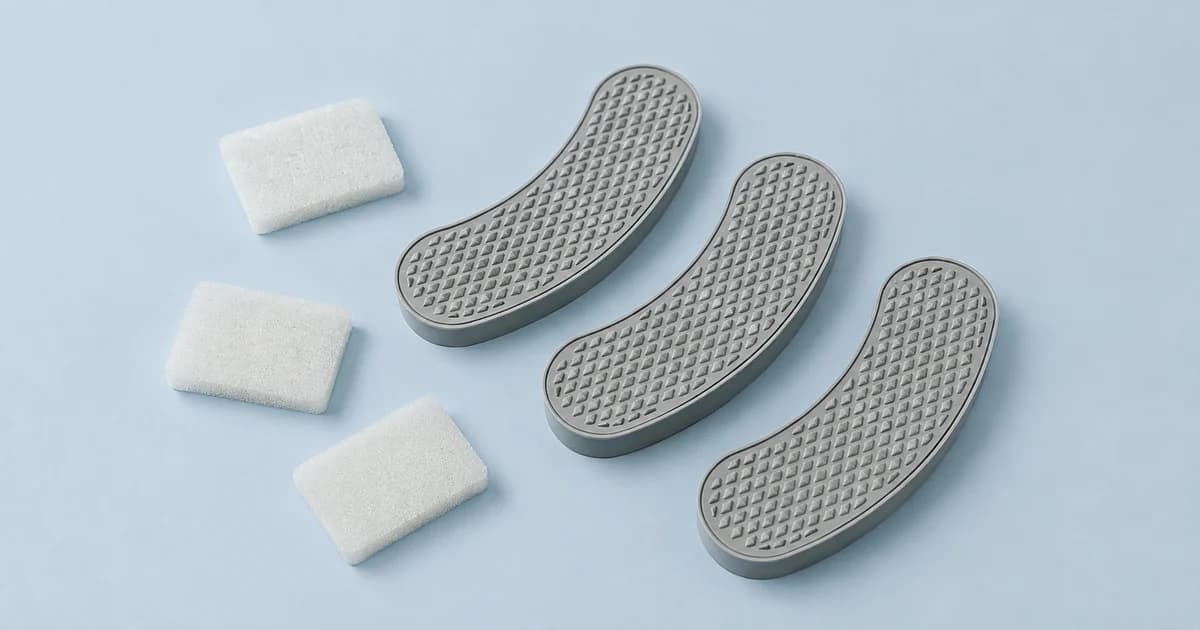
A few hairs on a filter are easy to spot. The harder decision comes when the cartridge looks fairly clean but its replacement reminder has arrived. Or it looks darker after only a day. Neither appearance tells you the whole story about what is happening inside.
How often should you change a cat water fountain filter? Many disposable cartridges have instructions around 2–4 weeks, but that is only a starting reference. The examples below range from two weeks to 30 days, with some separate foam filters lasting 1–2 months. Use the exact model's interval and replace sooner when its condition requires it.
I would start a filter review with its media list and part number. A photo can show the frame and surface debris; it cannot tell me how much useful capacity remains inside. That distinction also explains why replacement belongs alongside knowing how to clean a cat water fountain.
How Often Should You Change a Cat Water Fountain Filter?
Start with the replacement interval for your exact fountain and filter. Common carbon or composite cartridges may specify 2–4 weeks or about monthly; some models require two weeks. Separate foam components can have another schedule. Visible saturation, damage or confirmed filter restriction can require earlier replacement, even before a reminder appears.
Filter replacement does not replace fountain cleaning. A clean-looking cartridge is also not a reason to extend the manufacturer's interval.
Why Isn’t “Every 2–4 Weeks” a Universal Rule?
Different filters do different jobs, and manufacturers specify intervals for particular assemblies. Even two filters inside one fountain can have separate schedules. The same material name on another product does not carry that interval with it.
| Fountain / source | Component | Published interval |
|---|---|---|
| PetSafe Viva | Ion-X filter | Every 2–4 weeks |
| PetSafe Viva | Foam filter | Every 1–2 months |
| Catit PIXI | Triple-action cartridge | Every 30 days |
| Catit Stainless Steel Flower #43747W | Replacement filter | Every 3–4 weeks; sooner if visibly saturated or flow is impeded |
| PETLIBRO Dockstream Cordless PLWF115 | Main filter and foam filter | Both every 2 weeks |
Viva separates the two intervals; this Dockstream model does not. That is why “foam lasts longer” is no more universal than “change every month.” Follow current instructions for the model and revision you own.
What Does a Cat Water Fountain Filter Actually Do?
The job depends on the media. Mesh or fiber catches particles; activated carbon can adsorb substances responsible for some tastes and odors; suitable ion-exchange resin can reduce certain dissolved mineral ions. A composite cartridge combines jobs. None of these descriptions means the water becomes sterile.
| Media | Main job |
|---|---|
| Mesh / fiber | Intercept hair, sediment and visible debris |
| Foam pre-filter | Catch larger debris near the pump intake, where fitted |
| Activated carbon | Adsorb certain taste- and odor-causing substances onto its porous surface |
| Ion-exchange resin | Exchange selected dissolved ions; softening media can reduce calcium and magnesium |
| Composite cartridge | Combine mechanical and other media in one replaceable assembly |
Catit's PIXI specification identifies cotton mesh, activated carbon and ion-exchange resin. This is a named example, not the contents of every white cartridge. Check the specification before assigning a job to a layer.
These jobs address different things in the water. A mesh that catches a hair has not thereby removed dissolved minerals, and the presence of carbon does not tell you that a cartridge contains softening resin. Start with the problem you expect the filter to handle, then look for the corresponding media in the specification. A general claim such as “cleaner water” leaves that distinction unresolved.
A separate foam pre-filter may protect the pump from larger debris. A composite cartridge can combine several media.
Conceptual media symbols. This is not a teardown, layer order or performance claim for a particular cartridge.
Do Different Filter Types Need Different Replacement Schedules?
They can. Mechanical loading and the loss of adsorption or ion-exchange capacity are different processes. A rinseable pre-filter may remain in service between replacements, while a disposable composite cartridge is usually replaced as a complete unit according to its instructions.
Mesh can become restrictive as hair covers its openings. Carbon has a finite capacity for the substances it adsorbs. Resin performance depends on its chemistry and the water reaching it. The EPA's treatment overview explains these capacity limits; it does not provide a service-life calculation for a pet fountain.
That creates two separate maintenance questions: can water still pass through the component, and has it reached the service interval for its intended treatment job? A foam rinse may address the first question without answering the second for a carbon cartridge elsewhere in the same fountain. The Viva and Dockstream examples above show why the care instructions must identify each component rather than assigning one date to everything you remove during cleaning.
Track separate replaceable components separately. If several media are sealed into one cartridge, do not open it to replace selected layers unless its manufacturer designed it for that procedure.
Can You Tell When a Filter Is Used Up Just by Looking at It?
Not reliably. Hair, debris and surface clogging reveal mechanical loading. They do not measure remaining adsorption or ion-exchange capacity inside the cartridge. Use appearance to bring an inspection or replacement forward, not to cancel a replacement date because the outside still looks clean.
Inspect the surface and check whether water is restricted.
Use the exact model's service interval and use conditions.
Illustration only. A clean appearance or normal flow cannot measure the capacity left inside the cartridge.
I separate filter loading from filter life. Hair on the surface is visible; the media's remaining ability to do its job usually is not. Normal flow is useful information too, but it does not prove that the carbon still performs as intended.
Think of an inspection as a way to find a reason to act sooner. A mat of hair gives you a visible problem to address under the care instructions. Finding no mat only rules out that particular observation; it is not a measurement of the media inside. Recording the installation date alongside what you see avoids relying on memory or color when the scheduled change comes around.
Color needs context. Catit's preparation guidance explains that loose carbon can discolor a new filter and leave sediment. That does not identify every dark patch in an old fountain as carbon dust, harmless residue or exhausted media.
What Makes a Cat Water Fountain Filter Need Replacing Sooner?
More material reaching the filter can increase loading, while water conditions can place greater demand on particular media. Pet numbers, shedding, dust, food particles, available filter area and the cleanliness of the reservoir all affect what the cartridge has to handle.
The load also depends on where the debris ends up. Hair collecting on the tray, material lodged at the pump intake and a covered cartridge face call for attention in different places. If a filter repeatedly becomes restrictive before its scheduled change, note what is covering it and inspect the surrounding wet parts. Replacing the cartridge alone can leave the source of that recurring load untouched.
The Catit #43747W manual explicitly allows more frequent changes for environmental and water conditions or multiple pets. Inspect the fountain's location as well: moving it away from falling food crumbs can reduce one source of debris without changing its prescribed service interval.
Does Hard Water Affect Filter Life?
It can, especially for resin intended to reduce hardness ions. The demand depends on the water and the resin's capacity. Scale on the pump or outlet still needs separate, approved descaling. Hard water does not justify inventing a universal two-week rule.
Should Multi-Cat Households Change Filters More Often?
Often, yes. More pets can introduce more hair and debris, so inspect more frequently and replace sooner when loading or the instructions call for it. The number of cats alone does not determine the interval.
A head count does not show how heavily one fountain is used. Cats may share it unevenly, use other water bowls or bring different amounts of hair and food debris to it. When another cat starts using the fountain, inspect between scheduled changes and compare what you find with its previous condition. I would use that change in actual loading to guide extra attention, while keeping the manual's replacement deadline in place.
Start by checking how quickly the actual cartridge loads. Two cats do not automatically halve its life, and extra inspections never replace a shorter interval already specified by the manufacturer.
What Are the Signs That a Filter Should Be Replaced Early?
Replace early for visible saturation, damage or restriction attributable to the filter. Inspect it during regular cleaning rather than waiting for replacement day. A change in smell also calls for checking the water, reservoir and pump; it does not isolate the filter as the cause.
- Hair or debris saturates the filter beyond its permitted rinse care.
- Water passage remains restricted after allowed preparation and correct seating.
- The frame or media is torn, distorted or no longer seats properly.
- Contamination makes continued use inappropriate under the care instructions.
A scheduled date or app reminder is another reason to act, though not necessarily an early failure. Do not assume a reminder measures remaining media capacity. An undamaged filter installed incorrectly may need reseating rather than disposal.
Why Is the Water Flow Still Weak After You Replace the Filter?
A replacement will not resolve every flow problem. Check fill level, cartridge preparation and seating, then inspect accessible connectors and serviceable pump parts with the power off. Debris, scale or an assembly problem can remain elsewhere in the water path.
The PLWF115 output-speed FAQ mentions initial air discharge and dirt in the pump. If the new cartridge changes nothing, follow the model's pump inspection procedure instead of repeatedly replacing filters. Our pump cleaning guide explains the service boundaries.
Should You Rinse or Soak a New Cat Fountain Filter Before Installing It?
Follow the instructions for that filter. Rinsing can clear loose particles; prescribed soaking wets the cartridge, and some designs need an air-release step. Installing straight from the bag can leave preparation unfinished. Neither a five-minute soak nor a 30-second rinse applies to every product.
PetSafe Sedona: rinse its carbon filter under warm water for 30 seconds before use.
Dockstream Cordless PLWF115: soak in a clean bowl for 5 minutes, then rinse for 30 seconds.
Catit Flower filters: rinse, then submerge and press the mesh as instructed to release air.
Why Is There Black Dust on a New Carbon Filter?
Some new carbon filters shed loose carbon particles. PetSafe's Sedona instructions describe this during preparation. Rinse as directed; unexplained residue in a used fountain needs its own inspection.
Can You Wash and Reuse a Cat Water Fountain Filter?
Only within the exact filter's care instructions. Rinsing a reusable or temporarily rinseable component is different from restoring a disposable cartridge to new condition. Removing surface debris does not establish that the internal media has regained its capacity.
“Rinse” describes a care step, not a promise of indefinite reuse. If the manual allows it, removing loose debris may make the component suitable to reinstall for the remainder of its service interval. It does not give an expired cartridge a new installation date. Keep the original replacement record after a rinse, and retire a damaged frame or torn media even if washing makes the surface look better.
The Catit #43747W manual allows rinsing but prohibits soap on its filter. Keep filter media separate from parts you wash with detergent. Do not boil, bleach or chemically regenerate a cartridge to extend its life without explicit applicable instructions.
Does Changing the Filter Mean You Can Clean the Fountain Less Often?
No. The filter treats water passing through it. It does not clean the tray, reservoir, pump or impeller. Filter replacement does not replace fountain cleaning, and a new cartridge cannot remove buildup already attached to those surfaces.
Viva's replacement instructions also specify fountain cleaning. Keep both tasks in your routine; use the whole wet-path cleaning map to find the surfaces a filter change leaves untouched.
Does a Five-Layer Filter Last Longer Than a Three-Layer Filter?
Not necessarily. A layer count does not specify media quantity, exposed area, water contact or resistance to flow. Additional layers may include support screens as well as active media. Without a matched specification and service-life evidence, five layers cannot establish a longer replacement interval than three.
A small amount of carbon spread across another layer does not automatically add more capacity than a larger amount in one compartment. A denser assembly can also change how easily water passes. Compare the media list, quantity, usable filter area and intended flow before interpreting the number on the package.
To support a longer-life claim, the comparison would need to identify the same treatment job and the conditions used to judge when each filter needs replacement. A test that ends when flow becomes restricted answers a different question from one that tracks removal of a dissolved substance. Without that distinction, a longer quoted life may simply refer to a different endpoint. Owners should follow the approved interval rather than add extra days for extra layers.
For a specification review, I would ask what each counted layer contributes and what evidence supports the stated interval. “Five layers” alone leaves both questions unanswered.
Can You Use a Generic or “Compatible” Cat Fountain Filter?
A replacement needs to match the exact holder and intended water path, not just the outside shape. Thickness, edge seating, openings, orientation and media resistance can affect operation. Third-party origin alone does not establish either compatibility or incompatibility; verify the specific part and the fountain's requirements.
The cartridge seats as designed and water crosses the media.
An unintended gap may let some water avoid the media.
Simplified cross-sections, not a particular fountain. Holders may use seats, overlaps or seals; not all require gaskets.
Bypass means water can travel around the media instead of through it. The relevant edge may be a molded seat, overlap or seal; not every fountain uses a gasket. A cartridge that is too thick can also prevent the cover from seating, while a restrictive media stack may change flow even when the frame fits.
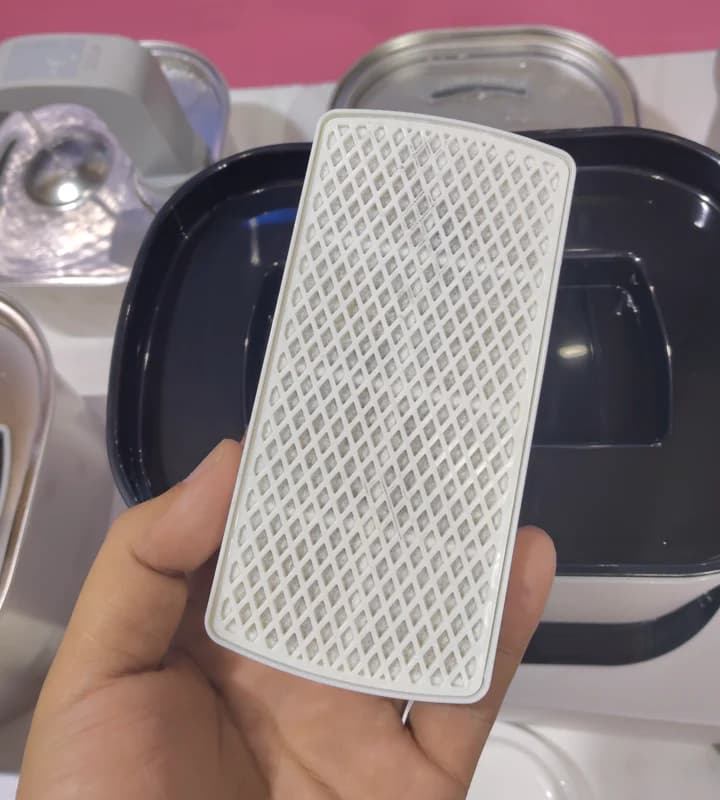
A useful compatibility statement names the fountain model and revision, including any separate pre-filter it requires. Matching the outline in a listing photograph leaves thickness and the underside openings unresolved. Even a lid that closes properly establishes only part of the fit: it does not verify the media specification. If the seller cannot identify the applicable model, ask for that confirmation before treating a similar-looking cartridge as a replacement. Our replacement filter compatibility guide provides the full model, geometry, holder and water-path checklist.
My first fit check would be the seated assembly: whether the cover closes normally and whether water has an unintended route around the edge. Do not trim a cartridge or improvise a seal to make a near match work. Confirm the part number or request a documented compatible replacement.
Should Replacement Filter Availability Affect Which Fountain You Buy?
Yes. Check that you can identify and obtain the correct replacement before buying a fountain that depends on it. Record the filter code, pack quantity and interval for each replaceable component. Similar product names or package photos can conceal a different revision.
Pack contents affect both planning and ongoing cost. A pack of main cartridges may not include the separate foam pieces shown in the fountain's maintenance instructions, and those pieces may follow another interval. Compare what each pack actually supplies against the components your model needs. For sourcing teams, retaining the filter code and revision with the approved fountain specification also makes later reorders less dependent on an old product photo or a salesperson's memory.
Keep a spare pack under its stated storage conditions and check reorder lead time before the last cartridge is installed. For a brand launch, I would confirm the replacement supply plan before approving the first fountain order. This belongs in how to choose a cat water fountain, alongside cleaning access and pump serviceability.
What Should Brands and Sourcing Teams Ask About Replacement Filters?
Ask for a filter specification and supply plan tied to the fountain model and revision. The care sheet, replacement pack and fit requirements should describe the same assembly. A sample that fits today is not a commitment to future supply.
- Which media does this exact model use?
- What does each layer do?
- What are the filter dimensions, thickness and fit tolerances?
- Is there a separate foam pre-filter?
- What interval applies to each replaceable component?
- Does preparation require rinsing, soaking or a particular orientation?
- Which models and revisions share this cartridge?
- How many cartridges and foam pieces are in each pack?
- What are the replacement-filter MOQ and lead time?
- Can the replacement packs carry the brand's model and care information?
Resolve these during private-label planning and sample quality review, before the first production order.
What Is a Practical Cat Water Fountain Filter Replacement Routine?
Use the model's interval as the baseline, inspect between changes, and record each replacement. Disconnect power before removing parts; switch battery operation off too. Keep the electrical base and charging components dry according to the manual.
- Identify the exact fountain and filter part numbers.
- Record each component's replacement interval.
- Inspect loading and flow during normal maintenance.
- Replace sooner for saturation, damage or confirmed restriction.
- Prepare and seat the new filter as instructed.
- Clean the fountain separately, reassemble and refill before restoring power.
- Record the installation date and reset the appropriate reminder.
What Are the Most Common Questions About Cat Water Fountain Filters?
Can I change the filter once a month?
Only if that matches its instructions. Some specify two weeks; another component may have a separate schedule.
Can I rinse and reuse it?
Only as permitted between replacements. Rinsing does not reset the cartridge's service interval.
Can I wash it with soap?
Do not assume so. The Catit #43747W instructions, for example, prohibit soap on the filter.
Does a black filter need immediate replacement?
Color alone cannot decide. New carbon dust, accumulated debris and unidentified residue need different consideration.
Do multiple cats always mean twice as many filters?
No fixed multiplier applies. Inspect more often and follow the model's guidance.
Does bottled or filtered water let me skip replacement?
No. Hair and debris can still enter during use, and the intended filter still needs its prescribed care.
Can I run the fountain without a filter if I clean it often?
Use the configuration the manufacturer permits. Frequent washing does not establish that a filter-dependent water path works correctly without its cartridge.
What Should Decide When You Replace the Filter?
Let the exact model and media set the baseline. Use loading, damage and restricted flow to act sooner, while keeping fountain cleaning on its own schedule. Appearance alone cannot measure remaining media capacity.
For me, a useful replacement plan names the part, explains its care and makes the next correct cartridge easy to obtain.
About This Guide
Tony Kong is an R&D Engineer at Fountelio. This guide combines product-structure inspection priorities with model-specific instructions from PetSafe, Catit and PETLIBRO. Diagrams explain mechanisms; they are not capacity tests. The cover is an AI-assisted editorial composition based on Fountelio filter photography; the in-body component photograph shows the original assembly.
Sources & References
- PetSafe Viva filter replacement. Separate Ion-X and foam intervals; fountain cleaning.
- Catit PIXI Fountain Filters. 30-day interval and named media components.
- Catit Stainless Steel Flower #43747W manual. 3–4 weeks, earlier replacement conditions and no-soap filter care.
- PETLIBRO Dockstream Cordless PLWF115. Two-week main/foam intervals, preparation and output-speed FAQ.
- Catit Flower filter preparation. Carbon residue, rinsing and air release.
- PetSafe Drinkwell Sedona setup. Carbon-filter rinsing and loose particles.
- US EPA drinking-water treatment technologies. Adsorption and ion-exchange mechanisms; not pet-product performance certification.