

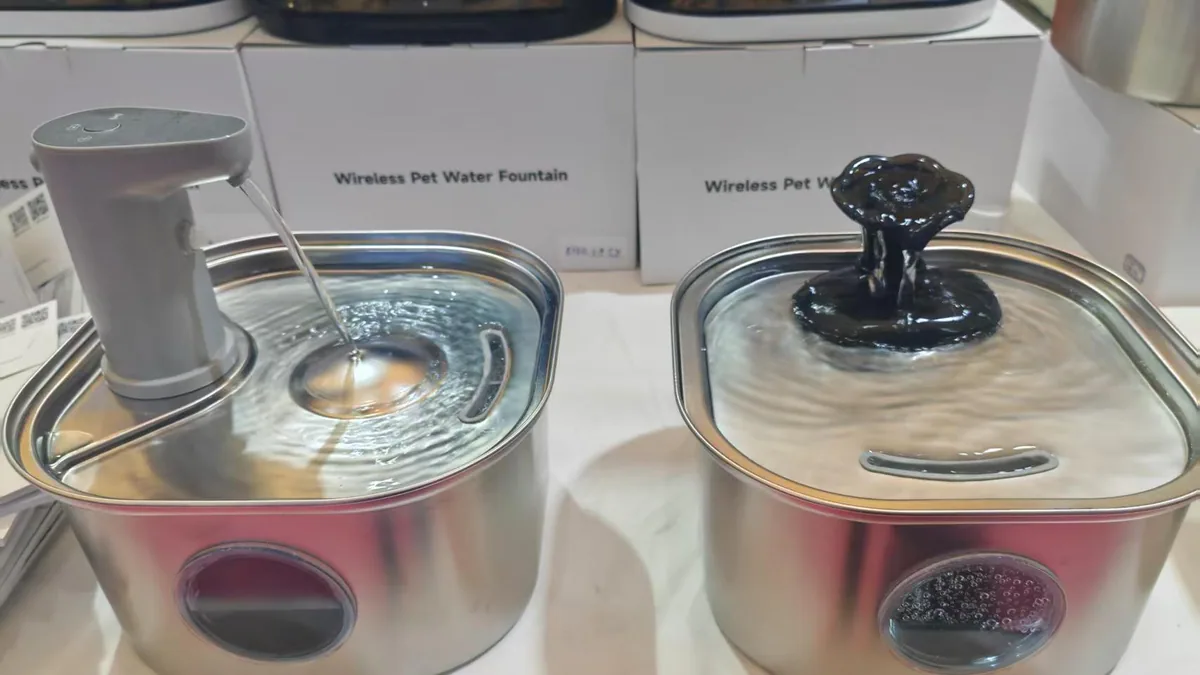
A few clear bubbles can appear the moment a fountain starts, especially after a refill. A dense band of foam that remains on the surface five minutes later is a different observation. Both may be described as “bubbles,” which is why owners often clean the wrong part or replace a pump before identifying what the water is actually doing.
If your cat water fountain is foaming or bubbling, switch off the flow as the manual allows and watch the surface for five minutes. Separate bubbles that quickly collapse are often linked to aeration, trapped air or low water. Foam that lingers, smells, feels slick, clouds the water or returns after agitation needs a full-water change and checks for cleaner residue, filter preparation, debris and the accessible water path.
From a fountain-design perspective, the useful question is not simply whether bubbles are present. We look at when they started, whether they depend on the pump, where air can enter, what was recently cleaned or replaced, and whether the correct filter and water level are being used. That sequence turns a vague symptom into a practical diagnosis.
Why Is My Cat Water Fountain Foaming or Bubbling?
Bubbles usually disappear quickly; foam lingers. If the bubbles disappear after the pump is turned off, the cause is usually air or circulation. If a foamy layer remains on the surface, smells unusual or returns after refilling, treat it as a residue or water-path problem: replace the water and clean the fountain before reuse.
Are You Seeing Foam or Ordinary Air Bubbles?
Bubbles are individual pockets of gas surrounded by water. A stream landing in a tray can make them continuously while the pump runs. They usually travel, merge and disappear. Foam is a more stable group of bubbles held together at the surface. It may collect along an edge, form a dense patch or return when the water is stirred.
That distinction is a diagnostic clue, not a home laboratory test. A photo cannot prove that foam is detergent, saliva or microbial growth, and not every persistent cluster means the water is hazardous. Look for context: Did it begin immediately after cleaning? After a new filter? Only after the water fell below MIN? Does it smell different, look cloudy or leave a film?
Bubbles
- Separate round bubbles
- Move with the stream
- Collapse soon after pump-off
- Often follow refilling or trapped air
Foam
- Dense clusters or a surface band
- Can linger after flow stops
- May carry odor or a film
- Can return when water is stirred
| Observation | More consistent with | Next check |
|---|---|---|
| Separate bubbles disappear soon after pump-off | Aeration or trapped air | Water level, refill timing and pump priming |
| Bubbles return only while the stream lands | Normal flow aeration | Outlet position and expected flow pattern |
| Dense cluster remains after five minutes | Persistent foam | Cleaning residue, filter, debris and water condition |
| Surface has odor, haze, slime or film | Water-quality or residue concern | Stop, discard water and clean the full accessible path |
| Gurgling and weak or pulsing flow occur together | Pump drawing or holding air | MIN level, intake, tube, filter and assembly |
The EPA notes that detergents and similar substances can cause foaming when water is agitated or aerated. That supports one possible explanation after washing; it does not support the shortcut “all foam is soap.” The fountain’s timing and condition still matter.
Try the Five-Minute Pump-Off Test First
Before disassembling anything, observe the symptom under one controlled change. If the manual permits, stop the pump without putting wet hands near a plug or connection. Do not add more water, stir the surface or remove the filter during the five-minute pause. You want to see what happens when aeration stops.
- 00:00Stop and observe
Pause the pump as the exact manual permits.
- 00:30Watch collapse
Ordinary aeration bubbles usually begin disappearing.
- 02:00Check the surface
Note clusters, film, odor or water cloudiness.
- 05:00Choose the path
Observe, rinse/reassemble, or stop and replace the water.
If the surface clears quickly and the water otherwise looks and smells normal, restart only after checking the correct water level. Watch whether bubbles emerge from the outlet, from the pump area or only where the stream hits the tray. A few bubbles after restart can be consistent with air leaving the system.
If foam remains, replace the water rather than running it until it “filters out.” Inspect what changed before the symptom appeared. Recent washing points to rinsing and reassembly. A new cartridge points to its preparation and fit. An older, cloudy reservoir points to a full clean of the accessible water path. When the water looks or smells wrong, give the cat clean water in a separate bowl while you troubleshoot.
When Can Bubbles Be a Normal Part of Fountain Operation?
Water falling through air naturally entrains some air. That is easiest to see where a narrow outlet lands above the tray, after the reservoir has been refilled, or after the pump and tube have been removed and reinstalled. Small bubbles may move with the current and vanish once the system has purged trapped air.
Official troubleshooting for named Xiaomi and GEX fountain models describes trapped air after refilling or resetting as one cause of gurgling or uneven output. Both also connect low water or insufficient pump submersion with air entering the pump. Those instructions are model-specific, but the diagnostic principle is useful: confirm fill level and assembly before treating every bubble as contamination.
Normal-looking bubbles should not require you to ignore other symptoms. A new grinding sound, repeated loss of flow, exposed intake, abnormal heat or water near an electrical connection needs a separate response. And bubbles that were not present before can still tell you that water level, filter resistance, pump seating or the outlet path has changed.
A bubble can be normal. A change in bubble pattern is still information.
Why Does a Cat Water Fountain Foam After Cleaning?
Foam that begins with the first refill after washing makes the cleaning process the first place to look. A small amount of dish detergent can remain in corners, tubes, seams, the pump cover or an outlet. When the pump aerates that residue, a much more visible surface foam can appear.
Stop the fountain, discard the water and follow the exact model’s disassembly instructions. Rinse every washable water-contact part repeatedly with clean water. Give extra attention to narrow channels and parts that were cleaned while still assembled. Accessible pump parts may need separate attention, but do not immerse or open any component the manual identifies as sealed or electrical.
Filters deserve different handling from washable hard parts. PetSafe’s official filter instructions for a named Drinkwell model explicitly say never to wash the filter with soapy water because residue can enter the filter and cannot be removed. Its support pages direct owners to rinse replacement filters with water. Do not assume a cartridge can be “washed clean” with detergent just because the housing can.
At our product bench, we treat post-cleaning foam as a system check. The question is not only whether the bowl was rinsed. It is whether cleaner could remain in the outlet, tube, filter holder, pump chamber or any part that returns water to the reservoir. That is also why a model-specific cat water fountain cleaning routine matters more than a universal soaking recipe.
Why Are There Bubbles After a Filter Change or Refill?
A dry or newly rinsed cartridge can hold air in its porous layers and housing. Refilling can also leave air in a tube or pump chamber. During the first run, that air may emerge as small bubbles. Loose carbon-colored particles may also appear if a cartridge was not prepared as directed, although visible particles and bubbles are different symptoms.
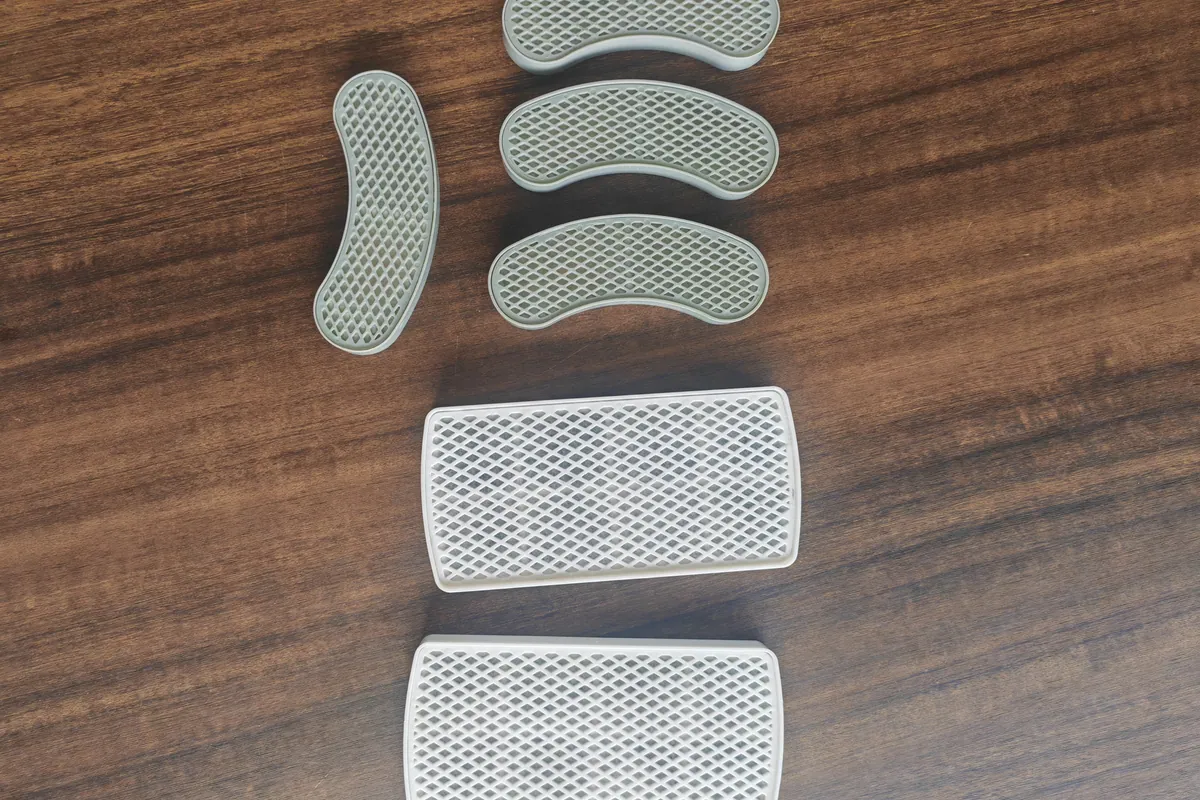
Use the exact cartridge and preparation instructions for the model. Rinse or soak only when the manufacturer specifies it, install it in the correct direction, seat the holder fully and make sure no packaging film remains. PetSafe’s cited instructions tell users to rinse a new filter for 30 seconds to remove loose particles; Xiaomi’s support page for its named fountain also tells users to soak and rinse the filter. Those examples show why the manual matters, not a universal 30-second rule.
If bubbles continue with weak flow, the filter may be incorrectly seated, clogged, incompatible or creating more resistance than the system expects. Do not judge compatibility from shape or filtration-layer marketing alone. Fountelio’s current platforms use more than one cartridge format, and the filter holder and water path belong to the specific fountain family. Our cat water fountain filter reference shows these platform differences without implying interchangeability.
Can Low Water Make a Cat Fountain Bubble or Gurgle?
Yes. When the water level falls below the pump’s intended operating range, the intake can draw a mixture of air and water. The result may be gurgling, pulsing flow, a stream that repeatedly breaks, or bubbles emerging from the outlet. The motor may still sound active even though the water path is no longer stable.
Flow can remain steady when the model is filled and assembled as specified.
Gurgling, uneven flow and transient bubbles may follow.
Switch off before refilling if that is what the manual requires. Fill only within the marked range; “more” is not a fix because overfilling can create other flow or overflow problems. Check the level again after the fountain has circulated, because water distributed through the tray, filter and tubing can lower the reservoir level from its initial fill point.
If the symptom returns unusually quickly, look beyond evaporation. The cat may be drinking more, a mat may be hiding a spill, the tank may not be seated correctly, or the fountain may be losing water elsewhere. Sudden or sustained changes in a cat’s drinking deserve veterinary advice rather than being treated only as a fountain-maintenance problem. VCA’s veterinary guidance also recommends contacting a veterinarian when thirst changes are persistent or concerning.
How Do Air, Pump Flow and the Water Path Create Bubbles?
A pump does not operate in isolation. The intake, pre-filter where used, pump cover, tube, cartridge, outlet and return openings determine how water and air travel. A loose tube, tilted pump, partially blocked intake or incorrectly seated filter can disturb that path. The symptom can be bubbles, gurgling, weak flow or a repeating surge.
Start with the least invasive checks: correct water level, level placement and fully seated removable parts. Then follow the manual to inspect the accessible intake and impeller area. Hair and debris can reduce flow, but never insert tools into a powered pump or open a sealed module. The cat water fountain pump troubleshooting guide covers the separate no-flow and weak-flow diagnosis.
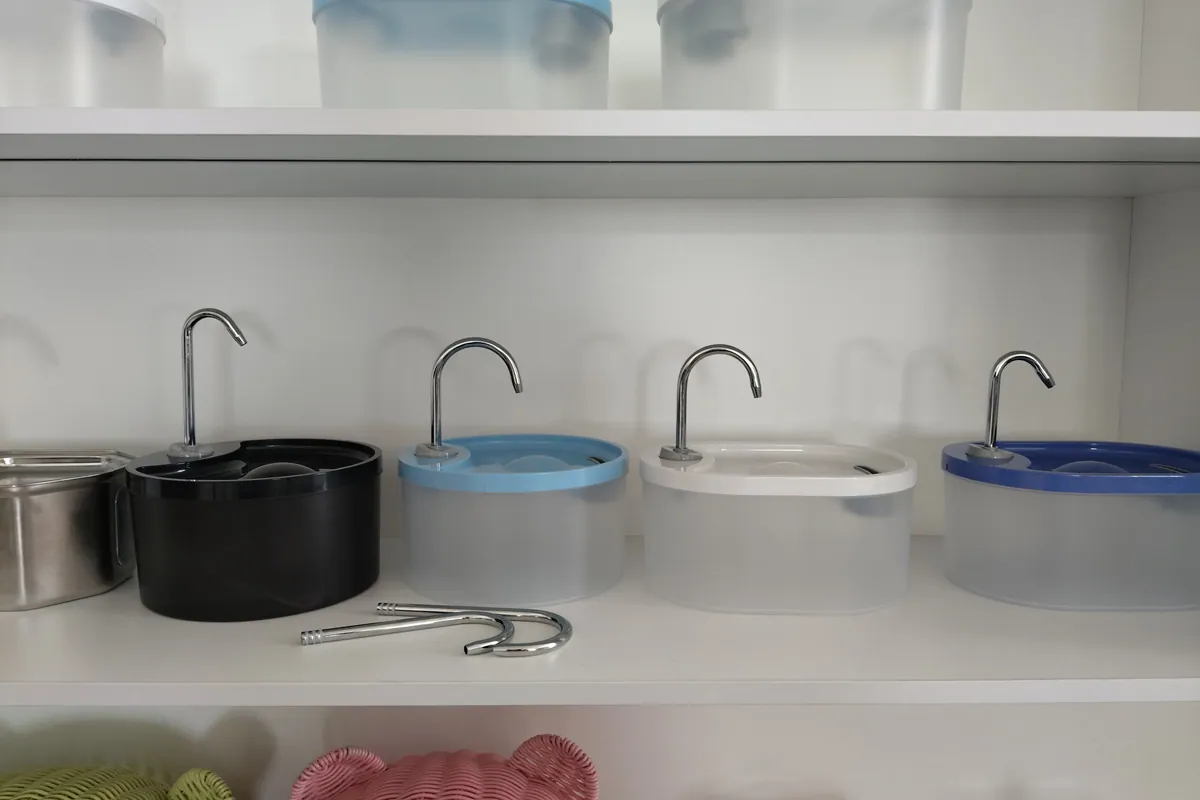
When we compare fountain samples, we look at more than whether the motor turns. We check whether the approved pump, filter and outlet produce a stable flow after normal disassembly and reassembly. A platform with a different outlet height or filter position can release trapped air differently, so one model’s bubble pattern should not be turned into a rule for every pet water fountain.
Can Food, Saliva, Hair, Oils or Additives Cause Persistent Foam?
Material introduced after filling can change how water behaves when the pump agitates it. Food crumbs, hair, dust, skin oils and saliva-related residue can accumulate in the tray, reservoir, filter holder and accessible pump chamber. A greasy film or slippery surface is more useful evidence than the presence of bubbles alone.
Do not add supplements, flavorings, medications, essential oils or cleaners to a fountain unless the product instructions and a veterinarian specifically support that use. Recirculation repeatedly moves an additive through the pump, filter and every water-contact surface. A cartridge is not a sterilizer and should not be expected to make unsuitable water or an unapproved additive safe.
Discard questionable water, clean the accessible parts, replace a cartridge when its instructions call for replacement, and refill with water appropriate for your location and cat. If residue rapidly returns, review feeding proximity, cleaning frequency and whether the cat drops food into the tray. The answer may be the environment rather than a defect.
Filters can help capture some debris or address taste and odor depending on their actual media, but they do not remove the need to wash the fountain. Our guide to when to change a cat water fountain filter keeps replacement timing separate from this foam diagnosis.
Which Foam or Bubble Signs Mean You Should Stop and Investigate?
Stop and provide fresh water separately when foam persists after pump-off, carries an unusual odor, forms with cloudy or discolored water, or accompanies slime, film or visible contamination. The same applies when you suspect cleaner, an additive or a non-water substance entered the reservoir.
Also stop for repeated loss of flow, abnormal pump heat or noise, a damaged cable, water at electrical contacts, a cracked reservoir or any behavior the manual identifies as unsafe. Do not keep cycling a struggling pump to see whether it clears. A dry-running or air-bound pump problem is not solved by allowing it to run longer.
Use this path for persistent foam with odor, cloudy or slimy water, suspected cleaner or additive, repeated pump trouble, or any abnormal heat, damage or electrical concern.
Provide fresh water separately while the fountain is out of service.If the fountain is clean and correctly assembled but persistent foam returns with fresh water, record the model, filter reference, water source, recent cleaning method and a short video of startup and pump-off behavior. Contact the manufacturer or seller with those details. Contact a veterinarian if the cat has consumed a suspected cleaner or additive, refuses water, vomits, appears unwell, or shows a meaningful change in drinking.
What Should You Do Right Now?
Stop the pump as the manual allows.
Give the cat fresh water in a clean bowl.
Empty questionable fountain water.
Remove cleaner and loose filter particles.
Check water level, filter, intake and assembly.
Only when the system is clean and correctly assembled.
- Observe before changing multiple variables. Note whether the symptom appears only while running, after cleaning, after a filter change or below a particular water level.
- Pause safely. Stop the pump in the manner specified for the model and perform the five-minute test.
- Protect water access. Put down a clean bowl of fresh water while the fountain is being checked.
- Discard questionable water. Do not expect continued circulation to remove cleaner residue, odor or contamination.
- Rinse and inspect the full accessible path. Reservoir, tray, outlet, tube, filter holder and permitted pump parts all matter.
- Prepare the filter correctly. Follow its model-specific rinse, soak, orientation and replacement instructions.
- Restore the correct water level and assembly. Refill within MIN/MAX marks and seat each removable component.
- Restart and watch. Confirm stable flow and whether any remaining bubbles collapse normally.
If one careful cycle does not resolve persistent foam or unstable pump behavior, stop repeating the same cleaning routine. The remaining question may involve the water source, an incompatible or damaged part, or support that requires the exact model and configuration.
What Should Brands and Retailers Check About Foaming and Air in the Water Path?
Foaming complaints should be prepared for before launch. The manual needs to distinguish filter preparation from fountain cleaning, show the correct water range, explain normal startup behavior, and identify which pump parts the user may access. A generic instruction to “clean regularly” is not enough for a buyer trying to separate residue from trapped air.
In projects we handle, we map the fountain model to its filter reference, pump or service reference where separate support is applicable, and the approved outlet and water path. We also review startup after refill and reassembly. This makes after-sales questions more precise: the support team can ask about pump-off persistence, water level, filter preparation and recent cleaning instead of telling every customer to buy a new cartridge.
Packaging and online listings should avoid claims that the filter sterilizes water or makes cleaning unnecessary. Replacement packs should show the compatible family and preparation steps. If the pump, filter holder or outlet changes, the troubleshooting content needs review too; an old instruction can create a new support problem even when the product itself is functioning as designed.
For a private-label program, connect this symptom guide with the filter and spare-parts planning checklist and the pre-shipment fountain inspection checklist. The goal is a traceable configuration and a support answer that matches the product customers actually receive.
Frequently Asked Questions
Why is my cat water fountain foaming?
Persistent foam can follow cleaner residue, an unprepared or incorrectly fitted filter, organic debris, an additive or water that needs replacing. Turn off the flow, wait five minutes and check timing, odor, cloudiness, film, recent cleaning and filter changes.
Why is my cat water fountain bubbling?
Short-lived bubbles often come from aeration, trapped air after refilling, low water or air passing through the pump and outlet. Check the marked water range, pump submersion and assembly.
Are bubbles in a cat water fountain normal?
They can be. Separate clear bubbles that move with the stream and quickly disappear after pump-off are often part of normal aeration or startup. Persistent clusters or bubbles combined with odor, haze, slime or unstable flow deserve investigation.
Why is my cat water fountain foaming after cleaning?
Cleaner may remain in a seam, tube, outlet, filter holder or pump chamber. Discard the water and rinse all washable water-contact parts according to the manual. Do not wash a filter with soap unless its manufacturer explicitly instructs that method.
Why are there bubbles after I changed the fountain filter?
A dry cartridge and holder can retain air, and loose particles may appear if the cartridge was not prepared as directed. Follow the exact rinse or soak instructions, install it in the correct direction and confirm stable flow.
Can a low water level make a cat fountain gurgle?
Yes. If the intake draws air, the pump can gurgle, pulse or produce bubbles. Refill within the marked range and check whether the pump and reservoir are seated correctly.
Does a clogged filter cause bubbles?
It can contribute to restricted or uneven flow in some designs, but bubbles alone do not prove a clog. Check filter age, fit, orientation and flow against the model instructions.
Should I keep running the fountain until the foam disappears?
No. Persistent foam should be investigated. Stop the flow, provide clean water separately, discard questionable water and check cleaning residue, the filter and the accessible water path.
Can a cat water fountain filter remove soap residue?
Do not rely on it. A cartridge is not a remedy for cleaner-contaminated water. Discard the water, rinse the fountain thoroughly and replace a filter that was exposed when its instructions or manufacturer require it.
When should I contact a veterinarian?
Contact a veterinarian if the cat may have consumed cleaner or another substance, refuses water, vomits, appears unwell, or has a concerning change in drinking. A fountain guide cannot diagnose the cat.
Use Persistence, Timing and the Water Path to Make the Decision
Begin with the five-minute pump-off test. Bubbles that collapse and appear only with normal flow point you toward water level, refill timing and trapped air. Foam that remains or returns points you toward rinsing, filter preparation, debris, additives and water condition.
Change one variable at a time, keep clean water available separately and follow the exact manual. Stop for odor, cloudiness, slime, suspected cleaner, abnormal pump behavior, damage or electrical concerns. “Foaming” is the symptom; persistence, timing and the water path tell you what to do next.
About This Guide
Tony Kong is an R&D Engineer at Fountelio. This guide combines official water-quality and model-specific support references with Fountelio’s product-platform perspective. The diagrams simplify diagnostic decisions and are not universal internal water-path drawings or records of a laboratory foam test.
Sources & References
- U.S. EPA foaming guidance. General explanation of foaming associated with detergents or similar substances under agitation or aeration.
- PetSafe Drinkwell Mini filter instructions. Model-specific instructions not to wash the filter with soapy water and to rinse a new filter.
- PetSafe Viva Fountain cleaning instructions. Model-specific cleaning and filter-handling instructions.
- Xiaomi Smart Pet Fountain 2 abnormal-noise support. Low water, pump air, filter installation and cleaning checks for the named model.
- Xiaomi Smart Pet Fountain no-flow support. Model-specific filter preparation, hose and pump checks.
- GEX Pure Crystal fountain gurgling FAQ. Low water, pump submersion, filter and trapped-air checks for applicable GEX products.
- VCA cat nutrition and water-access guidance. Veterinary context for water access and changes in drinking behavior.