

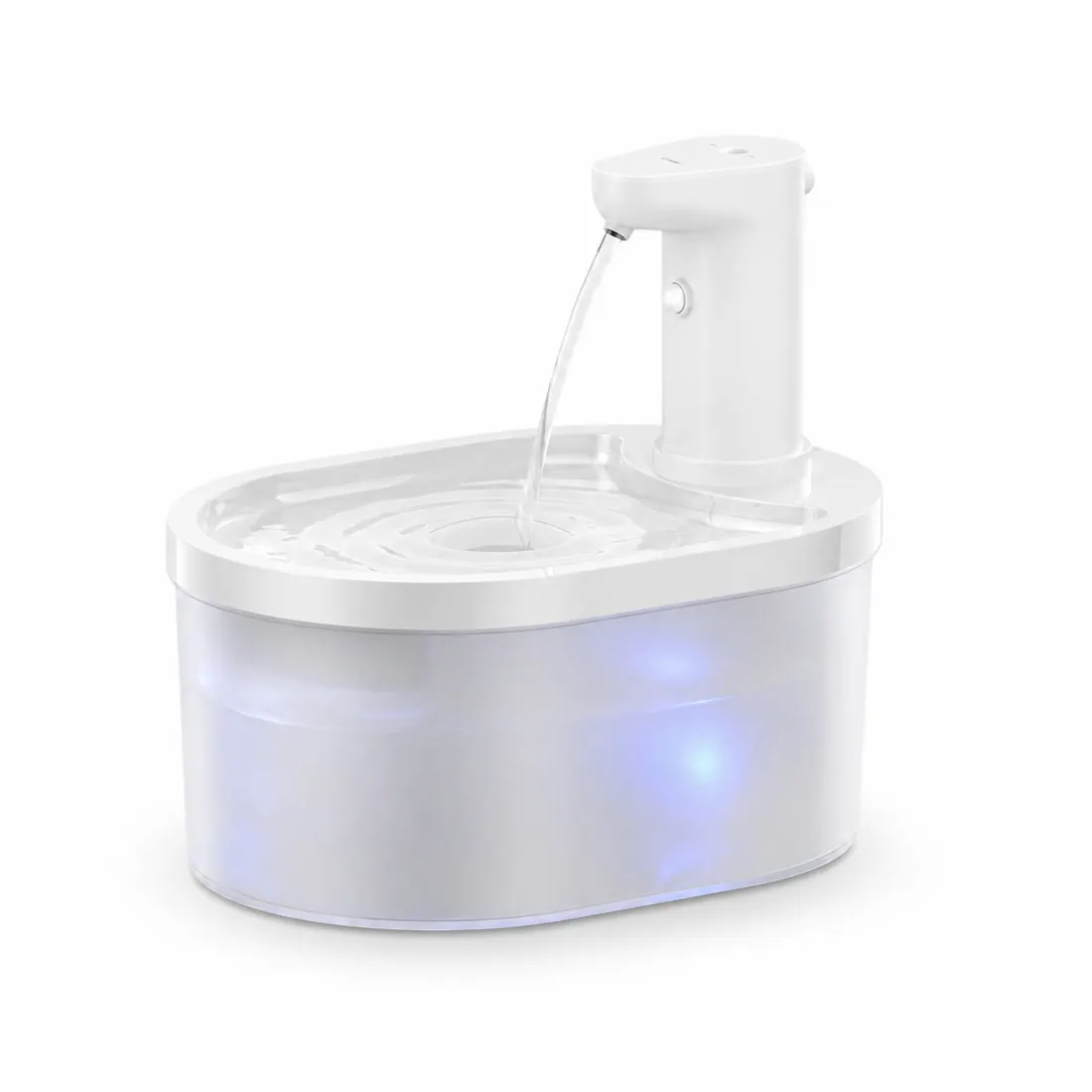
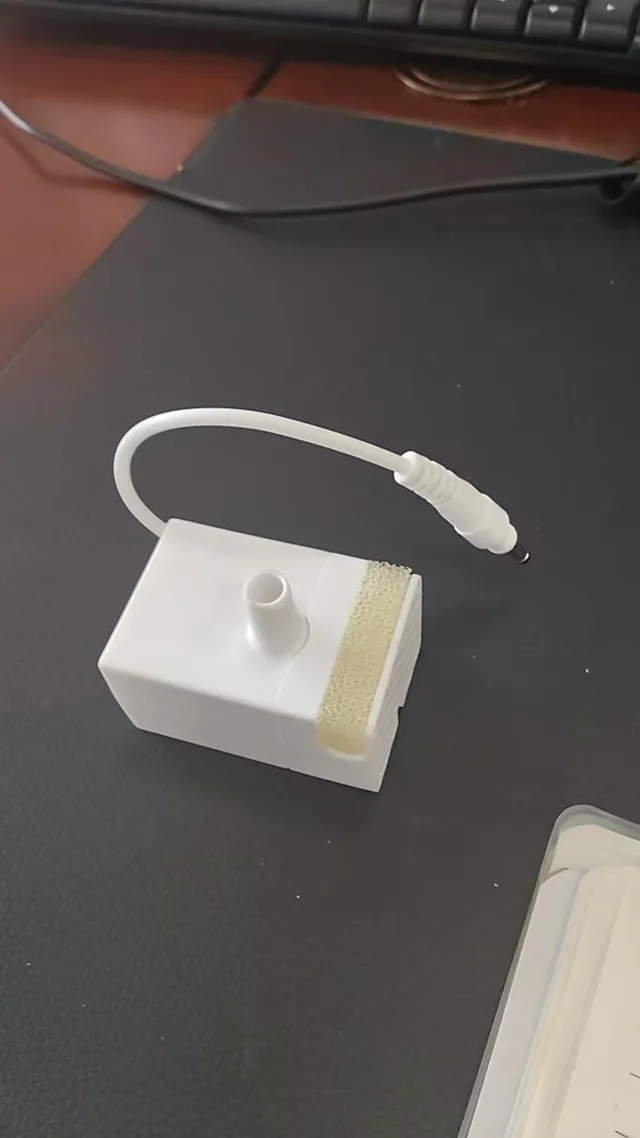
A silent fountain and a humming fountain with no water at the outlet can look equally broken. So can a stream that has dwindled over several weeks. Yet the useful first check is different in each case. Ordering a pump before noticing that difference can leave you with a new part and the same problem.
For a cat water fountain pump not working, begin with power, operating mode and water level. Then follow the water path through the filter, pipe and outlet before inspecting accessible moving parts. No flow does not automatically mean a dead pump. Damage or an electrical warning is a reason to stop using the unit, not keep testing it.
I would record the symptom before taking a sample apart: silent, humming, weak, intermittent or mechanically noisy. That description keeps the investigation focused. The cat fountain cleaning guide covers the full washing routine; this guide helps you decide which part of the system needs attention.
What Should You Check First When a Cat Water Fountain Pump Stops Working?
Start outside the pump: establish power and an active operating mode, refill within the marked range, and check assembly. Follow the filter, pipe and outlet for restrictions. Only then inspect the pump or rotor using the model's permitted access procedure. A warning sign or damaged component takes priority over this sequence.
- Check power, battery and operating mode.
- Check water level.
- Check reservoir and component seating.
- Inspect filter, tube and outlet.
- Inspect accessible pump or rotor parts.
- Look for deposits or physical damage.
Diagnose the symptom before replacing the pump. If the cause remains unclear, contact support with the checks you completed rather than guessing.
What Should You Do Before Taking the Pump Apart?
Disconnect external power and switch off battery operation as the manual requires before disassembly. Keep parts identified as non-submersible dry, including applicable bases, charging connections and controllers. Never run a conventional pump dry or below its specified operating level, even briefly to listen for a fault.
Provide another clean, accessible water source while the fountain is out of service. Set small removable parts in a tray away from the sink drain. A cover intended for cleaning is different from a sealed motor enclosure: do not open adapters, battery packs or sealed electronics.
- Power / controlOutlet, adapter, cable, battery, button, mode
- Water supplyFill level, intake coverage, reservoir seating
- Water pathFilter, tube, connector, spout
- Pump / rotorAccessible covers, impeller, shaft, debris, scale
Start outside the pump and work inward. Disconnect power before opening or adjusting components.
What Does Your Fountain’s Symptom Tell You?
The symptom chooses the first area to inspect; it does not identify a failed part. Note the lights, sound, water delivery and whether the problem began after cleaning, charging or a move. A lit indicator confirms only that some circuitry is active, not that the pump is receiving the correct power.
| What you observe | Start here |
|---|---|
| No lights, sound or flow | Power, battery and control |
| Lights on, no pump sound | Mode, sensor, connection, then pump |
| Hum but no water | Water supply, trapped air, water path, impeller |
| Weak flow | Filter, tube, intake, impeller and scale |
| Buzzing / humming | Water level, rotor resistance, seating and vibration |
| Grinding / rattling | Stop; inspect debris, moving parts and contact |
| Intermittent operation | Intended mode, sensor, battery and connection |
| Louder after weeks | Fill level, buildup, filter, seating and wear |
| Stopped after cleaning | Parts, pipe, covers, seating and permitted restart |
Establish power and an active running mode first.
Check water supply, the water path and permitted moving parts.
A sound is a clue, not proof of a healthy motor or a jammed impeller.
Why Does the Fountain Have No Power, Pump Sound or Water Flow?
Start with the supply and controls. On a plug-in unit, inspect the outlet, supplied adapter, cable and accessible connections. On a rechargeable unit, check charge state, the power button and selected mode. A sensor or timed setting may intentionally keep the pump still. A silent fountain is not automatically a failed pump.
PETLIBRO's Capsule PLWF002 guidance includes adapter and plug checks. Its Dockstream Cordless PLWF115 procedure also checks the battery indicator and power button. These examples explain why pump cleaning is not always the first task; button sequences and cable requirements belong to the named model.
Use only a supply confirmed compatible by the manufacturer. A connector fitting the socket does not establish the correct voltage, polarity or charging behavior. Do not test damaged cables, wiggle a loose connection while powered, or open the adapter. If the approved external checks produce no response, support can help distinguish supply, controller and pump faults.
Why Can You Hear the Pump but No Water Comes Out?
A hum suggests that something is energized, but it does not prove normal rotation or water delivery. With power off before adjustments, check sufficient water, pump position, connected tubing, filter seating and outlet clearance. A disconnected pipe can return water inside the reservoir while leaving the drinking outlet dry.
Next, inspect the permitted pump cover and moving parts. A rotor can be obstructed, and missing internal parts can affect pumping. For the PETLIBRO Glacier PLWF007, the official procedure specifically directs users with lights and motor sound but no flow to clean the water pipe and mesh filter. It does not treat sound as proof that the motor is healthy.
Can Trapped Air Delay Water Flow?
Some designs need to expel air after refill or storage. PETLIBRO's Dockstream PLWF005 support page notes a startup delay after refill or reconnection. Use the exact model's startup procedure and time limit with adequate water. Do not repeatedly run a dry pump, shake powered equipment or improvise a priming method.
Why Is the Cat Fountain Water Flow Weaker Than Before?
Weak flow can come from a restriction anywhere along the water path. Check the filter, foam, tube, intake and outlet, then accessible pump parts and deposits. Compare at the same fill level and operating mode. A smaller stream alone does not show that the motor has lost power.
I would trace where water is supposed to travel before judging the pump. A bent tube or partly seated connector can reduce delivery without changing the sound much. If the decline was gradual, inspect accumulated material; if it followed maintenance, inspect what was removed and refitted.
PETLIBRO's Capsule weak-flow guidance identifies hair, food debris and calcium deposits as possible contributors. Restore clean, correctly fitted parts, then retest the assembled fountain within its operating limits. If output is still abnormal, record the result for support. Installing a stronger pump can create splashing or mismatch the water path without correcting the restriction.
Can a Dirty or Incorrect Filter Make the Pump Look Weak?
Yes. A loaded, poorly seated or unsuitable filter can restrict flow in some designs. Preparation and orientation also matter. Correct the filter according to the manual, but continue along the water path if flow stays weak. A fresh cartridge cannot clear a blocked pipe or dirty impeller.
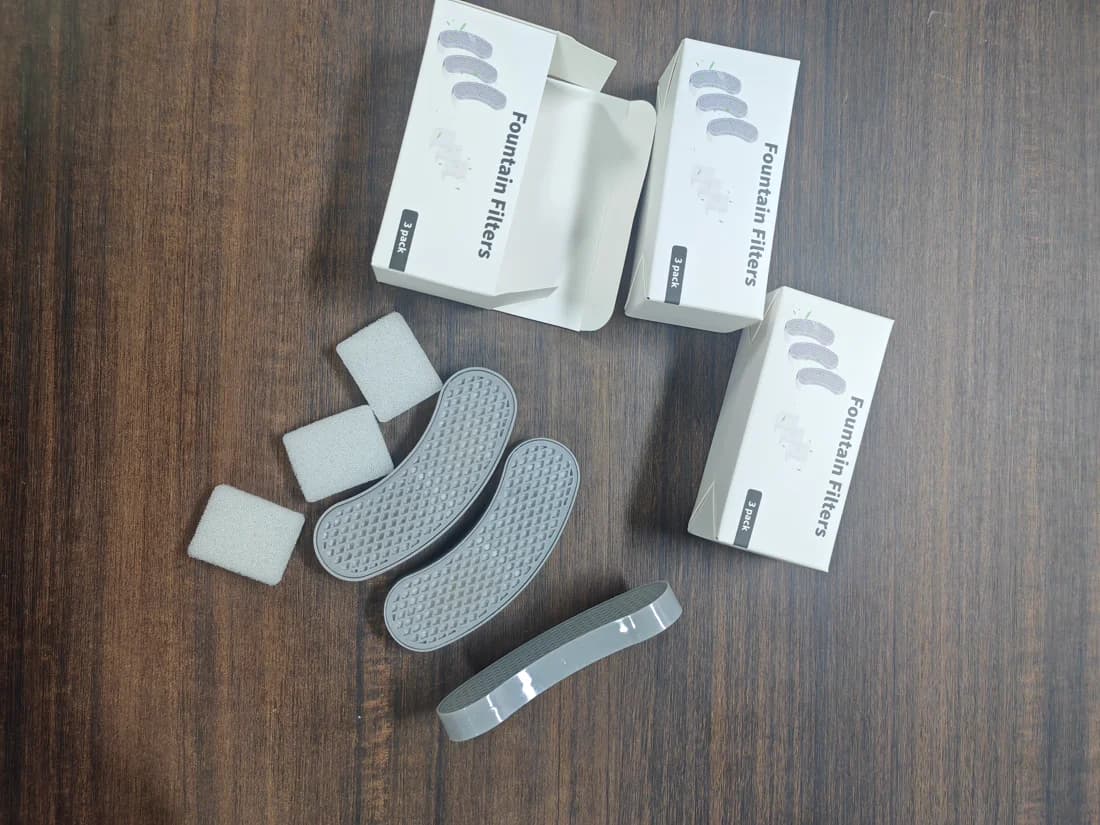
Some manufacturers permit a brief filter-removal diagnostic; do that only when your model's instructions allow it. Do not make bypassing the filter a permanent fix. Our filter replacement guide explains loading, fit and model-dependent intervals.
Why Is the Cat Water Fountain Pump Buzzing or Humming?
Buzzing can accompany resistance at the rotor, but the housing or support surface can produce a similar sound through vibration. Water level, debris, scale and seating are useful checks. Sound alone cannot distinguish a jam, wear or an electrical problem, so avoid treating a hum as a definite impeller diagnosis.
Pump or rotor condition
Seating and contact between parts
Stream landing point and fill level
Support beneath the fountain
Listen without touching energized parts. Then disconnect power to inspect seating and permitted components. After reassembly, compare at the correct fill level. If the sound is accompanied by unusual heat, an electrical smell or repeated shutdown, stop testing and contact support. A quieter support surface does not repair a damaged pump.
Why Is the Pump Making a Grinding or Rattling Noise?
Stop operation and inspect the accessible moving parts. Debris, deposits, a misaligned cover, damaged blades or shaft contact can create abnormal mechanical sound. Grinding is a reason to investigate promptly, not an automatic instruction to replace the entire fountain.
Look for an obvious obstruction and compare part seating with the model drawing. Do not bend a shaft, trim blades or force a rotor to make it fit. If a part is broken or the noise returns after approved cleaning and assembly, ask about the specified replacement part. Continued running is not a useful way to loosen an obstruction.
Can Low Water Make a Cat Fountain Pump Noisy or Stop Working?
Yes. An inadequately supplied pump can draw air and lose normal flow, while a longer fall into the reservoir can change water noise. Some fountains also stop through model-specific low-water protection. Refill within the marked operating range; never assume every fountain has a protective shutoff.
PetSafe's Drinkwell Platinum noise guidance links low water with difficulty drawing water. Its minimum-depth instruction belongs to that design. Use your fountain's MIN/MAX marks and manual instead of copying another brand's measurement. Water remaining in the tray does not necessarily mean enough water is reaching the pump.
Can Hard-Water Scale Stop the Impeller From Turning?
Yes. Mineral deposits can restrict the cavity or moving parts, including the shaft area. The obstruction may persist after loose hair has been removed. Use a descaling method approved for the exact component; a treatment allowed for a removable reservoir may be unsuitable for a base, seal or pump module.
Look at the intake, rotor and narrow openings.
Remove accessible material with the approved cleaning method.
Inspect the cavity and shaft area for adherent deposits.
Use the model's permitted descaler, parts list and contact time.
These are inspection clues. Color and texture alone cannot identify every deposit.
PetSafe's Multi-Tier pump guidance identifies mineral deposits as a possible obstacle to rotation. Manufacturer recipes vary, so this guide supplies no universal vinegar ratio or soak time. Confirm the cleaner, permitted parts, dilution and contact time in the current manual; ask support when instructions conflict.
After treatment, rinse as instructed and inspect the assembly before restarting. Do not scrape a shaft or cavity with a sharp metal tool to remove a stubborn deposit. If deposits conceal damage or movement remains abnormal, stop forcing the part and request advice.
How Can You Tell if the Pump Impeller Is Stuck?
Only inspect it through the access the manufacturer permits, with power disconnected. Remove the specified cover and look for material around the rotor, shaft and cavity. Check movement as instructed. Resistance during extraction can come from magnetic attraction; it does not by itself establish a jam or damaged bearing.
The PetSafe Drinkwell disassembly guide identifies a magnetic impeller that can resist removal. Its named faceplate and removable stator piece describe that pump, not every fountain. Do not interpret a diagram as permission to dismantle sealed motor windings.
I would check the cavity as well as the removed rotor. Cleaning only the visible blades can leave deposits where the shaft sits. Keep the small supports and covers together, and do not force a part that differs from the manual. A rotor that moves by hand still needs a correct, water-filled assembly to demonstrate normal flow.
Why Does the Pump Work Intermittently?
First establish whether stopping is intentional. Sensor-triggered and timed modes are designed to pause. If the pauses are unexpected, check battery state, water level, power connection and the model's indicator or error guidance before opening the pump. Cordless operation does not specify one flow pattern.
Observe whether stopping follows a fixed interval, an approach, falling water level or a power-state change. That record helps separate normal control behavior from an irregular fault. The cordless versus plug-in guide explains why available modes can change when a unit is connected to power. Repeated unexplained shutdown after correct setup needs support, not repeated resets.
Why Has the Fountain Become Louder After a Few Weeks?
Compare it with its clean, properly filled condition. Falling water level, accumulating material, filter restriction, changed seating and wear can all alter the sound. The elapsed weeks are context, not a diagnosis or a universal maintenance deadline.
I would note what changed with the sound: refill frequency, stream shape, a recent filter, a new surface or the last cleaning. Restore the correct fill and assembly before comparing again. A short recording from the same position can document change for support, but it is not a calibrated noise measurement or proof of the cause.
Can the Floor or Counter Make a Fountain Sound Louder?
Yes. Vibration can travel from the pump and housing into the supporting surface. A firm, level position and an appropriate stable mat may reduce that transmitted sound. They do not clear a jammed rotor or resolve electrical noise.
PetSafe recommends a rubberized mat for a vibrating Platinum fountain. Keep any required ventilation and base contact unobstructed. The placement guide covers suitable surfaces and cable routing. Avoid soft supports that tilt the reservoir.
Why Did the Pump Stop Working After I Cleaned the Fountain?
Check what changed during reassembly before assuming the motor failed. A missing cap, loose cover, disconnected tube, displaced filter or poorly seated reservoir can interrupt normal delivery. Water level and the model's restart procedure also matter. Cleaning immediately before failure is a clue, not proof of one cause.
My first comparison would be the assembled parts against the drawing, especially pieces small enough to be left beside the sink. For Dockstream PLWF005, PETLIBRO specifically describes the impeller cap and secure pump cover as important to sufficient pressure. That cap and order must not be copied onto a different pump design.
With power off, compare the parts with the assembly drawing.
Rotor / cover → pipe / filter → tank / base → refill / permitted restart
Return to the four-layer sequence.
Power → water → water path → pump / rotor
Recent reassembly determines the first check; it does not prove the pump is undamaged.
With power off, restore the correct pipe connection and component seating, refill, then restart as directed. If water entered a component identified as non-submersible, do not power it to see whether it survived. Contact support. Correct assembly cannot make suspected electrical damage safe.
Does Pump Architecture Change How You Troubleshoot a Cat Fountain?
Yes. Whole-unit power, pump connection and control mode are separate layers. A battery can power a conventional wired pump; a cable-free pump can still depend on a plugged-in base. Identify the actual arrangement before deciding which cable, contact, rotor or module to inspect.
| Arrangement | Additional checks |
|---|---|
| Plug-in + conventional pump | Supply, pump cable, wet intake and permitted internals |
| Cordless + conventional pump | Battery and mode, then conventional pump checks |
| Plug-in + contactless pump | Base supply, correct seating and the specified transfer interface |
| Cordless + wireless pump | Battery, base, operating mode and model-specific wet mechanism |
| External motor / magnetic-drive design | Dry base, coupling arrangement and accessible wet rotor |
| Sensor control on any compatible platform | Add detection and selected-mode checks; this is not a pump type |
The wireless pump versus cordless explanation separates those terms. This matrix is an inspection framework, not six interchangeable teardown procedures. If the manual does not identify a user-serviceable part, leave its enclosure closed.
What Should You Check on a Conventional Submerged Pump?
Inspect the cable and connector exterior, intake, mounting, covers and accessible rotor parts. Check for trapped material and deposits within the manual's cleaning access. Keep the pump supplied with water during normal operation, and disconnect power before handling it.
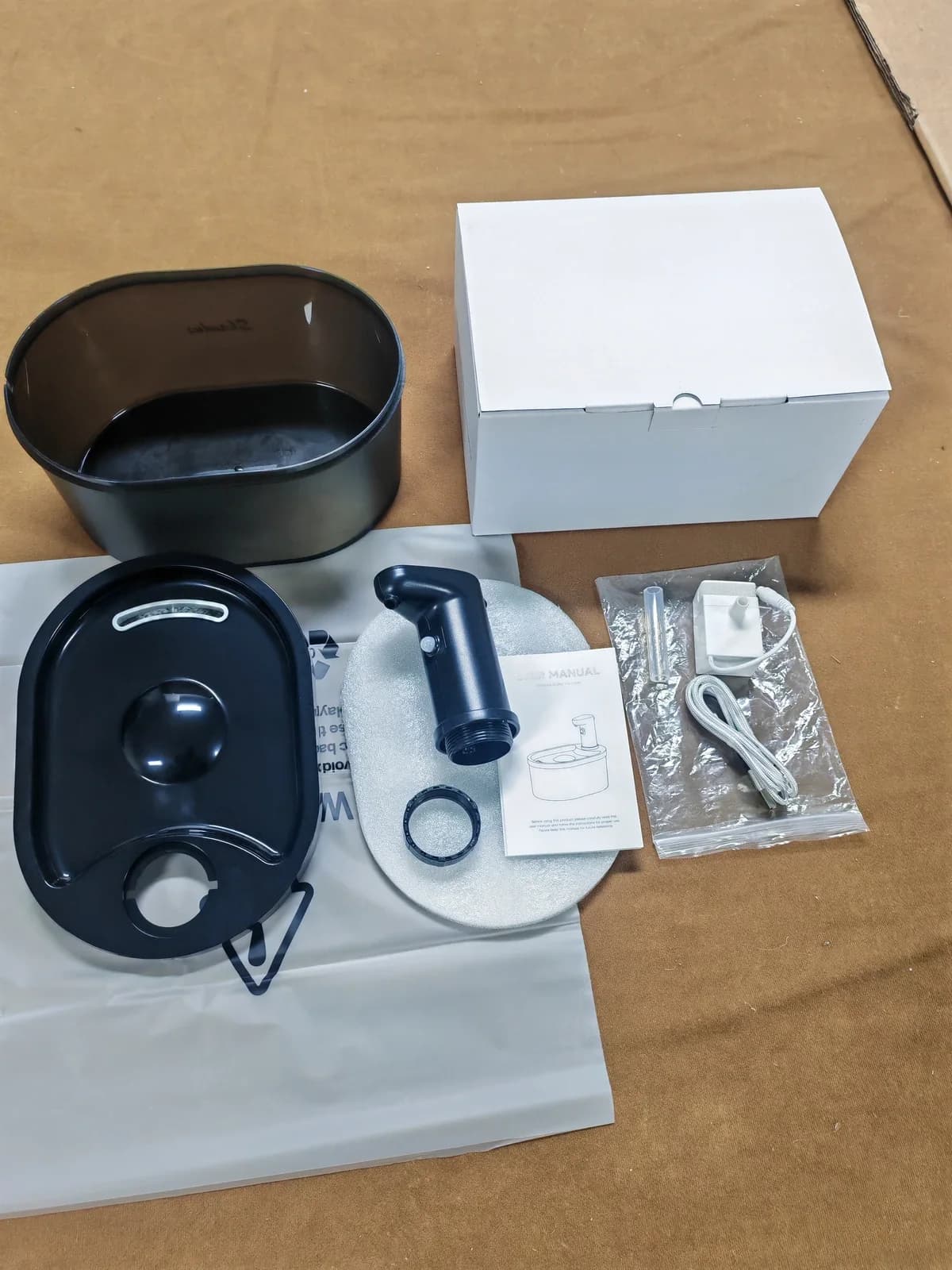
- Trace the cable to its permitted connection.
- Find the pump outlet and matching water connection.
- Compare tray and outlet seating with the assembly guide.
This photo shows the supplied components, not opened pump internals.
Use the pump-cleaning section for maintenance principles, then the exact manual for removal order.
What Changes With a Wireless-Pump or Magnetic-Drive Fountain?
Inspect the dry power platform and the specified reservoir interface as well as the wet moving parts. Depending on the design, incorrect seating or a transfer problem can stop water without a conventional pump cable to inspect. Wireless, contactless and magnetic-drive labels do not guarantee identical internal mechanisms.
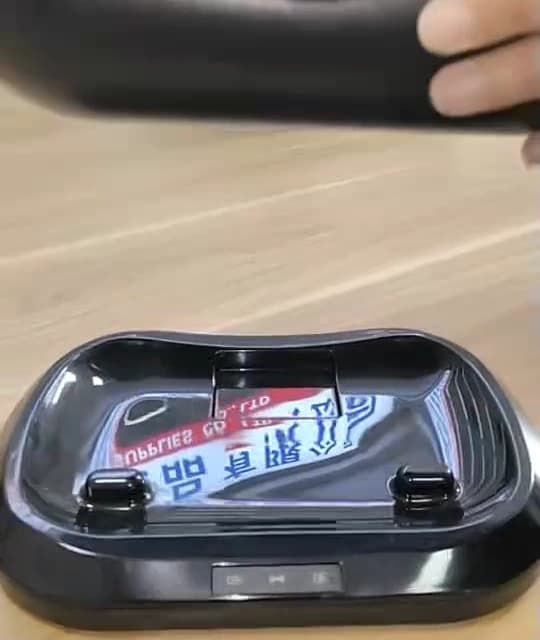 Tank lifted
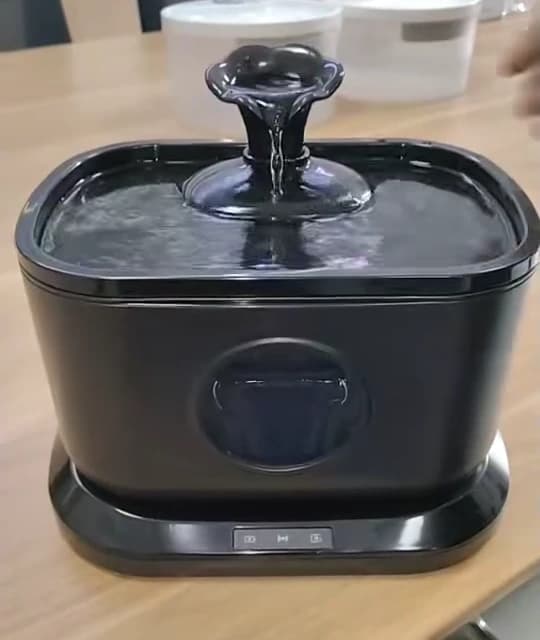 Tank seating
Catit Easy Clean Flower Fountain, product 43621, places its motor in the base and drives a magnetic impeller. Its refill advice includes lifting the reservoir for at least five seconds before reseating, then checking the impeller if it still fails. That is this model's procedure, not a reset instruction for all wireless pumps.
Its cleaning guide also keeps the base and pump out of immersion. Fountelio's wireless-pump platforms likewise need configuration-specific support: identify the rechargeable or USB version rather than ordering a wet module by appearance.
When Should You Clean the Pump Instead of Replacing It?
Approved cleaning is a sensible next step when accessible parts are undamaged but visibly dirty, restricted or scaled. It can address the cause of reduced flow or changed sound. It cannot establish that every electrical or mechanical component is healthy, and it does not make damaged power hardware suitable for reuse.
- Damage or electrical warning?Stop use and contact support. Do not attempt a cleaning trial.
- Undamaged but dirty or restricted?Clean permitted parts and restore correct assembly.
- Still abnormal after correct setup?Give support the model, symptom and checks completed.
- Replacement confirmed?Match the specified part and revision, not appearance alone.
No cleaning interval fits every fountain and household. Follow the model schedule and inspect sooner when operation changes. After maintenance, assess the complete fountain at the correct water level and mode. If normal flow returns, continue monitoring; if the fault persists or quickly returns, record that instead of repeating increasingly aggressive cleaning.
When Should You Replace the Cat Fountain Pump?
Consider the specified replacement after correct power, water, assembly and approved maintenance checks fail to restore operation, or when a service part is physically damaged. Support should confirm whether the replaceable item is the rotor, pump module, base or another component. Buying a pump cannot fix an unrelated supply fault.
PetSafe's Multi-Tier troubleshooting sequence reaches pump replacement after cleaning, reassembly and a test. Keep your model number, part revision and completed checks ready. For a fault under warranty, ask about support before purchasing parts or altering the product.
Can You Replace a Cat Fountain Pump With Any Similar-Looking Pump?
No. Match electrical requirements, water-delivery characteristics and mechanical fit. Voltage, connector and polarity where applicable matter alongside flow, lift height, pipe connection, intake position and mounting. Use the specified replacement or obtain confirmation for the exact fountain and revision.
I would compare the supply and required delivery before the housing dimensions. A pump that fits the recess may not lift water to the outlet correctly; a higher nominal flow may overwhelm the tray. Even a matching connector can hide a different electrical requirement.
Ask for a part number and configuration match, not just a photograph. Keep the original cable route and permitted connections. For a new product purchase, spare-part availability belongs in the fountain selection decision before a failure occurs.
What Should Brands Ask a Supplier About Cat Fountain Pumps?
Request a component specification and service procedure tied to the exact configuration. The goal is to make support reproducible: a customer symptom should lead to a documented check and an identifiable replacement, not a guess based on housing color.
- Pump or drive architecture, supply requirements and part revisions.
- Flow and lift requirements, pipe connection and mounting.
- Minimum water level and any documented protection behavior.
- Permitted cleaning, descaling and disassembly steps.
- Replacement availability and compatibility confirmation.
- Normal mode behavior, error indications and escalation steps.
What Should a Fountelio Sample Review Include?
For sample approval, I would record startup, refill restart, flow at permitted fill levels and operation after reassembly. Add pump sound, water impact and support-surface vibration separately. On rechargeable or sensor platforms, record the power state and trigger conditions. These are proposed review checks, not a claim that every configuration has passed a standardized laboratory test.
What Are the Most Common Questions About Cat Water Fountain Pump Problems?
Why will the pump not turn on?
Start with power, battery, button and active mode. Then check water and assembly. A silent unit does not isolate the pump as the fault.
Why does it hum without moving water?
Water supply, trapped air, restrictions or moving parts may be involved. Motor sound does not prove a healthy pump.
Can vinegar fix the pump?
It may remove mineral deposits where the manufacturer permits it. It cannot repair damage, and there is no universal dilution or soak time.
Can I test the pump outside the water?
Do not run a conventional fountain pump dry. Follow the model's water-filled testing procedure.
Does grinding always mean replacement?
No, but stop operation and inspect permitted parts. Debris and damage require different responses.
Does wireless pump mean no electrical checks?
No. Base power, battery state where applicable, and the specified transfer arrangement still matter.
Should every pump be cleaned every two weeks?
No. Follow the exact model schedule and inspect sooner when flow or sound changes.
What should I send customer support?
The model and part number, operating mode, symptom, when it began, and the checks completed. Include clear photos or a short recording if requested.
What Should You Do Before Replacing a Cat Water Fountain Pump?
Describe the symptom, check power and control, confirm water supply, follow the water path and inspect permitted moving parts. Stop for damage or electrical warnings. If the fault remains, use the model-specific support route to identify the correct service part.
If the fountain still fails after the permitted checks, give support the symptom and what you have already ruled out. Keep another clean water source available throughout.
About This Guide
Written by Tony Kong, R&D Engineer at Fountelio. Fountelio manufactures cat water fountains. This guide combines product-review priorities with named manufacturers' maintenance and troubleshooting instructions; it is not a repair manual for every model.
Fountelio photos show product exteriors, components and base arrangements. The Hero pairs separate product examples and does not establish pump compatibility. Diagrams explain diagnostic relationships, not exact internal geometry or measured failure rates. Follow the current manual and keep sealed electronics closed.
Sources & References
- PETLIBRO Capsule PLWF002: pump stopped working
- PETLIBRO Glacier PLWF007: no operation / no flow
- PETLIBRO Capsule: reduced water flow
- PETLIBRO Dockstream PLWF005: assembly and pump checks
- PETLIBRO Dockstream Cordless PLWF115: power and battery checks
- PetSafe Drinkwell: pump disassembly for cleaning
- PetSafe Drinkwell Platinum: noise and surface vibration
- PetSafe Multi-Tier: pump troubleshooting and replacement
- Catit Easy Clean Flower Fountain 43621: architecture and refill restart
- Catit Easy Clean Flower Fountain: cleaning and keep-dry boundaries