

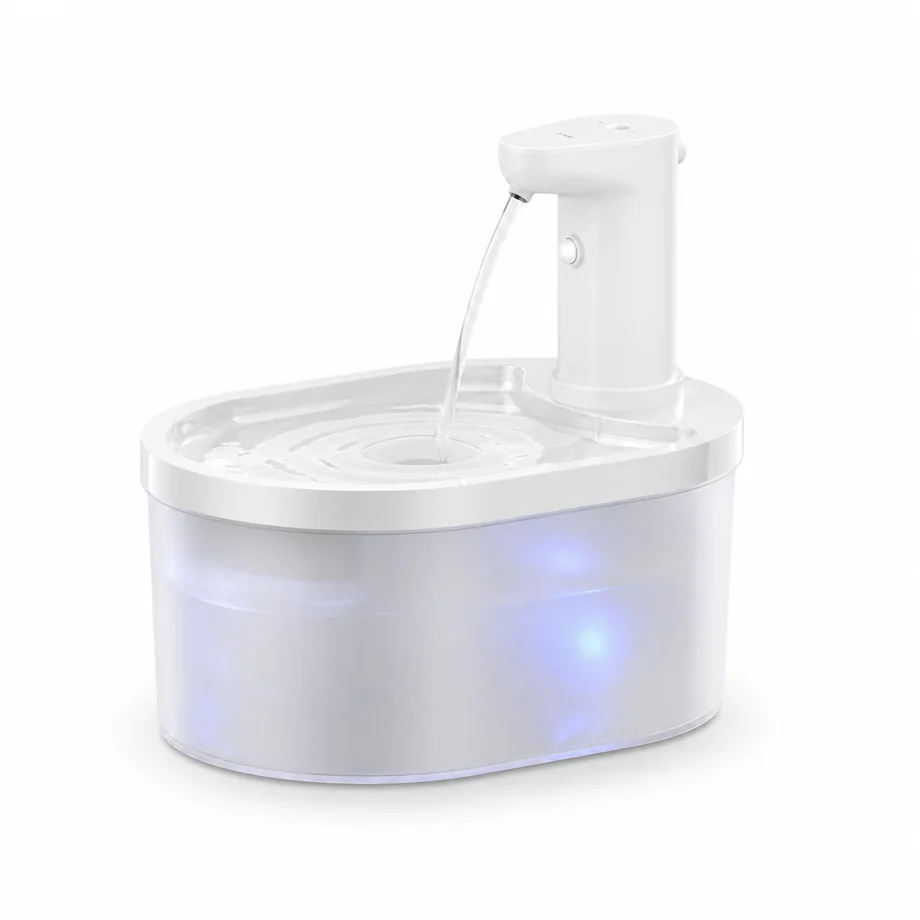
The floor is wet again, but the fountain still appears to be running normally. The puddle might be coming from the reservoir, from water thrown out by the stream, or from a cat pushing the whole unit a few centimeters at a time. By the time you find it, those very different events can look exactly alike.
If a cat water fountain is leaking, splashing or tipping over, first separate a true product leak from water caused by assembly, water level, blocked flow, uneven placement or cat interaction. A wet floor does not automatically mean the tank is cracked. Dry the fountain and its surroundings, test it away from pets on a light dry towel, and watch where the first water appears.
This guide follows that first wet point through bottom leaks, top overflow, splash, tipping, damp mats and post-cleaning assembly problems. It also explains what a pet water fountain can reasonably do to resist spills, when a home check is appropriate, and when water near power parts means you should stop using the fountain and contact the manufacturer.
Why Is My Cat Water Fountain Leaking or Splashing?
A wet floor is evidence of water movement, not automatic evidence of a defective fountain. First confirm whether the water comes from the tank or base, or from splashing, overflow, pawing or tipping. Dry the fountain, mat and floor, refill to the correct level, place it on a paper towel away from pets, and watch where the first wet spot appears.
Is It Really Leaking, or Is Water Being Splashed or Tipped Out?
A leaking fountain, a splashing fountain and a tipped-over fountain can leave the same wet floor, but they do not have the same cause. A true leak escapes from a part meant to contain water. Overflow leaves the intended water path because drainage cannot keep up. Splash crosses the rim while the fountain remains upright. Tipping moves the whole unit or tray. Residual wash water and a wet mat can create a fifth false lead.
Start with timing and location. Water that appears while pets cannot reach the fountain deserves a tank, seal or assembly check. Drops that appear only after drinking point toward the tray, stream or the cat’s fur and paws. A puddle after cleaning raises the probability of trapped water or incorrect reassembly, but it does not prove either one.
Tank · seam · seal
Tray · return path
Stream · landing point
Pawing · drinking
Base · surface · route
Refill · wash · wet mat
| What you see | Likely category | First check |
|---|---|---|
| Water appears while pets cannot reach the fountain | Possible true leak | Dry and isolate-test the tank and base |
| Water appears only after the cat drinks | Splash or energetic drinking | Observe the drinking edge and splash zone |
| Water appears after cleaning | Residual water or assembly issue | Dry fully; check lid, tube, seal, plug and filter holder |
| Water rises out of the tray or top | Overflow or slow return | Check MAX level, filter, return path and tray alignment |
| The whole fountain has moved | Pushing or tipping | Check footprint, surface, route and cable |
| The mat stays wet or smells damp | Trapped moisture | Remove it, dry both sides and inspect the floor |
PetSafe’s model-specific leak guidance makes the same core distinction: energetic drinking can look like a leak, so it recommends testing the fountain away from pets with paper towel underneath. That does not mean most puddles are harmless. It means source identification should happen before diagnosis.
Start With the 10-Minute Leak Test
The fastest useful check is not to stare at the largest part of the puddle. It is to reset the scene and find where water first reappears. Use the exact fountain manual because some tanks can be tested separately while others should not be powered or assembled in the same way.
- 1Unplug if electrical areas may be wet
- 2Dry fountain, mat and floor
- 3Refill only to the marked level
- 4Set on a light dry towel
- 5Keep pets away during the test
- 6Run only if the manual allows
- 7Watch for the first wet point
- 8Repeat after correct reassembly
- Disconnect power if any electrical area may be wet. Do not handle a wet plug, adapter or contact area while energized.
- Empty and dry the exterior. Pay attention to seams, the underside, cable channels and the joint between a tank and base.
- Dry the mat and floor separately. A mat can release stored water later and imitate a continuing leak.
- Refill only within the model’s permitted range. Do not overfill to make the test faster.
- Place the fountain or removable tank on a light dry towel. Use only the separation allowed by the manual.
- Keep pets away. Run the fountain only when that setup is safe and supported.
- Watch the first wet point. Note whether it begins at a seam, under the tank, near the tray or after water hits the drinking surface.
- If the problem began after cleaning, reassemble correctly and repeat. Compare the result with the dry, unpowered tank check where applicable.
Find the first wet point, not the biggest puddle. Water can travel along a cord, rim, tank wall or floor before it becomes visible.
PETLIBRO uses similar isolation logic for specific models. Its Glacier support page tells users to dry the tank, separate it from the filtration unit and observe it on a towel; its Capsule support page also distinguishes tank leakage from pet interaction and a cord-slot issue. These are useful examples, not a universal ten-minute guarantee. Slow or intermittent leaks may need longer observation or manufacturer support.
Why Is My Cat Water Fountain Leaking From the Bottom?
Water under the base can originate above it and travel downward, so “leaking from the bottom” describes where you found water rather than where it began. After drying the unit, inspect the water-containing tank first, then the interfaces and openings that belong to the exact model.
Possible causes include a cracked reservoir or damaged seam, a loose rubber or silicone plug, an incorrectly seated tank, a damaged gasket, water above the MAX line, or wash water trapped under a tank before reassembly. A tilted surface can also shift the tray level and send water over one side. On conventional corded designs, a cord opening or plug may need to be seated exactly as the manual shows. PetSafe’s support page documents that specific issue and illustrates the matching rubber-plug position for its ½-, 1- and 2-gallon fountains. Do not transfer that part layout to a cordless or sealed-base model.
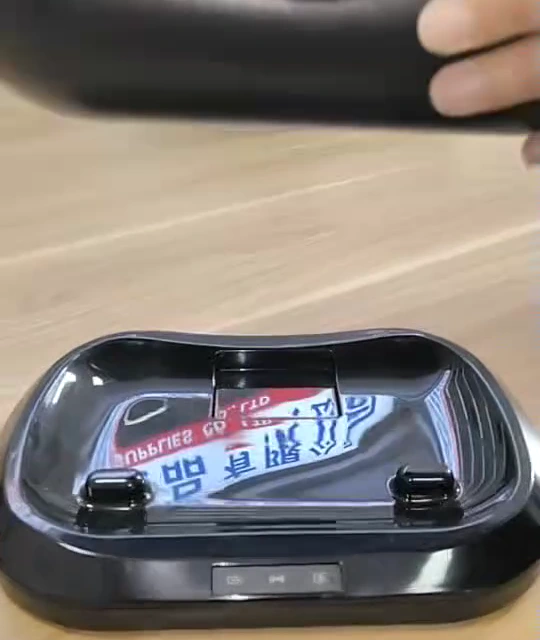 Tank-to-base seating
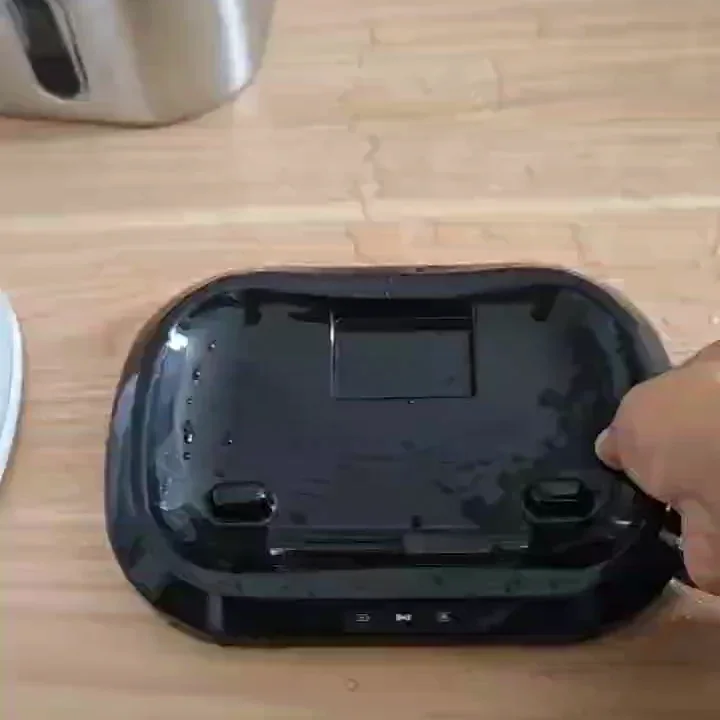 Underside and base interface
If water appears only after the pump starts, observe whether it comes from the outlet, a tube connection or water returning over the tray. If the pump is noisy, weak or intermittent as well, use the cat water fountain pump troubleshooting guide for the flow diagnosis. Do not open sealed electronics or substitute a different pump simply because its connector looks similar.
Condensation and residual wash water are less dramatic but common enough to check. Dry the empty exterior, allow concealed recesses to drain, then place the unpowered tank on a fresh towel if its construction permits. If a filled tank releases water from a crack or seam, stop using it and request the correct replacement part.
Why Is My Cat Water Fountain Overflowing From the Top?
Top overflow usually means water is entering the tray faster than it can return, or the tray is no longer level. The first checks are the permitted water level, lid and tray seating, filter fit, outlet alignment and the return openings. Do not assume that a stronger stream proves a healthier pump.
A filter or pre-filter loaded with hair can slow the return path. So can debris in an outlet or channel, an incorrectly prepared cartridge, a holder left slightly raised, or an incompatible replacement filter. Overfilling above MAX reduces the space available to handle normal circulation. A sloped counter raises the effective water level at one edge even when the reservoir marking looks correct.
PETLIBRO’s support instructions are deliberately model-specific. Its Glacier page asks users to inspect the outlet, pipe, mesh filter and gaps around the filtration unit. Its stainless-fountain overflow page names filter loading, pet play and a flat surface for two listed models. Those examples support the diagnostic categories; they do not establish one filter interval or assembly for every automatic pet water fountain.
Use the replacement filter formats page to see why similar-looking cartridges are not automatically compatible. For a full cleaning sequence, follow the cat water fountain cleaning guide and the model manual. If overflow began immediately after a filter change, recheck preparation, orientation, thickness and seating before blaming the pump.
Why Does My Cat Water Fountain Splash Water Everywhere?
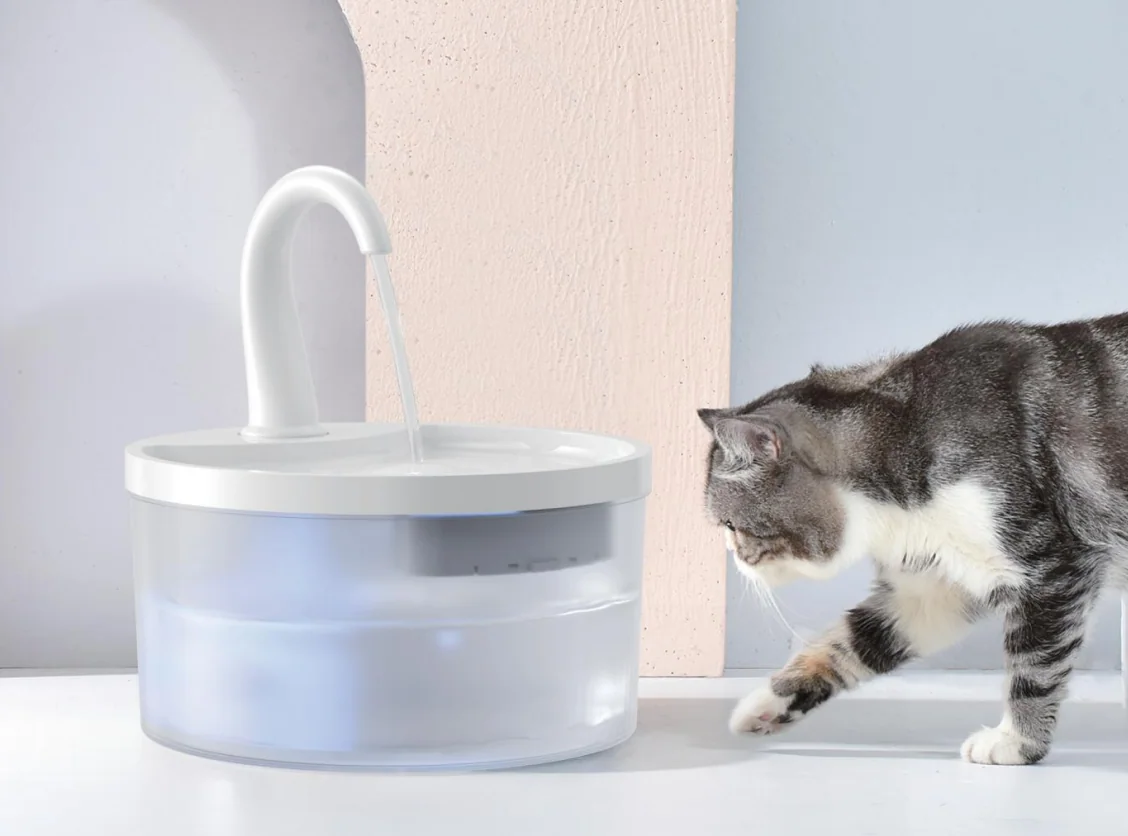
Splashing can happen when the flow is too strong, the outlet is misaligned, water falls too far, the tray is too shallow, the surface is tilted or the cat paws at moving water. A hard or raised landing point can also redirect droplets toward the rim.
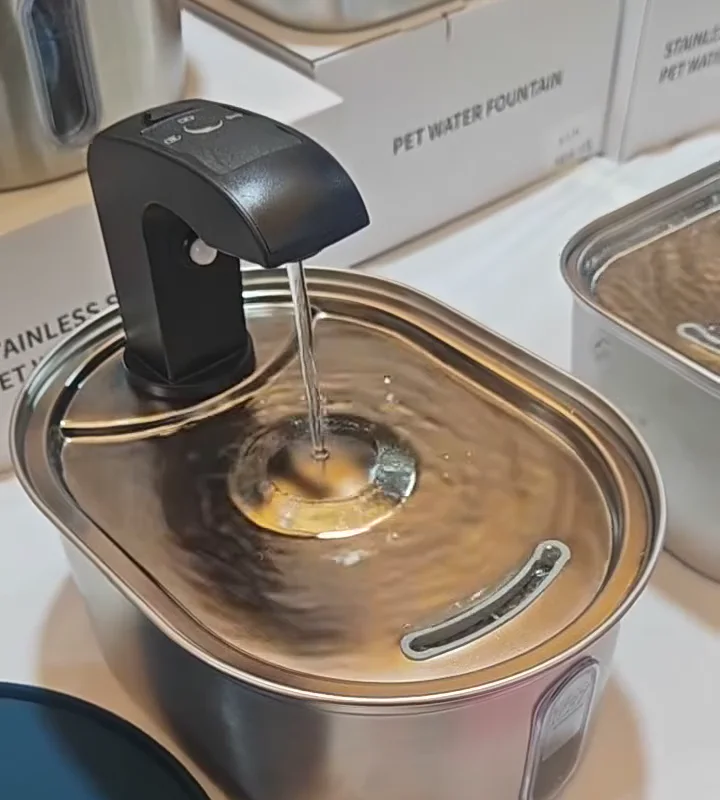 Raised landing surface
 Open tray landing point
In our fountain-sample reviews, the stream’s landing point, tray depth and rim height are considered together. Pump strength alone is not the useful target. A fountain can look clean in a still product photo yet splash when its stream strikes the wrong part of the tray, or when a spout and tray from different configurations are paired after reassembly.
Next observe the cat. Some cats drink at the edge, carry water on their chin or fur, or tap the moving stream with a paw. If the surface stays dry during the isolated test and becomes wet only after interaction, changing a seal will not solve the problem. Reduce adjustable flow if the manual permits, restore the correct outlet, lower the water to the approved range, and change one variable at a time.
If the cat approaches and retreats because the stream, sound or activation feels unfamiliar, the cat not using water fountain guide covers gradual introduction and flow presentation. Do not punish a cat for exploring water; protect the floor while you work out whether the behavior, setup or product geometry is driving the splash.
Why Does My Cat Keep Knocking Over the Water Fountain?
A cat may push a fountain because moving water is interesting, because pawing has become play, or because nudging the station reliably gets a response. The physical setup can make that behavior easier: a light body, narrow footprint, slippery surface, exposed cable or loose top gives the cat leverage. Accidental collisions in a busy route can look deliberate too.
Location changes the interaction. A fountain squeezed beside a door, food station or another cat’s route may be difficult to approach and leave. In a multi-cat home, one cat may move around the water station when another controls the easiest path. The AAFP/ISFM feline environmental needs guidelines recommend multiple and physically separated key resources; they do not prescribe a particular fountain shape.
Many cases are mechanical or behavioral, but a sudden change in drinking deserves context. VCA advises contacting a veterinarian when a cat’s drinking behavior changes unexpectedly. Increased thirst, urination, weight change, vomiting, lethargy or other illness signs are not problems to diagnose from the overturned fountain. Keep water accessible and discuss the pattern with a veterinarian.
How Do You Stop a Cat From Tipping Over a Water Fountain?
Stabilize the water station before trying to stop the cat. Put the fountain on a level, water-resistant surface in a calmer location, then check whether the base slides, rocks or presents an easy edge to lift. A wide footprint, lower center of gravity and non-slip contact can reduce movement, though none can make a fountain impossible for every cat to disturb.
More resistance to casual pushing
Less leverage at the rim
Even tray and reservoir position
Less sliding during pawing
Fewer collisions and cord pulls
Access remains if the station is disturbed
- Use a properly sized waterproof mat with a non-slip upper surface, and dry beneath it regularly.
- Keep the cable outside the approach and walking route so it cannot become a pulling point.
- Avoid tight corners and swinging doors; leave a clear approach and exit.
- Provide another clean water source while testing changes, especially if the fountain is frequently emptied.
- If the fountain has become a toy, add suitable play opportunities elsewhere rather than making water access unpleasant.
- Change one variable at a time and observe a complete drinking session.
The full cat water fountain placement guide covers stable surfaces, cables, charging, sensor direction and cleaning access. Where several cats share the home, the guide to water access for multiple cats explains why a second separated station can matter more than one larger reservoir.
What Does “No-Spill” or “Spill-Proof Cat Water Fountain” Really Mean?
No indoor fountain is truly spill-proof in every home. A product can be designed to reduce splash and tipping risk, but its result still depends on assembly, water level, surface, flow setting and cat interaction. “Spill-resistant” is usually the more accurate description.
Useful design variables include a wide base, low center of gravity, non-slip feet, stable tank seating, adequate tray depth, a rim that contains normal ripples, controlled outlet height and a landing point that does not direct water toward an edge. Clear MIN/MAX marks help prevent overfilling. Accessible filter and return paths make it easier to remove restrictions before the tray rises.
A sensor mode can reduce total flowing time on some products, but it does not correct a poor landing point and does not stop a cat from pawing. Likewise, a heavy stainless body can still slide on a wet counter or overflow after incorrect filter installation. Judge the whole configuration, not one material or feature.
Where Should You Put a Cat Water Fountain to Reduce Water on the Floor?
Choose a level, water-resistant surface with enough room to approach, drink and leave without hitting furniture or a door. Keep adapters, power strips and outlets away from the splash zone, route cables without tension, and leave room to lift the reservoir for cleaning without spilling.
A mat should catch minor droplets without hiding a continuing leak. Remove and dry it regularly; thick soft mats can make some bases less stable. Keep the water station separated from litter and, where practical, food. These choices also make refilling and cleaning less likely to create a new spill.
When Should You Stop Using the Fountain?
Stop using the fountain when water is coming from a crack or structural seam, reaches electrical contacts, the plug, adapter or a powered base, or continues after correct drying and model-specific reassembly. Also stop for a damaged cable, burning smell, abnormal heat, a reservoir that no longer seats securely, or a unit that cannot stand level.
Use this path when water reaches electrical contacts, a crack or seam is visibly releasing water, the cord is damaged, or abnormal heat, odor or operation appears.
Do not keep running the fountain to “see if it clears.”CPSC electrical-safety guidance says not to use damaged electrical cords and to unplug an electrical product before touching it if it falls into water. For a fountain, the practical response is to disconnect safely, dry the area and contact the manufacturer or seller. Do not open sealed power modules, bypass protection, tape over a damaged cable or keep cycling power to reproduce the fault.
Send the model number, order date, photos of the first wet point and a short video if it can be recorded without energizing a wet or damaged product. This gives support a better starting point than a photo of the final puddle.
What Should Brands and Retailers Check Before Calling a Fountain “Spill-Resistant”?
For brands and retailers, leak, splash and tipping complaints sit across design, assembly, instructions, user setup and cat behavior. A pump-flow check alone cannot evaluate the claim. The reviewed sample should represent the final tank, seal, filter, outlet, tray and base configuration.
In OEM platform reviews, we check where the stream lands, how the tray returns water, how the tank sits after reassembly and whether the user can identify the correct water level. The review also covers base movement, non-slip contact and whether cleaning instructions make it easy to restore the approved configuration. A tolerance that seems small at one interface can move the outlet or leave a tray sitting unevenly.
Before retail wording is printed, document tank sealing, plug or gasket fit where applicable, MAX/MIN marks, filter orientation, return-path blockage points, pump and mode, outlet landing point, tray depth, rim height, base stability and the mat recommendation. The after-sales checklist should begin with isolation and source location, then separate product damage from pet interaction.
For private-label projects, we prefer “designed to reduce splashing” or another defined, supportable statement over an absolute spill-proof promise. Compare current cat water fountain platforms, then use the cat water fountain quality-control checklist to carry the approved water path, accessories and assembly into production inspection.
Frequently Asked Questions
Why is my cat water fountain leaking?
It may be a true tank, seam or loose-seal leak, but water can also come from splashing, overfilling, incorrect assembly, a blocked return path, a tilted surface or the cat pushing the fountain. Dry everything and locate the first wet point before replacing parts.
Why is water collecting under my cat water fountain?
Water can travel down the tank, rim or cord channel and collect under the base. Residual wash water and moisture trapped under a mat can do the same. Test the dry fountain and mat separately.
How can I tell if it is a real leak or just splashing?
Dry the fountain, mat and floor, refill to the correct level, place it on a dry paper towel away from pets and observe where the first wet spot appears. If it stays dry until the cat drinks or paws, splash is more likely. If a seam or tank wets the towel by itself, stop and inspect that part.
Why does my cat water fountain leak from the bottom?
The tank may be cracked or incorrectly seated, a model-specific plug or gasket may be loose, or water may be traveling down from the tray. Water trapped after washing can also appear later. A dry isolation test helps separate these possibilities.
Why does my cat water fountain overflow from the top?
Common checks include water above MAX, a clogged or incorrectly seated filter, blocked return openings, a misaligned tray or outlet, excessive flow for the tray and a tilted surface. Use the manual because water paths vary.
Why does my cat water fountain splash water everywhere?
The flow may be too strong, the outlet may be misaligned, the water may fall too far, the landing surface may redirect droplets, or the cat may paw at the stream. Tray depth and rim height matter alongside pump flow.
Why does my cat keep knocking over his water fountain?
Play, curiosity, learned attention, a light or slippery base, an exposed cable and an awkward location can all contribute. Observe how the movement starts instead of assigning one motive to every cat.
How do I stop my cat from tipping over the water fountain?
Use a wider stable base on a level non-slip surface, clear the approach route, protect the cable and provide another water source during changes. Do not punish the cat or make water difficult to access.
Is there a truly spill-proof cat water fountain?
No fountain is spill-proof in every home. Designs can reduce risk through a stable base, controlled flow, suitable tray and clear assembly, but setup and cat interaction still matter.
Should I stop using the fountain if water reaches the cord or base?
Yes. Disconnect it safely, dry the area and stop using it until the exact model has been inspected. Do not energize wet contacts or repair a damaged cord with tape.
Find the Water Source Before You Replace the Fountain
Begin with one controlled observation: dry the fountain, mat and floor, use the correct water level, keep pets away and find the first wet point. Water from a tank or seam calls for a different response from water that appears only after the stream runs or the cat drinks.
Recheck assembly and return paths for overflow, stream position and tray geometry for splash, and base stability and location for tipping. Stop immediately when water reaches electrical areas or damage is visible. The wet floor is the symptom; the source is what tells you what to do next.
About This Guide
Tony Kong is an R&D Engineer at Fountelio. This guide combines source-specific support instructions from PetSafe and PETLIBRO with Fountelio’s product-configuration perspective. The diagrams organize diagnostic decisions; they are not universal internal drawings or records of a measured leak test.
Sources & References
- PetSafe — Drinkwell ½-, 1- and 2-gallon fountain leak troubleshooting. Pet interaction, paper-towel isolation, crack and rubber-plug checks for named models.
- PETLIBRO — Glacier Fountain leak and overflow support. Tank isolation, pet observation, water level, outlet and assembly checks for PLWF007/WF007.
- PETLIBRO — Capsule Fountain leak support. Tank test, cord-slot plug, pet interaction, mat and overflow guidance for PLWF002/WF002.
- PETLIBRO — Stainless Steel Fountain overflow support. Filter loading, pet play and level placement for WF003/WF006.
- AAFP/ISFM — Feline Environmental Needs Guidelines. Multiple and separated water and other key resources.
- VCA Animal Hospitals — General feeding guidelines for cats. Veterinary review when drinking behavior changes.
- U.S. Consumer Product Safety Commission — shock and electrocution prevention. Damaged-cord and water-contact precautions.