

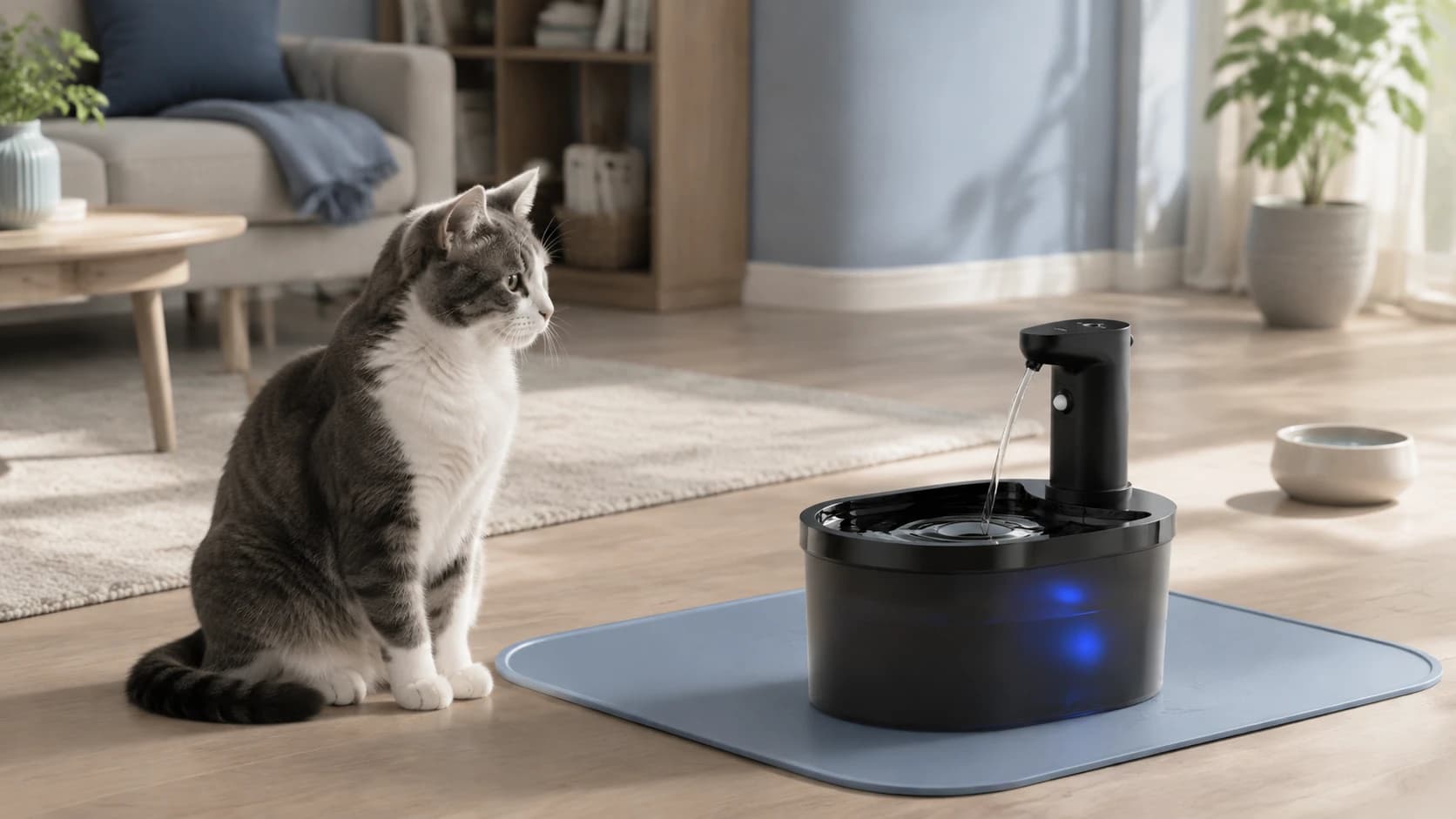
A new fountain is running, but the old bowl is still the one being used. That is a different problem from a fountain your cat used yesterday and ignores today. Before moving it or buying a replacement, establish which situation you are dealing with.
For a cat not using a water fountain, useful checks include unfamiliarity, noise, flow, location, water preparation, drinking geometry and sensor behavior. These are possible explanations, not diagnoses from a single sniff or retreat. If drinking has dropped across all sources or your cat seems unwell, seek veterinary advice instead of continuing product-only trials.
My starting point is what the product is doing: the sound at tray height, the stream's landing point, the water level and the moment a sensor starts the pump. Those details give us something to check. The fountain selection guide covers design choices; here, the task is to work out what deserves attention in an existing setup.
Why Is My Cat Not Using the Water Fountain?
Your cat may be responding to novelty, sound, flow, access, smell, drinking geometry or a change in operation. It may also prefer another water source. First check whether drinking is normal elsewhere; then use the fountain's history to choose a sensible starting point.
Is Your Cat Refusing the Fountain—or Water Altogether?
If your cat drinks normally from another clean source and otherwise seems well, investigate the fountain and setup. A marked reduction across available sources, or a cat that seems unwell, needs veterinary advice. Changing a spout is not an appropriate response to a broader change in health or drinking.
Not seeing a drink is different from confirming reduced intake. Cats may drink when you are absent, and wet food contributes water. Compare with your cat's usual pattern, including diet, appetite, energy and litter-box habits. PetMD's veterinary-reviewed guidance explains why diet, stress, mouth pain and illness can all be relevant; those possibilities cannot be diagnosed from fountain avoidance.
If you are unsure whether intake is adequate, contact your veterinarian for advice rather than assuming either a product fault or dehydration. Do not withhold familiar water to find out whether the cat will eventually use the fountain.
Is drinking normal at another clean water source?
Check the fountain and setup
↓
Has this fountain ever been used?
Check the usual pattern, diet and other water sources.
Marked reduction or unwell?
Contact a veterinarian; stop product-only trials.
Not seeing a drink alone does not establish low intake.
A product-troubleshooting aid, not a veterinary diagnostic chart.
Did Your Cat Never Use the Fountain—or Stop Using It Later?
A never-used fountain calls for an introduction and setup check. A previously accepted fountain calls for a comparison with its last normal use. These are starting priorities, not mutually exclusive causes: a moved fountain can create a new access problem even when its pump still works.
For later avoidance, note what happened just before it began: cleaning, filter replacement, charging, a move or falling water level. For a new unit, establish that assembly and operation match the manual before evaluating preference. A short note about the last change is more useful than trying all ten fixes in order.
What Are the 10 Most Common Reasons a Cat Avoids a Water Fountain?
Use these ten common checks to decide what to inspect first. The observations overlap, so the table does not identify a cause or rank reasons by measured frequency.
| Possible reason | What you may notice | First thing to test |
|---|---|---|
| 1. Unfamiliar object | Watches without using it | Keep a predictable setup; allow voluntary investigation |
| 2. Noise | Approaches, then leaves | Listen for pump, vibration and water-impact sound |
| 3. Flow | Hesitates at the stream | Try a calmer permitted setting |
| 4. Location | Rarely approaches the station | Check traffic, entry and exit |
| 5. Beside food | Uses water elsewhere | Offer a separate drinking zone |
| 6. Litter / shared route | Waits or turns away nearby | Provide independently accessible resources |
| 7. Smell / taste | Sniffs and leaves | Refresh water; verify rinsing and filter preparation |
| 8. Surface / height | Reaches awkwardly or avoids an edge | Compare the accessible drinking area |
| 9. Changed operation | Used it before, then stopped | Check water, assembly, pump, filter and mode |
| 10. Bowl preference | Repeatedly chooses the clean bowl | Keep that reliable option |
Is the Fountain Still Too New or Unfamiliar?
Possibly. A new fountain introduces an object, sound, water movement and drinking surface together. Hesitation does not establish permanent rejection. Allow voluntary investigation while keeping the surroundings predictable and the familiar clean water source available.
Cats Protection's settling-in advice emphasizes individual pace in a new environment. That supports a patient approach, but it is not a fountain-specific acceptance timetable. Avoid repeatedly relocating the unit after every brief visit. Never carry the cat to the tray or put its paw into the stream to force interaction. If the model permits a quieter or calmer setting, try it without changing everything else.
Is the Pump or Water Flow Too Noisy?
Sound is worth checking, especially if it has changed. Pump hum, housing vibration and water striking the tray are different sources. Low water, debris, scale or incorrectly seated parts can alter operation. A retreat near the fountain alone does not show which sound, if any, affected the cat.
I separate the steady hum from the splash before choosing a fix. Listen at a normal fill level and, only within the manufacturer's permitted range, as the level falls. Do not run a pump dry to test it. Check whether the base is level and parts touch or vibrate against each other.
- Pump
- Mechanical hum; inspect accessible parts as instructed.
- Housing / support
- Vibration; check seating and a firm, level surface.
- Stream / tray
- Water impact; observe height and landing point.
- Water level
- Sound may change as water falls; stay within the marked range.
These are inspection points, not measured sound levels or a diagnosis of avoidance.
If filling to the proper level restores normal operation, maintain that level. If the sound persists, switch off the unit before inspecting accessible pump parts and assembly. The pump and fountain cleaning guide explains the maintenance route. A phone recording may help you compare the same setup over time, but it does not establish a universal sound threshold acceptable to cats.
Is the Water Flow Too Strong or Unpredictable?
Flow can be a preference variable. A tall falling stream, a shallow moving surface and a flow that starts suddenly offer different drinking experiences. The useful question is what changes when your cat approaches, not whether one flow style is universally better.
When comparing outlets, I look at the landing point as well as the spout. A similar stream height can produce a different splash when it meets a raised surface instead of a deeper tray. Try a lower or calmer setting only if the model supports it; do not obstruct the outlet or modify the pump.
Keep location and water preparation stable during that trial. On rechargeable models, plugging in may also change the available flow mode. Check the power-state and flow-mode differences before interpreting a change in use. A calmer stream is an option to test, not a promised solution.
Is the Fountain in the Wrong Location?
A working fountain can still be awkward to approach. Busy doors, sudden appliance activity, a narrow gap or another pet occupying the route are useful things to inspect. On a sensor model, the same route also determines whether the cat enters the detection area.
Watch an ordinary approach without guiding the cat. If it stops before reaching the fountain, consider the surrounding zone before changing the outlet. Move to one quieter, accessible position and keep the operating mode stable. Our fountain placement guide covers resource separation, cable routing and clearance in detail.
Is the Fountain Too Close to the Food Bowl?
Separating feeding and drinking is a sensible setup check. The AAFP/ISFM environmental guidelines recommend separate food and water resources. This does not prove that proximity to food caused this cat's avoidance.
If the fountain shares the feeding mat, offer water in another suitable zone with an independent approach. Keep the familiar water source available. There is no universal distance in feet or meters in this guidance, and no need to invent a contamination instinct to explain the recommendation.
Is the Fountain Too Close to the Litter Box or Another Cat’s Resource?
Give drinking and toileting ample separation, and consider who controls the route to the water. A full reservoir is of little help if a cat repeatedly turns back at the doorway. Several bowls together may still function as one shared resource zone.
The 2024 AAFP intercat guidelines recommend multiple visually separated feeding and water stations. Try another accessible water location rather than just another vessel beside the first. Waiting or turning away is a reason to observe access more closely, not proof of aggression or a behavioral diagnosis. No fixed fountain-per-cat rule is implied.
Does the Water Smell or Taste Different in the Fountain?
Smell and taste are worth checking, particularly after first setup, washing, a filter change or a change in water source. VCA's water guidance notes that cats can have smell and taste preferences and stresses cleaning and rinsing vessels. Sniffing and leaving does not isolate the cause.
Refresh the water and follow the manual for washable components. Check for cleaning residue, incorrectly prepared media or an unexpected persistent odor. Do not mask an unexplained smell with additives. A smell you notice after unpacking does not establish that plastic, metal or the filter caused rejection; investigate preparation before replacing the whole product.
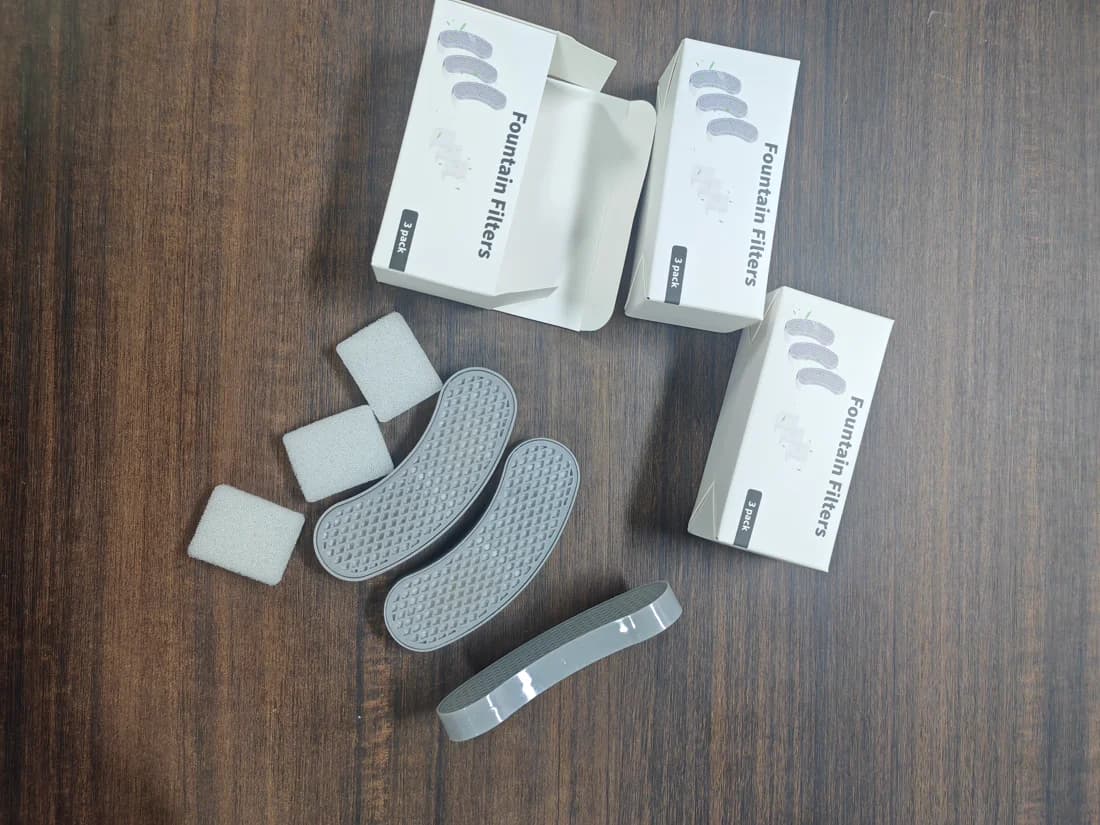
The filter replacement guide separates preparation, visible loading and service intervals. Replacing a filter does not clean the reservoir or tray.
Is the Drinking Surface, Height or Shape Uncomfortable?
Geometry can be another trial variable. Tray width, rim depth, outlet position and drinking height affect where the cat can place its face. Look for an awkward reach or repeated attempts to use one edge, while remembering that posture alone does not diagnose pain or preference.
If a different outlet or accessible surface is supported by the same model, compare it before buying a new unit. Avoid unstable improvised stands. A wider tray does not automatically solve a problem if the only usable water is directly beneath a tall outlet.
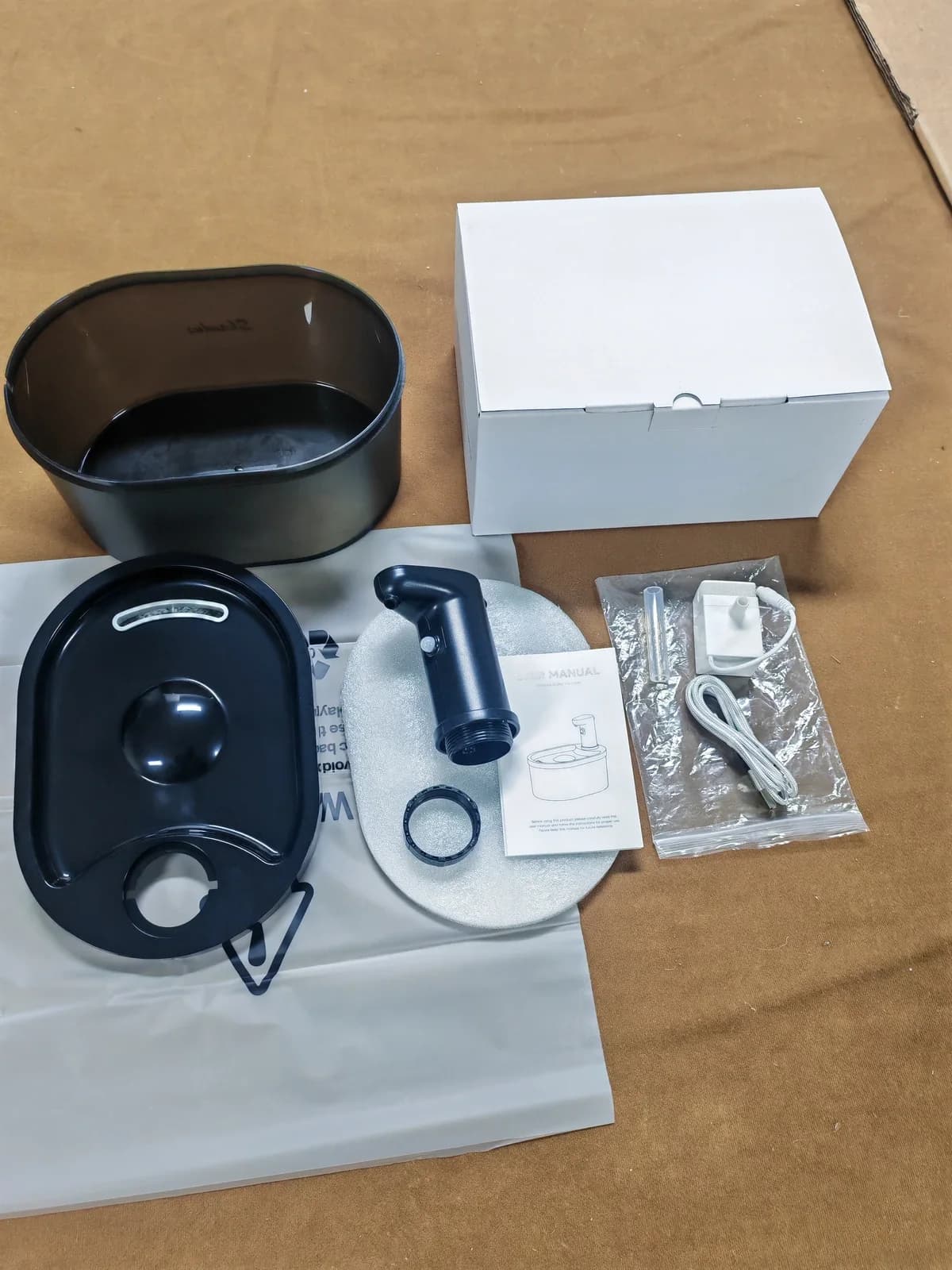
Tray: where is water accessible?
Rim: how far must the face reach?
Outlet: where does the stream land?
This component photograph shows the parts, not a test of comfort or acceptance.
Whisker fatigue is described as a theory, not an established explanation for fountain refusal. Reflections and surface color likewise belong among individual trial variables, not universal causes. The materials comparison explains why the material name alone says little about finished geometry.
Has the Fountain Changed Since Your Cat First Used It?
If your cat previously used it, compare current operation with the last normal use. Check water level, freshness, pump and filter condition, outlet seating, power state and mode. An unchanged exterior can hide a changed stream, louder pump or different activation timing.
I would reconstruct the last maintenance step before replacing a component. If avoidance began after washing, check assembly and rinsing. If flow weakened gradually, inspect loading and accessible pump parts. A symptom that appeared after charging deserves a mode check as well as a battery check.
Use the model's procedure to restore clean, correctly assembled operation first. Do not buy successive filters while leaving a dirty pump untouched, or bypass parts to force stronger flow. If operation remains abnormal, ask the manufacturer for support with the model number and what changed.
Is the Sensor Triggering at the Wrong Time—or Not at All?
Observe approach, activation and water delivery separately. My check would include the cat's actual direction and whether the selected mode is available on battery. A rear approach can miss a directional field, while a start close to the tray may make the flow feel different from a continuous stream.
- ApproachWhich direction does the cat take?
- DetectionDoes it enter the specified active field?
- Water startsObserve timing in the selected power/mode state.
- What happens next?Note use or departure without assigning a cause.
Conceptual sequence. Detection, flow and recording may be separate functions on the exact model.
The PETLIBRO Dockstream 2 FAQ describes missed drinking registration from a rear approach in sensor mode and a model-specific wall-placement suggestion. A missing app entry is not proof that no water was delivered. Follow your model's setup instructions rather than applying that wall advice universally. Wireless pump and cordless operation are also separate from sensor control.
Does Your Cat Simply Prefer the Familiar Water Bowl?
Yes. Repeatedly choosing a clean bowl can be a valid outcome once reliable water access and normal drinking are established. More features do not make the fountain necessary, and a preference for one bowl does not show that all moving water will be rejected.
In Robbins and colleagues' controlled study, 14 cats completed comparisons of still, circulating and free-falling water. Group water intake did not differ significantly between presentations; three cats showed significant individual preferences. The study does not support a general promise that a fountain will increase drinking.
Keep the chosen water source clean and accessible. If both options remain available, separate suitable zones can offer location choice as well as different presentations. The fountain versus bowl guide examines those trade-offs without assuming a winner.
How Should You Introduce a New Cat Water Fountain?
Prepare it correctly, choose an accessible location and let the cat investigate without pressure. Keep its familiar clean water source available throughout. Judge repeated voluntary use rather than a single first reaction, and do not set a deadline by which every cat must accept it.
- Wash and rinse the permitted parts.
- Prepare and fit the exact filter as instructed.
- Assemble, fill and check normal operation.
- Place it in a suitable separate water zone.
- Keep the established water source available.
- Try a calmer flow if the model allows it.
- Observe voluntary approaches and repeated use.
A pump-off introduction is only an option if the design permits clean, accessible standing water in that state. Never run a pump without enough water or assume a stopped fountain always leaves a drinkable tray. There is no need to force a staged introduction on a cat already comfortable using it.
Why Should You Change One Variable at a Time?
Changing the room, spout, water source and filter together makes the result hard to interpret. Correct obvious faults and dirty conditions first, then choose one setup variable to test while keeping the others reasonably stable. This is a practical product method, not a validated feline behavior protocol.
ObservationFlow became uneven after reassembly.
One correctionReseat the outlet as the manual instructs.
Keep stableSame location, water source and permitted mode.
Observe againDid flow recover? Does voluntary use return?
Illustrative product check. Correct unsafe or dirty conditions promptly; do not preserve a fault for comparison.
Choose the order from the observation: noise suggests checking water and assembly; avoidance of the whole zone suggests access; an unexpected start suggests mode or sensing. Record the adjustment and what happened next. There is no value in keeping an unsafe or unclean condition unchanged merely to preserve a comparison.
When Should You Stop Trying to Make Your Cat Use the Fountain?
If normal drinking continues from a clean alternative after reasonable maintenance and setup adjustments, keeping the bowl may be the right answer. You do not need to keep changing products to prove that a fountain can work.
A useful stopping point is when the unit works as intended, access is suitable, and repeated observation still favors the alternative. That is not a failure of ownership. Continue maintaining the water source your cat uses.
When Is This No Longer Just a Fountain Problem?
A sudden or persistent marked change in drinking, especially across water sources or alongside poor appetite, lethargy, vomiting or unusual urination, needs veterinary attention. Do not keep trying product settings while your cat appears unwell.
The veterinary guidance on reduced drinking explains that mouth pain, stress and illness are among possible causes. Contact your veterinarian promptly for advice about the change; seek urgent veterinary care if your cat is severely unwell. A fountain trial cannot assess hydration or treat an underlying problem.
Tell the clinic when the change began, whether other water sources are used, any diet changes and other signs you noticed. You do not need to identify the cause before asking for help.
What Should Brands Test Before Approving a Fountain Sample?
Check the whole operating experience, including startup, the permitted water-level range, outlet geometry, sensor approach and maintenance instructions. A working pump alone does not show that the configuration is easy to introduce or keep consistent after cleaning.
For sample review, I want startup and normal running checked separately, then the same checks after reassembly. Those comparisons can expose a seating or mode issue that a brief product video misses. They still do not establish how every cat will respond.
- Startup sound, steady pump sound, vibration and water impact.
- Flow height and behavior from normal fill to the marked minimum.
- Tray access, stability and outlet seating.
- Specified sensor range, direction and power-state behavior.
- Filter preparation, rinsing, residual odor and cleaning access.
- Clear introduction and backup-water guidance.
Document the exact configuration during quality review. Instructions should explain permitted adjustments and support steps, not promise universal cat acceptance.
What Should You Check Before Deciding Your Cat Dislikes the Fountain?
Use the checks that match the history, with another reliable water source available.
- Drinking is normal elsewhere, or veterinary advice has been sought.
- Water, tray, reservoir and accessible pump parts are clean.
- The filter is prepared, fitted and replaced as instructed.
- Fill level, assembly and selected mode are correct.
- The approach, resource separation and sensor direction work together.
- Noise, flow and geometry have been considered individually.
- Repeated bowl preference remains an acceptable outcome.
What Are the Most Common Questions When a Cat Won’t Use a Water Fountain?
Why does my cat look scared of the fountain?
Novelty, sound, movement or the location may be worth checking. One retreat does not identify the cause. Allow voluntary investigation.
How long should I give my cat to adjust?
There is no universal timeline or guarantee of acceptance. Keep reliable water available and look for repeated voluntary use.
Should I remove the old water bowl?
No. Keep a clean source your cat already uses throughout introduction and troubleshooting.
Can I add flavoring to encourage use?
Do not use additives to mask an unexplained odor. Ask your veterinarian and check the fountain instructions before changing what goes into the water.
What if it worked before the last cleaning?
Start with rinsing, part seating, filter fit and the selected power/flow mode. Also check whether drinking has changed elsewhere.
What if my cat still wants only the bowl?
A clean, accessible bowl is a valid option when drinking remains normal. The fountain does not have to replace it.
What Should You Do If Your Cat Still Won’t Use the Fountain?
Separate fountain avoidance from a broader drinking change. For a fountain-specific problem, start with its history, correct faults and test one relevant variable at a time. Keep another reliable water source available.
From a product standpoint, I can compare sound, flow, geometry and control behavior. I cannot make one water presentation right for every cat. The goal is reliable access to water, not proving that the fountain has to win.
About This Guide
Written by Tony Kong, R&D Engineer at Fountelio. Fountelio manufactures cat water fountains. Tony's product-review priorities are separated from published water-source research and attributed veterinary guidance; this article does not diagnose a cat's health or behavior.
The Hero is an illustrative home scene based on Fountelio product assets. Diagrams explain troubleshooting relationships, not measured behavior or exact teardown details. Product footage shows construction or operation, not proof of preference or comparative sound performance. Follow the manual for the exact model.
Sources & References
- PetMD: Why Your Cat Won’t Drink Water and What To Do
- Robbins et al. (2019): still, circulating and free-falling water study
- AAFP/ISFM Feline Environmental Needs Guidelines (2013)
- AAFP Intercat Tension Guidelines (2024)
- VCA: Tips to Encourage Cats to Drink More Water
- Cats Protection: Bringing a Cat Home
- PetMD: Whisker Fatigue in Cats
- PETLIBRO Dockstream 2 FAQ