

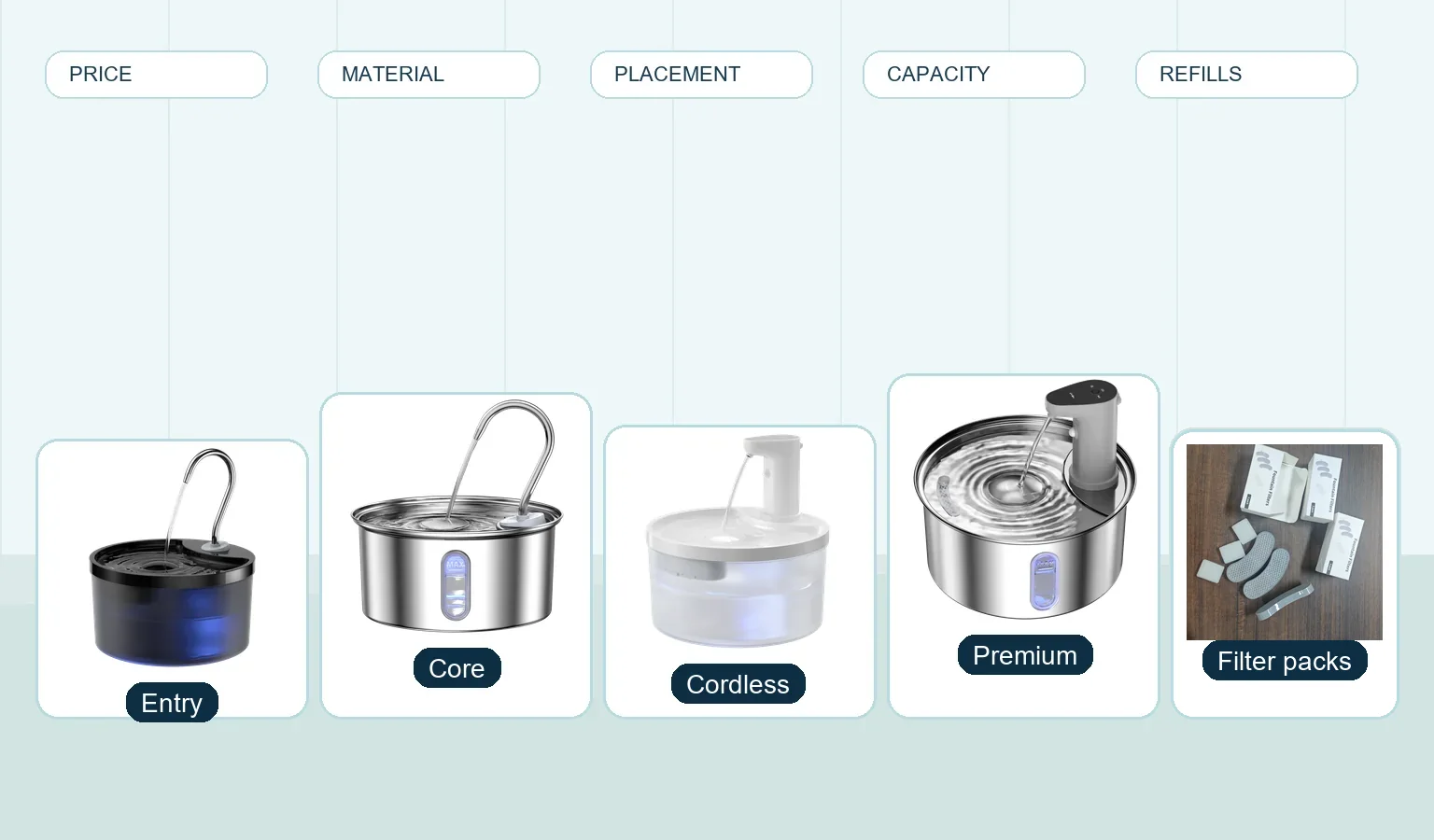
A retailer wants enough cat water fountains to offer a real choice. One model feels too narrow, but ordering every available shape, color and power version creates a different problem: cash is split across similar SKUs, the shelf becomes harder to read, and staff need to explain more filters and spare parts. The first buying decision is therefore the assortment, not the individual fountain.
Retailers should plan cat water fountains as a small category range rather than a single SKU. A practical starting assortment normally covers an entry option, a core everyday model, a premium material choice, a cordless or placement-flexible option, and compatible filter support. The exact mix depends on the channel, target price position, available shelf or listing space, customer profile, inventory budget and MOQ.
This guide builds that range around shopper needs, then checks price tier, material, power type, capacity, maintenance, replenishment and packaging. It also shows how a store, ecommerce seller or distributor can begin with a controlled pet water fountain selection and add depth only after sell-through, returns and service questions show where demand is real.
How Should Retailers Plan a Cat Water Fountain Assortment?
Start with the smallest range that covers the main buying reasons: entry price, everyday use, premium material, cordless placement, larger capacity and filter replacement. Avoid too many similar SKUs in the first order. Choose models that are visually distinct, easy to compare, practical to replenish and supported by clearly matched filters or service parts. Expand only after sales and customer feedback show which tier needs more depth.
Retail Assortment Planning Is Not Product Collecting
More fountain SKUs do not automatically create a stronger category. A useful assortment gives each item a job: open a price point, anchor everyday comparison, offer a material upgrade, solve a placement constraint, serve a larger household or support the installed product with refills.
That distinction matters because breadth consumes inventory and attention. Six fountains that differ mainly by outline can be harder to sell than three models with obvious roles. The retailer still needs enough stock behind each listing, a clear explanation for staff or product pages, and the correct filter and service reference.
The NIQ merchandising and assortment guide connects assortment decisions across physical and digital channels and highlights the pressure created by limited shelf space and SKU rationalization. McKinsey likewise places the assortment plan between category vision and buying in its retail merchandising workflow. The practical point for this category is simple: define the range before negotiating individual SKUs.
In assortment discussions we handle, buyers often begin with model count. We find the conversation becomes more productive when every proposed model must answer, “Which shopper need does this cover that the existing range does not?”
Start With Shopper Needs, Not Product Shapes
A strong range translates different shopper missions into distinct product roles. Shape and color can help presentation, but they are weak reasons to add inventory when the underlying price, material, power and maintenance story is unchanged.
Start with the questions a shopper brings to the category. Is this a first fountain? Is placement away from a wall outlet important? Does the shopper want stainless steel, more capacity or a simpler maintenance plan? Will replacement filters be easy to identify after the sale? Those questions create a workable category map.
| Shopper need | Retail product response | Suggested SKU role | Support item |
|---|---|---|---|
| First purchase / entry price | A simple standard-powered model | Entry | Compatible filter pack |
| Everyday comparison anchor | A broadly useful, easy-to-explain platform | Core | Filter and setup guide |
| Material upgrade | A stainless steel or design-led option | Premium material | Surface-care guidance |
| Cordless placement | A rechargeable platform with clearly stated modes | Placement option | Charging and model support |
| Multi-pet or larger-capacity use | A suitable larger reservoir and accessible drinking area | Use-case option | Correct filter and pump reference |
| Ongoing maintenance | Matched filter multipacks and supported service parts | Replenishment | Compatibility reference |
| Private-label program | A coherent model family with consistent packaging | Brand range | Manual, barcode and after-sales plan |
This method also prevents one feature from being asked to carry the whole assortment. A larger reservoir is a capacity choice, not automatically a premium choice. Cordless operation is a placement and power choice, not a guarantee of better flow or easier cleaning.
Build a Good / Better / Best Range
A good / better / best structure gives shoppers a visible reason to move between price tiers. The difference should be understandable from the product and packaging: simpler entry configuration, a well-balanced core model, then a premium step based on material, placement, capacity or design.
The core tier matters most as a comparison anchor. “Better” does not have to mean the largest specification list. It should be the model that represents the retailer's everyday proposition and can be stocked, explained and supported consistently. “Best” needs a concrete step-up; changing only the finish can leave shoppers wondering why the price changed.
Clear value and a simple first purchase
The everyday model that anchors comparison
A visible material, placement or design step-up
Filters and service parts matched to the range
| Tier | Role | Product type | Buyer expectation | Retail note |
|---|---|---|---|---|
| Good | Open the category at an accessible price | Standard plastic or another simple proven platform | Clear function without an overloaded feature story | Keep the difference from the core model visible |
| Better | Anchor the everyday comparison | Core plastic or stainless platform with a clear step up | Balanced material, maintenance and price | Give this role the clearest explanation and refill support |
| Best | Offer a meaningful premium choice | Cordless, stainless, larger-capacity or design-led platform | A visible reason to trade up | Premium must be more than a different color |
| Add-on / refill | Keep the installed base usable | Filter pack and supported service part | Easy compatibility identification | Place beside the correct fountain online and in store |
Keep filters outside the price ladder. They support the installed base and should be grouped by verified compatibility, not positioned as a premium fountain tier.
Core SKU Roles for a Cat Water Fountain Assortment
Every SKU needs a role that is easy to state in one sentence. If two products answer the same need at the same price and use different filters, the second SKU may be adding more support work than customer choice.
| SKU role | What it covers | When to include | Risk if missing |
|---|---|---|---|
| Entry model | Price-sensitive and first-time buyers | When the category needs an accessible starting point | The assortment may appear expensive or intimidating |
| Core model | The broadest everyday use case | Almost every focused range needs one | Shoppers have no obvious reference point |
| Premium material | Shoppers comparing finish and construction | When material creates a clear trade-up | The range lacks a visible premium step |
| Cordless / rechargeable | Placement flexibility and cable concerns | When the channel can explain modes and charging | A real shopper mission goes uncovered |
| Larger-capacity / multi-pet | Households seeking more water volume or access | When size differs meaningfully from core | Larger households must compromise |
| Filter refill | Routine replacement for sold models | From the first fountain launch | Customers cannot easily maintain the product |
| Pump / service part | After-sales resolution where separate supply is supported | When the exact platform has an identifiable service reference | Returns may replace a serviceable product |
A retailer does not need every role on day one. A small store may combine core and premium material in one stainless model, while a distributor may separate several capacities or power systems. The test is whether the role is visible and the inventory commitment is justified.
Before assigning roles, review the available cat water fountain platforms. Treat the product photo as a starting point; the exact pump, filter, outlet, power system and carton configuration define the SKU that will actually be ordered.
Material Mix: Plastic, Stainless Steel and Ceramic
Material is one of the clearest ways to separate entry, core and premium choices, but it should not become a quality shortcut. A plastic model can provide accessible pricing and lower shipping weight. Stainless steel gives a different finish and material story. Ceramic can suit design-led ranges, while its weight and breakage risk need to fit bulk handling.
Retail copy should describe the actual water-contact parts and construction rather than reducing the fountain to one headline material. A stainless tray on a plastic reservoir is not the same configuration as a stainless housing, and “ceramic” still leaves the pump, cable, filter and internal interfaces to review.
The stainless steel vs plastic cat water fountain guide goes deeper into cleaning access, scratches, weight and construction. For assortment planning, use material when it creates a visible price or use difference and avoid stocking several models that tell the same story.
Power Mix: Plug-In, Cordless and Wireless-Pump Options
Power and pump architecture affect placement, product explanation and after-sales support. A standard plug-in model can anchor entry or core. A rechargeable model can answer placement flexibility. A wireless-pump platform changes the relationship between reservoir, base and pump, which can change cleaning and service references.
Do not treat “cordless” and “wireless pump” as interchangeable labels. Cordless describes how the product is powered during use. Wireless pump describes the pump arrangement inside the fountain. Some platforms may also have different continuous-flow or sensing versions, so the exact configuration has to be fixed before the listing is written.
Use the cordless vs plug-in cat water fountain guide for placement and operating trade-offs, and the wireless pump vs cordless fountain comparison for architecture. At assortment level, include another power type only when the shopper benefit is clear enough to justify its battery, manual and service needs.
Capacity and Household Use Cases
Capacity should cover a household routine, not merely add another litre figure to the shelf. Compare the reservoir, minimum operating level, drinking access, footprint and refill visibility for the exact model. Nominal volume alone does not establish how many days the fountain can run.
| Use case | Suitable SKU feature | Retail note |
|---|---|---|
| Single-cat apartment | Compact footprint, understandable water-level check and manageable cord route | Avoid assuming small always means easier to clean |
| Multi-cat home | Suitable drinking access and capacity for the household routine | Do not promise a refill interval from nominal litres alone |
| Cat and small-dog home | Accessible tray and stable footprint where the model is suitable | Confirm the intended pet use for the exact product |
| Flexible room placement | Rechargeable operation or another appropriate placement solution | State operating modes and charging routine clearly |
| Design-conscious home | A distinct material, shape or finish | Keep replacement parts and cleaning access in the comparison |
| Weekend planning | Capacity and operating mode that fit the owner's checked routine | A fountain does not replace a backup water plan |
A multi-pet model should earn its role through usable capacity, access or stability rather than a “multi-cat” badge. A compact model should still be serviceable. Keep medical or hydration promises out of the range plan; this section is about household fit and operating routine.
Filters, Pumps and Spare Parts Are Part of the Range
A fountain assortment creates avoidable support friction when shoppers cannot identify the filter or supported service part that belongs to each model. Plan the compatibility map before the product reaches the shelf, then decide which refill packs belong beside the fountains and which parts remain centrally held for after-sales support.
In the projects we handle, refill planning often arrives after the product list. That order creates avoidable work: filter codes have to be added to finished artwork, replacement packs may use a different MOQ, and customer-service teams may lack a clear model-to-part reference. We prefer to map fountain, filter and pump references before packaging is approved.
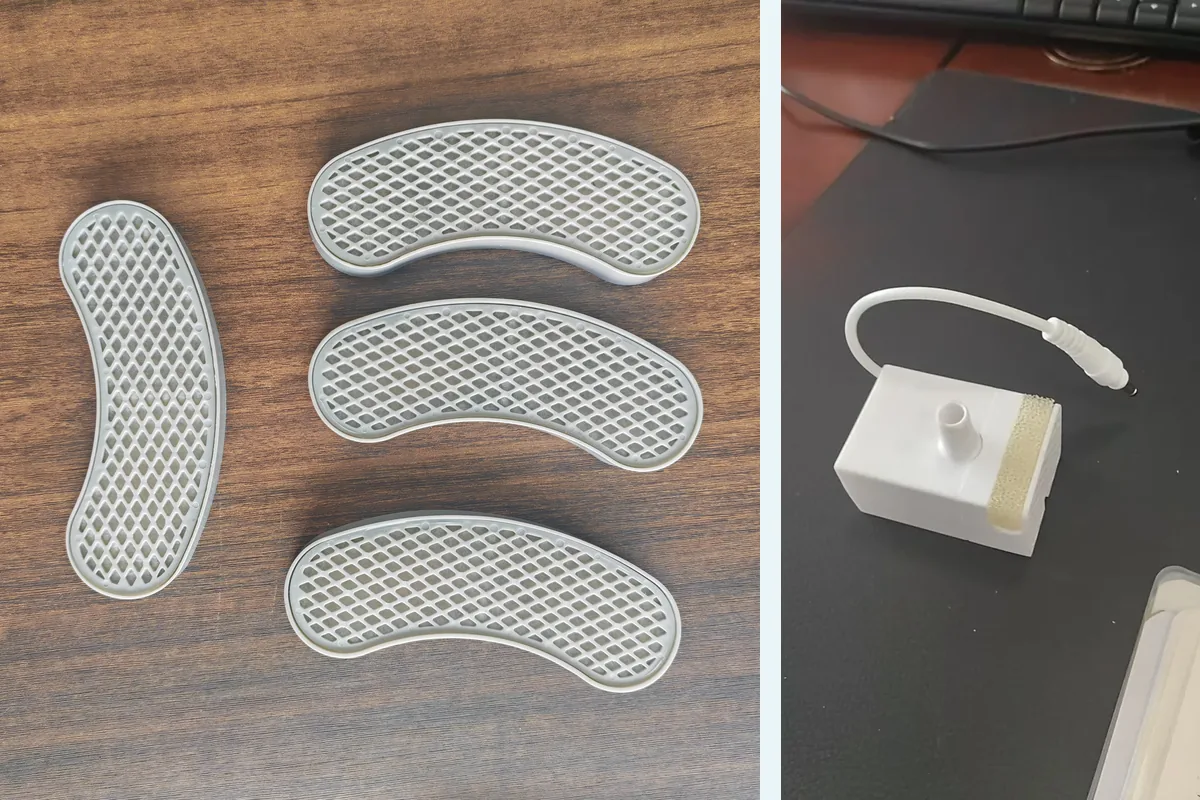
Compatible filters can provide repeat-purchase support, but actual demand depends on the channel and installed product base. Their immediate value is operational: customers can maintain the product, staff can answer compatibility questions and avoidable returns are less likely to begin with missing information. The filter and spare-parts planning guide covers pack quantity, version control and reorder supply in detail.
Retail Shelf vs Ecommerce Assortment
Physical shelves reward a tighter, more visible range; ecommerce can carry more depth only when the comparison remains clear. A store has limited facings and seconds to communicate differences. An online listing has more room for specifications, video, bundles and variant logic, but duplication can still confuse shoppers and fragment stock.
A retail planogram maps where products sit and how much shelf space each receives. For fountains, use it to protect the price ladder, keep refill packs close to compatible models and give the core SKU enough presence to act as the comparison anchor.
Price · plug-in · filter A
Compare roleMaterial · everyday use · filter A
Compare roleRechargeable · flexible location · filter A
Compare roleArchitecture · service reference · filter B
Compare role| Channel | Best assortment approach | Main risk | Useful support |
|---|---|---|---|
| Small pet store | Two or three clearly different fountains plus matched filters | Using shelf space for near-duplicate products | Simple shelf comparison and compatibility labels |
| Large pet chain | A tiered core range adjusted by store format | Sending the same depth to every location | Planogram, store cluster and replenishment data |
| Amazon / ecommerce | A wider but highly structured comparison set | Variants that look different but are hard to distinguish | Consistent product fields, bundles and refill links |
| Distributor catalog | Coverage across material, power and capacity with controlled references | Too many versions without service mapping | Model codes, carton data and availability status |
| Private-label brand site | A small branded family with distinct roles | Artwork is finished before the range logic | Shared visual system, manuals and after-sales map |
One assortment can serve several channels, but the depth and presentation may differ. A distributor catalog may show more platforms than a small store stocks. An ecommerce seller may keep long-tail variants online while using the homepage or collection grid to present only the clearest roles.
First Order Assortment: How Many SKUs Should You Start With?
There is no universal starting number, but most first orders benefit from fewer fountain SKUs and enough stock to test each role properly. The framework below is a planning reference, not a rule.
| Retailer type | Starting range | Why | Avoid |
|---|---|---|---|
| Small retailer | 2–3 fountain SKUs plus filters | Enough choice for a visible price or material step | Three similar shapes at nearly the same price |
| Ecommerce seller | 3–5 fountain SKUs plus filters and selected service parts | More room to explain attributes and bundles | Unclear variant names or incompatible refill links |
| Distributor | 4–6 fountain SKUs across material, power and capacity | Broader account needs and catalog coverage | Buying width without stock depth or reorder logic |
| Private-label brand | 2–3 hero platforms before expansion | Keeps artwork, inventory and support manageable | Launching a full catalog before demand is measured |
A smaller range is easier to photograph, list, train, replenish and support. It also makes early data easier to interpret. If five new models launch at once and three are nearly identical, weak sell-through may say more about internal competition than shopper demand.
At Fountelio, we normally separate four first-order questions: which shopper roles matter, which existing platforms cover them, what refill support is required, and which packaging work changes the MOQ. The wholesale cat water fountain MOQ and pricing guide explains those minimums without turning the assortment decision into one headline quantity.
Expand the Range After Sell-Through Data Shows a Gap
Add a SKU because the current range misses a need, not because another model is available. After launch, review sell-through by role, stockouts, return reasons, filter reorder rate, product questions, reviews, support tickets and preference by price, material and power type.
These signals answer different questions. A core model that repeatedly stocks out may need more depth rather than another model. Returns caused by unclear setup may call for better instructions. Frequent requests for cordless placement can justify a new role. Low filter reorders may indicate weak product sales, poor compatibility communication or purchases through another channel.
Keep the measurement tied to the SKU role. McKinsey describes merchandising as planning, selecting, distributing and then measuring product performance; the range is managed after launch, not frozen at purchase order. Use actual retailer data to adjust depth, delist duplication or add a missing tier.
Packaging and Private-Label Consistency
Packaging should help a shopper understand the range without reading every specification. Use consistent positions for material, capacity, power type, operating mode, filter reference and included parts. Then give each tier a visible difference without making unrelated models look interchangeable.
For private-label programs, we prefer to agree the SKU roles before the artwork is released. Otherwise a box may be designed around an “entry” message while the product is later moved into the core tier, or several boxes may use the same claims even though filters and power systems differ.
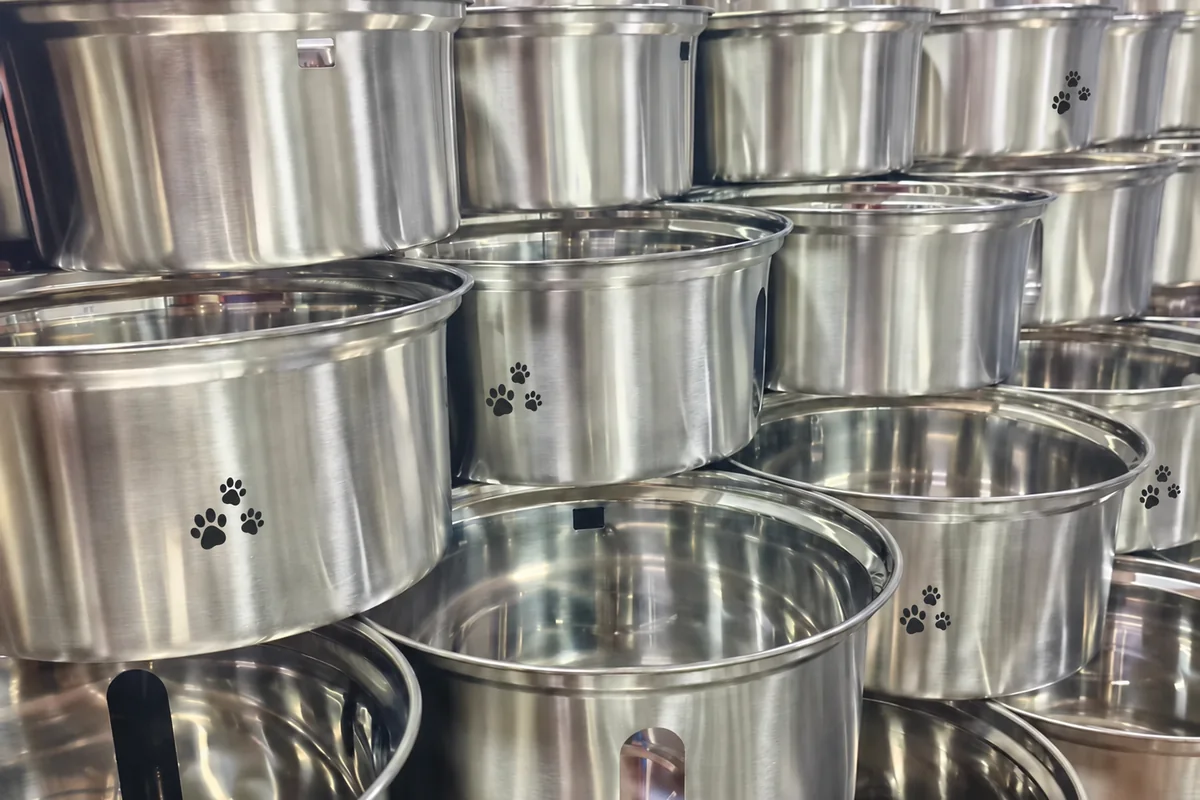
The product mark, retail box, manual and filter reference should all identify the same approved SKU. A consistent visual family is useful, but it should not hide configuration differences that matter after the sale.
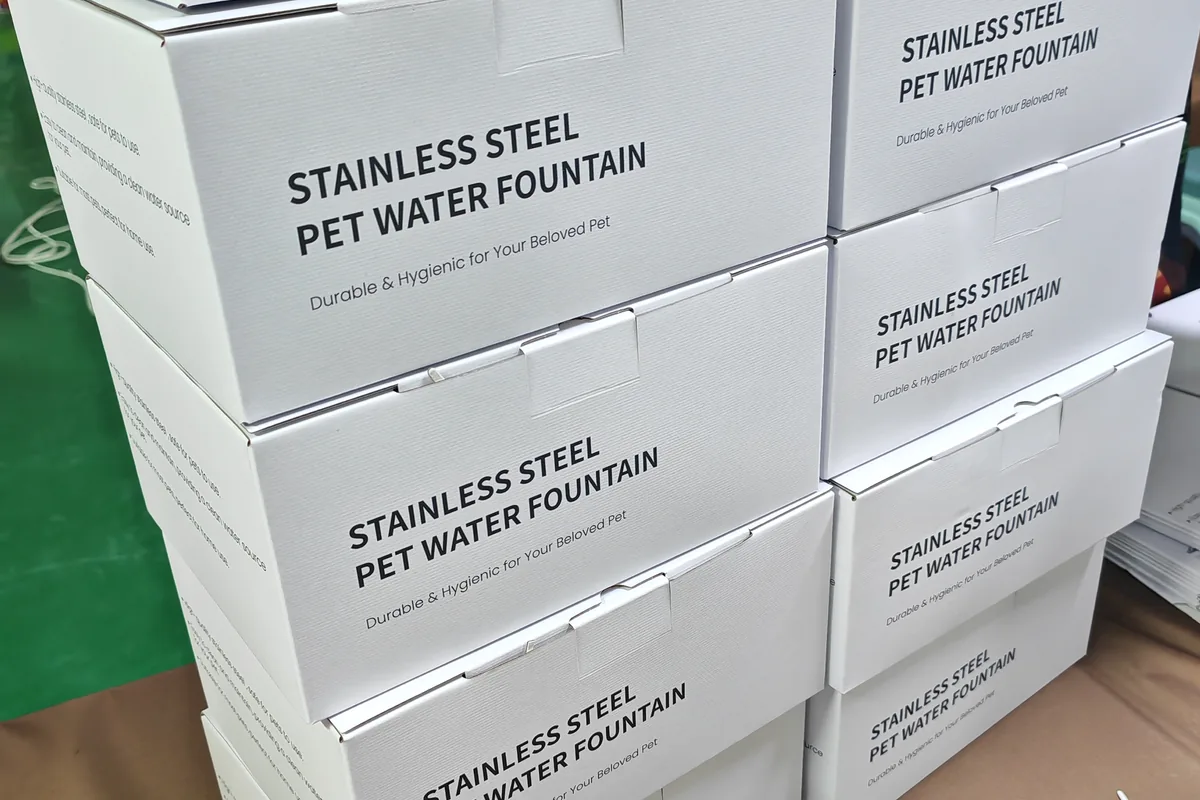
The cat water fountain retail packaging guide covers pack-out, barcode and transport decisions. If the requested range changes housing or electronics rather than branding an existing platform, review the boundary between private label and custom product development before artwork starts.
What Retailers Should Confirm With Suppliers
A range proposal is ready for quotation only when every SKU has an exact product, commercial and support reference. A broad request for “three fountains at different prices” leaves the differences open and makes supplier quotations difficult to compare.
RETAIL BUYER CHECK
Can each SKU be sold, explained, replenished and supported?- ✓SKU role
- ✓Model and version
- ✓MOQ basis
- ✓Packaging
- ✓Filter code
- ✓Service parts
- ✓Carton quantity
- ✓Lead time
- ✓Market documents
- ✓Reorder plan
- Exact available model and version
- Role in the proposed range
- MOQ for stock, logo and custom packaging
- Neutral packaging or printed-box option
- Logo method and artwork requirement
- Filter format and refill-pack configuration
- Replacement pump or service parts, where supported
- Manual and packaging languages
- Barcode, SKU label and carton marks
- Pieces per carton and carton dimensions
- Factory preparation and approval lead time
- Shipment options to the named destination
- Applicable market or compliance documents
- After-sales troubleshooting and version control
Share the intended channel, target price roles, quantity and destination with the supplier. The bulk cat water fountain order lead time guide helps buyers work backward from a launch date once the assortment is defined.
Frequently Asked Questions
How many cat water fountain SKUs should a retailer start with?
Small retailers can often begin with two or three fountain SKUs plus compatible replacement filters. Ecommerce sellers or distributors may need a wider range. The useful number depends on channel, shelf space, MOQ, budget and customer profile. Each SKU should cover a different buying reason; adding another shape or color without a new role usually adds inventory complexity rather than useful choice.
Should retailers carry both plastic and stainless steel fountains?
Often, if the two models occupy different price or material roles. Plastic can support an accessible entry point, while stainless steel can provide a visible material step-up. The comparison should also include construction, cleaning access, pump arrangement, filters and power system. Material alone does not decide product quality or shopper fit.
Should cordless cat water fountains be part of the range?
Include a cordless option when placement flexibility is a meaningful shopper need and the channel can explain charging and operating modes. It should have a distinct role rather than duplicate a plug-in model with a vague premium label. Confirm the exact battery, sensing and flow configuration before writing listings or packaging.
Are replacement filters necessary in the retail assortment?
Yes, for fountain models that use replaceable cartridges. Plan the compatible filter reference, pack count, packaging and reorder route when the fountain is selected. Similar-looking filters are not automatically interchangeable. Pumps or other service parts should be listed only where separate supply and compatibility are supported for that model.
What is a good / better / best cat water fountain range?
It is a visible trade-up path: an entry model, a core everyday model and a premium model with a meaningful difference in material, placement, capacity or design. Replacement filters sit beside those tiers as support rather than as a fourth fountain. Retailers should set the actual products and prices for their market.
How should small pet stores plan the assortment?
Start with a narrow range that staff can explain quickly and the shelf can display clearly. Two or three visibly different models, matched filters and a simple comparison card are usually more useful than many closely related variants. Reorder depth can then follow observed sales rather than being spread across too many SKUs.
How should ecommerce sellers plan the assortment?
Use a consistent comparison grid across product pages: material, capacity, power type, operating mode, filter reference, dimensions and included parts. Ecommerce can support more SKUs than a small shelf, but each listing still needs a distinct role. Variant names, images and refill links should make differences obvious without forcing shoppers to decode the catalog.
When should a retailer add more fountain models?
Add a model when data shows a gap that the current range does not cover. Useful signals include sell-through by tier, repeated stockouts, return reasons, review questions, filter reorders and requests for another material, capacity or power option. Do not expand only because another supplier model is available.
Should retailers choose private-label packaging?
Choose private-label packaging when the brand can support the artwork, print quantity, inventory continuity and after-sales information. The box should distinguish SKU roles and identify the correct filter and model. Neutral packaging can be a practical first-order route when the product range still needs market validation.
What should buyers confirm before placing a bulk order?
Confirm the exact model and version, SKU role, quantity, MOQ basis, branding, packaging, filter reference, service parts, carton quantity, lead time, shipment route and market documents. The bulk cat water fountain order lead time guide explains how stock, printing and delivery schedules fit together.
The Best First Assortment Is the One You Can Explain and Replenish
A good cat water fountain assortment is the smallest range that clearly covers the main shopper needs and can be replenished, explained and supported. Start with distinct roles, not a catalog count. Give shoppers a visible entry, core and premium path, add cordless or larger-capacity options only when they solve a real need, and launch the correct filters with the fountains.
Once the range is live, let sales, returns, refill orders and customer questions show where to add depth. That approach keeps the first order controlled while leaving a clear path for expansion.
Sources and Editorial Scope
This guide combines Fountelio's current product-platform, packaging, filter and supplier workflow with established retail assortment principles. The starting SKU counts are planning frameworks, not universal performance rules.