

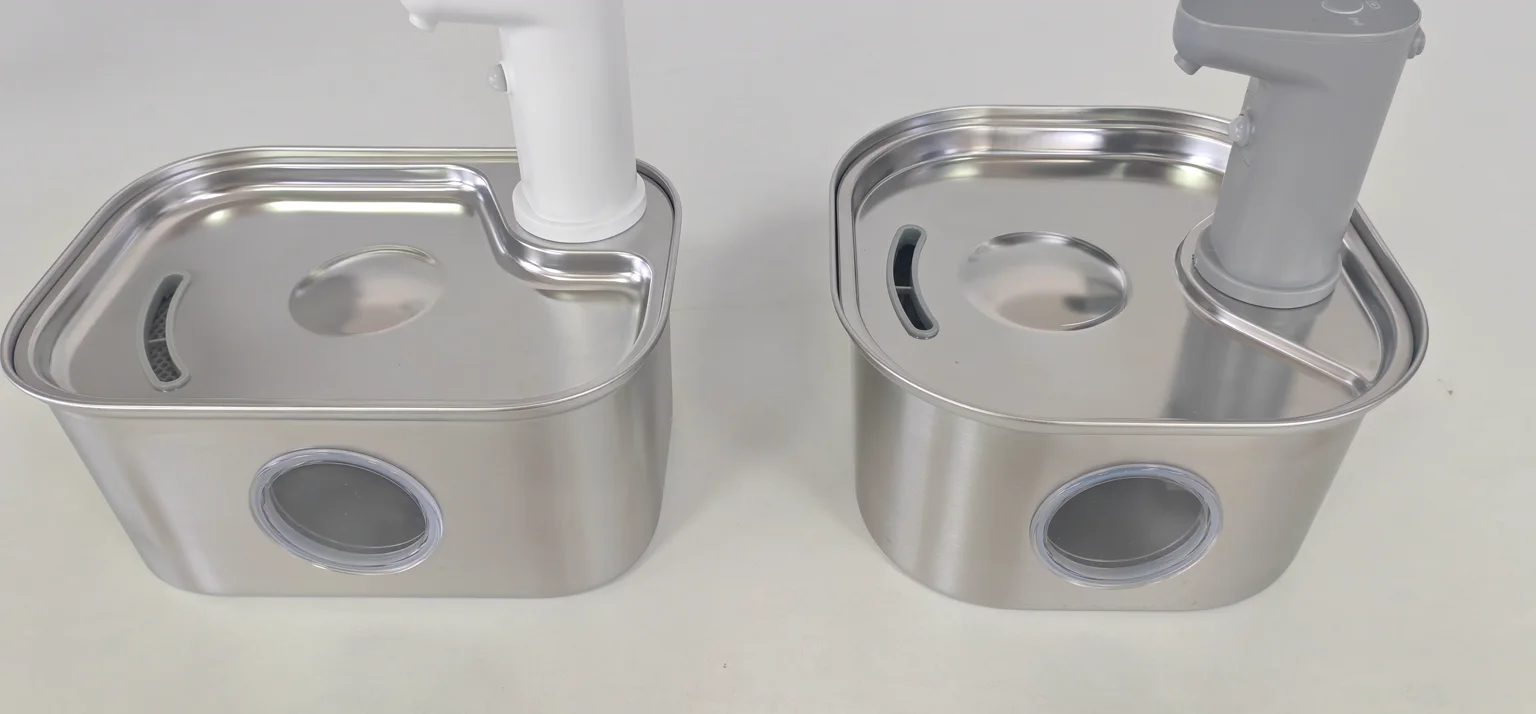
A fountain can look old because its flow is weak, its pump is noisy or its filter is overdue, yet the reservoir and body may still be sound. The opposite can also happen: a pump still runs while a cracked body, damaged cord or surface that can no longer be cleaned makes continued use a poor decision. That is why a single age, such as two or three years, is rarely a useful answer.
A cat water fountain does not have one single lifespan. The pump, filter, reservoir, battery, cord, seals and body age at different speeds. Filters are consumables measured in weeks on many models; pumps may need cleaning or replacement well before the body; and a cordless platform adds a battery and charging system with its own wear pattern. Judge the affected part, its condition and the availability of a verified replacement before replacing the whole fountain.
This guide separates normal maintenance from part failure and whole-product retirement. It does not promise a universal service life. Water hardness, hair and debris, dry running, cleaning access, daily operating pattern and model design all change the result. Where a manufacturer publishes a replacement interval or warranty, treat it as guidance for that product rather than a rule for every cat drinking fountain.
A Cat Water Fountain Does Not Have One Lifespan
The fountain body may last for years, but the pump and filter are usually the parts users notice first. A slower stream can come from a dirty intake, hair around the impeller, mineral scale, trapped air or a filter that is restricting flow. None of those observations proves that the reservoir has reached the end of its life.
It is more useful to separate the fountain into consumables, service parts, durable water-contact parts and safety-critical power parts. Each group has a different decision rule. A filter is replaced on a model-specific schedule. A pump is cleaned and diagnosed before replacement. A reservoir is judged by damage, surface condition and whether it remains fully cleanable. A damaged cord or adapter calls for stopping use rather than stretching its life.
Usually planned in weeks
Can range from months to years
May last for years if intact and cleanable
| Part | Typical planning rhythm | What shortens useful life | Practical decision |
|---|---|---|---|
| Replaceable filter | Usually weeks; follow the exact model | Hair, debris, multiple cats, water condition | Replace; do not treat as fountain life |
| Pump | Months to years; highly model and use dependent | Dry running, hair, slime, scale, blocked intake | Clean and inspect first; replace if performance does not recover |
| Reservoir and tray | May remain useful for years if intact | Cracks, deep scratches, chips, warped interfaces | Replace the part or fountain if damage affects hygiene, fit or leakage |
| Cord and adapter | No useful "wear allowance" for visible damage | Chewing, bending, moisture, wrong adapter | Stop using and follow the manufacturer's replacement guidance |
| Rechargeable battery | Cycle-based and model-specific aging | Heat, charging pattern, storage, battery chemistry | Review runtime and charging behavior; service only as supported |
| Seals, tubes and fitted parts | Condition based | Age, scale, stretching, repeated assembly | Replace verified parts where separate supply is supported |
The terms in this table are planning categories, not guaranteed intervals. A well-maintained pump can outlast a neglected one by a wide margin, while a physically damaged reservoir can end the product's useful life even when it is relatively new.
How Long Does a Cat Water Fountain Pump Last?
There is no reliable universal pump lifespan, so start with the exact pump and the manufacturer's guidance. As one product-specific reference, GEX says the pump in its Pure Crystal line varies by individual unit but has an approximate life of 1 to 1.5 years. A separate GEX P-3 product page recommends considering replacement at about one year for that pump. Those figures are useful examples, not an industry-wide promise.
Pump warranties are also not lifespan claims. PetSafe lists a 90-day warranty for individually purchased fountain replacement pumps, while warranty terms for a complete fountain may differ. A warranty is a service commitment under specific policy conditions, while actual service life depends on maintenance, water level, cleaning, wear and spare-part availability.
When I review weak-flow reports from a product standpoint, I first separate a pump that is worn from a pump that is simply starved of water or blocked. Listen for a new grinding or rattling sound, compare the flow after model-safe cleaning, confirm the intake is submerged and check whether the impeller is accessible under the manual. A motor that can be heard running is not proof that the correct flow is reaching the tray.
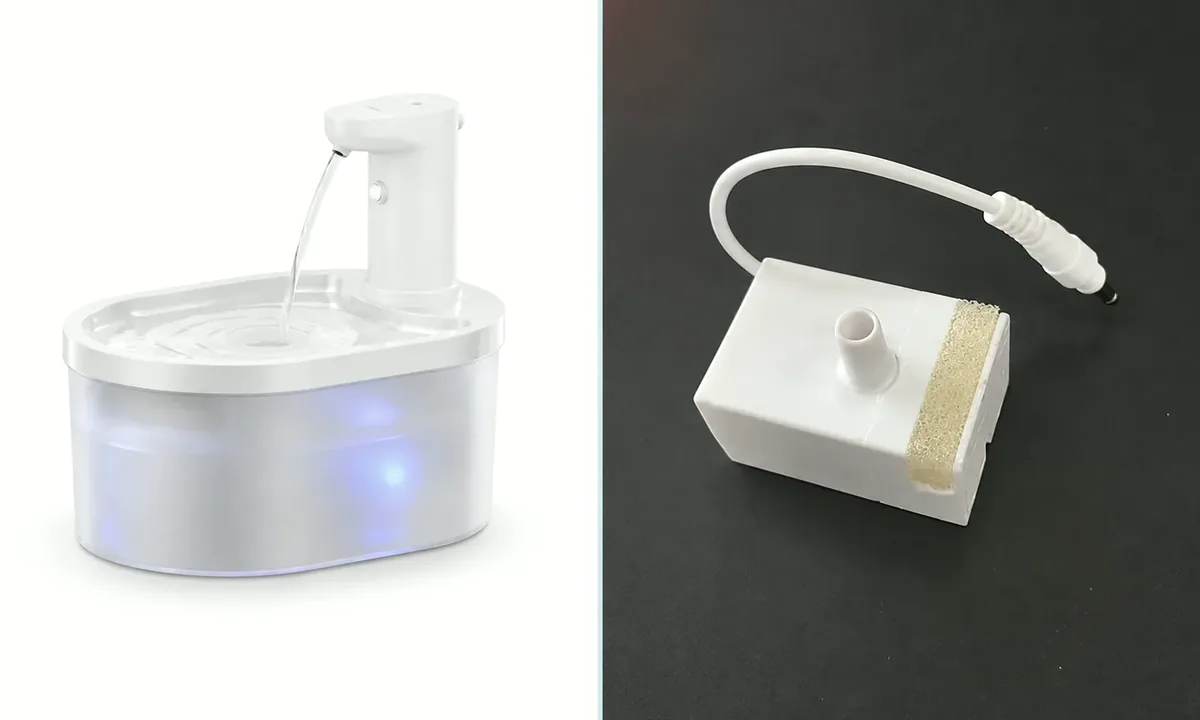
If cleaning restores stable flow and normal sound, replacement may not be necessary. If the pump repeatedly stalls, runs hot, leaks into areas that should remain dry, has damaged wiring or cannot maintain the approved flow after correct cleaning and assembly, stop use and seek the exact replacement or manufacturer support. The cat water fountain pump troubleshooting guide gives the full diagnostic sequence.
Why Pumps Often Fail Before the Fountain Body
A pump works continuously in a narrow wet path, so small changes in water level, debris and friction can affect it sooner than the reservoir around it. Hair can collect at the intake. Slime-like residue can form behind a cover. Mineral deposits can restrict a small impeller chamber. A filter fitted incorrectly can change the water path, and a low reservoir can allow the pump to draw air.
Dry running is especially hard on small fountain pumps. Catit's stainless fountain manual, for example, tells users not to allow the pump to run dry and to top up the fountain if the pump becomes noisy. That instruction belongs to that product, but the broader lesson is sound: keep the model within its permitted water range and do not assume every pump has automatic low-water protection.
Common pump-life stressors
- Low water: evaporation and drinking can expose an intake or introduce air.
- Hair and food debris: material can obstruct intake slots or reach the impeller.
- Mineral scale: hard-water deposits can narrow passages and increase resistance.
- Incomplete cleaning: wiping the reservoir does not clean the pump chamber.
- Incorrect reassembly: a cover, tube or outlet can sit out of position.
- Continuous operation outside the instructions: operating modes and duty expectations are model-specific.
A pump that becomes noisy after a water change may contain trapped air rather than permanent damage. A pump that weakens again soon after cleaning deserves closer inspection for scale, a restricted filter or wear. Diagnosis prevents a good pump from being discarded and prevents an unsafe or unreliable pump from being kept in service.
How Long Do Cat Water Fountain Filters Last?
Filters usually have the shortest planned life in the system, but their interval is set by the fountain and cartridge, not by the age of the fountain. PetSafe's official instructions for its Seaside Stainless fountain, for example, specify replacing the carbon filter every 2 to 4 weeks and the foam filter every 1 to 2 months. That is model-specific guidance and should not be copied onto an unrelated cartridge.
A filter can load faster in a multi-cat home, near food, in a dusty room or when visible hair and debris enter the tray. Flow restriction, odor, discoloration or a cartridge that no longer rinses as instructed can be useful warning signs, but the manual remains the primary reference. A filter does not sterilize water, and extending its use does not reduce the need to clean the reservoir, tray, outlet and permitted pump parts.
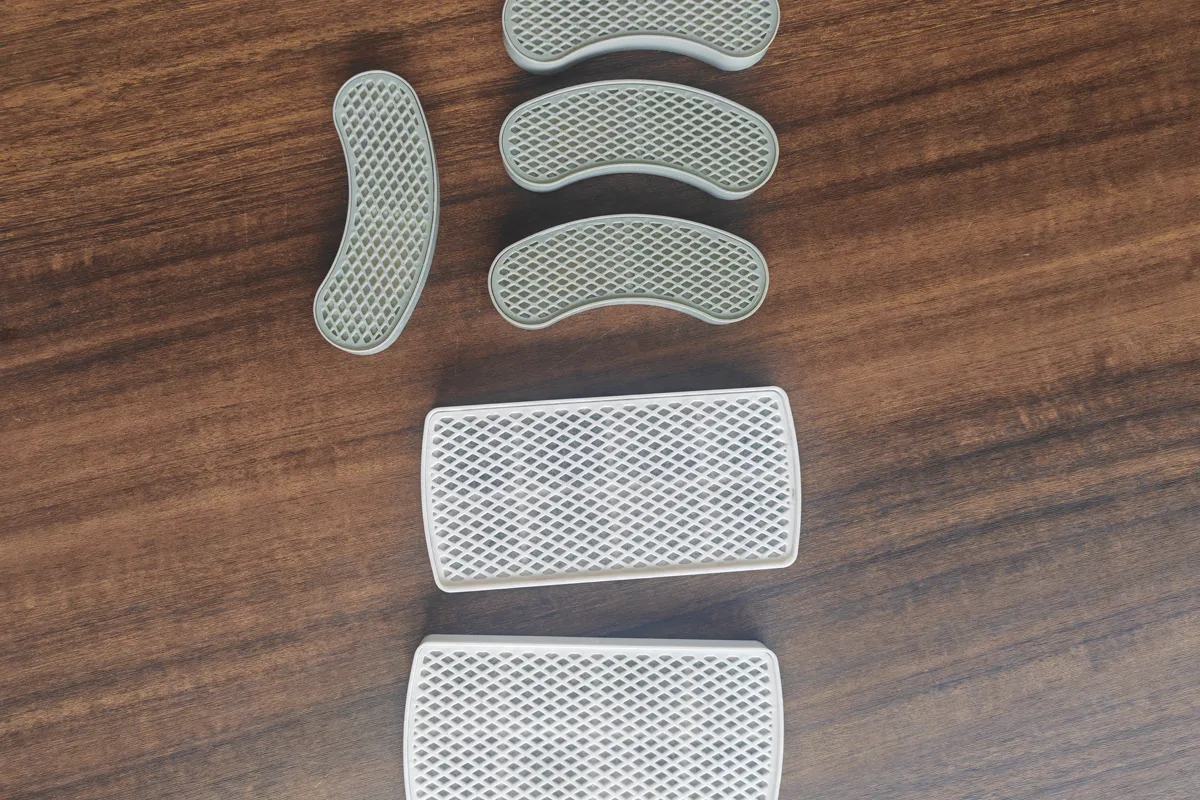
At Fountelio, current fountain families use more than one filter format. That is why we map the fountain model to a filter reference instead of calling a similar-looking cartridge compatible. For replacement planning, record the outline, dimensions, thickness, holder interface, water path and pack count. See the Fountelio cat water fountain filter formats and the cat water fountain filter replacement guide for the separate replacement question.
How Material Affects Useful Life
Material changes the wear pattern, but stainless steel, plastic or ceramic alone cannot predict how many years a fountain will last. Construction, thickness, finish, joints, pump housing, seals and cleaning access matter too. Many products also combine materials, so a stainless tray may sit above plastic structural or electrical parts.
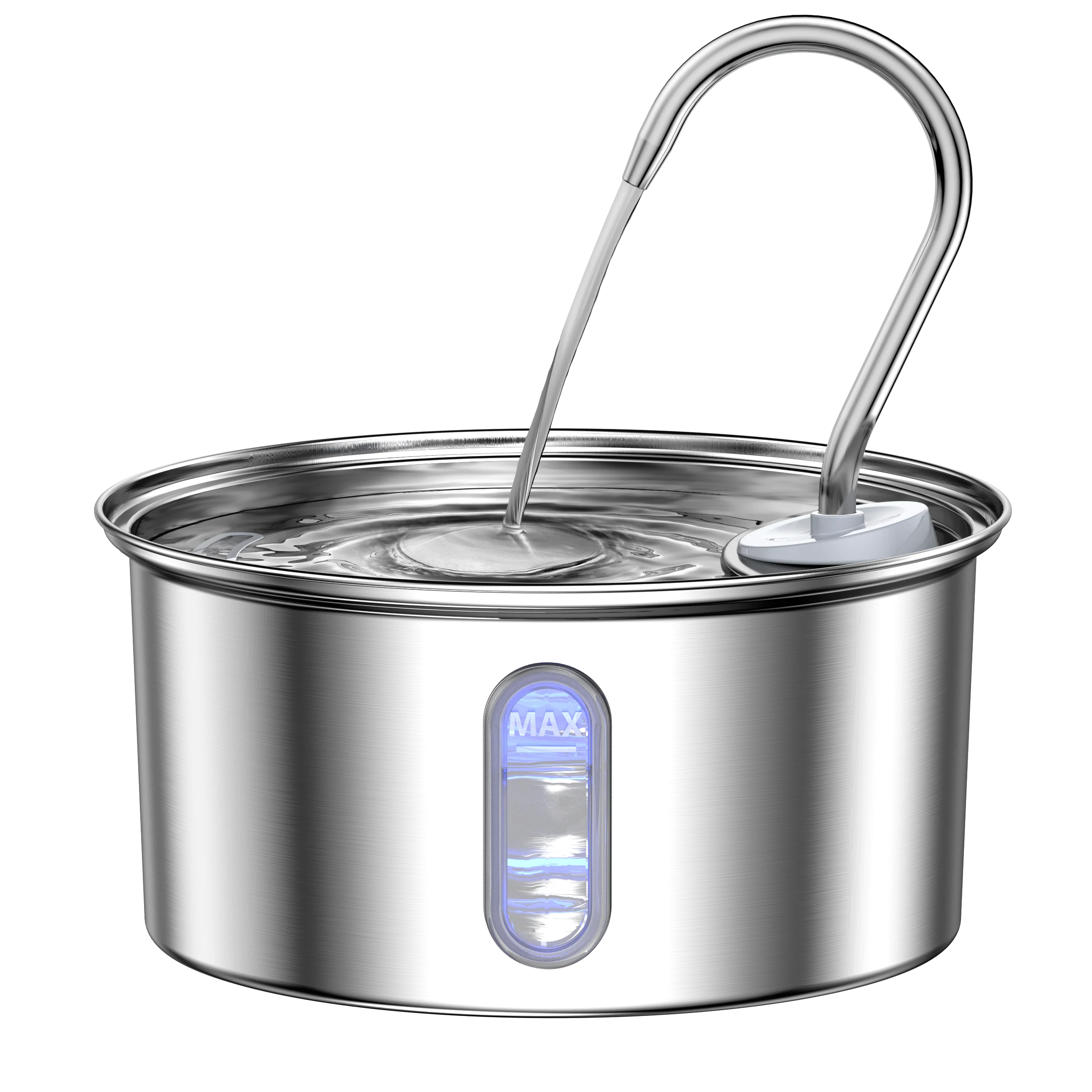 Stainless steel platform
Inspect finish, edges, seams and fitted plastic or silicone parts.
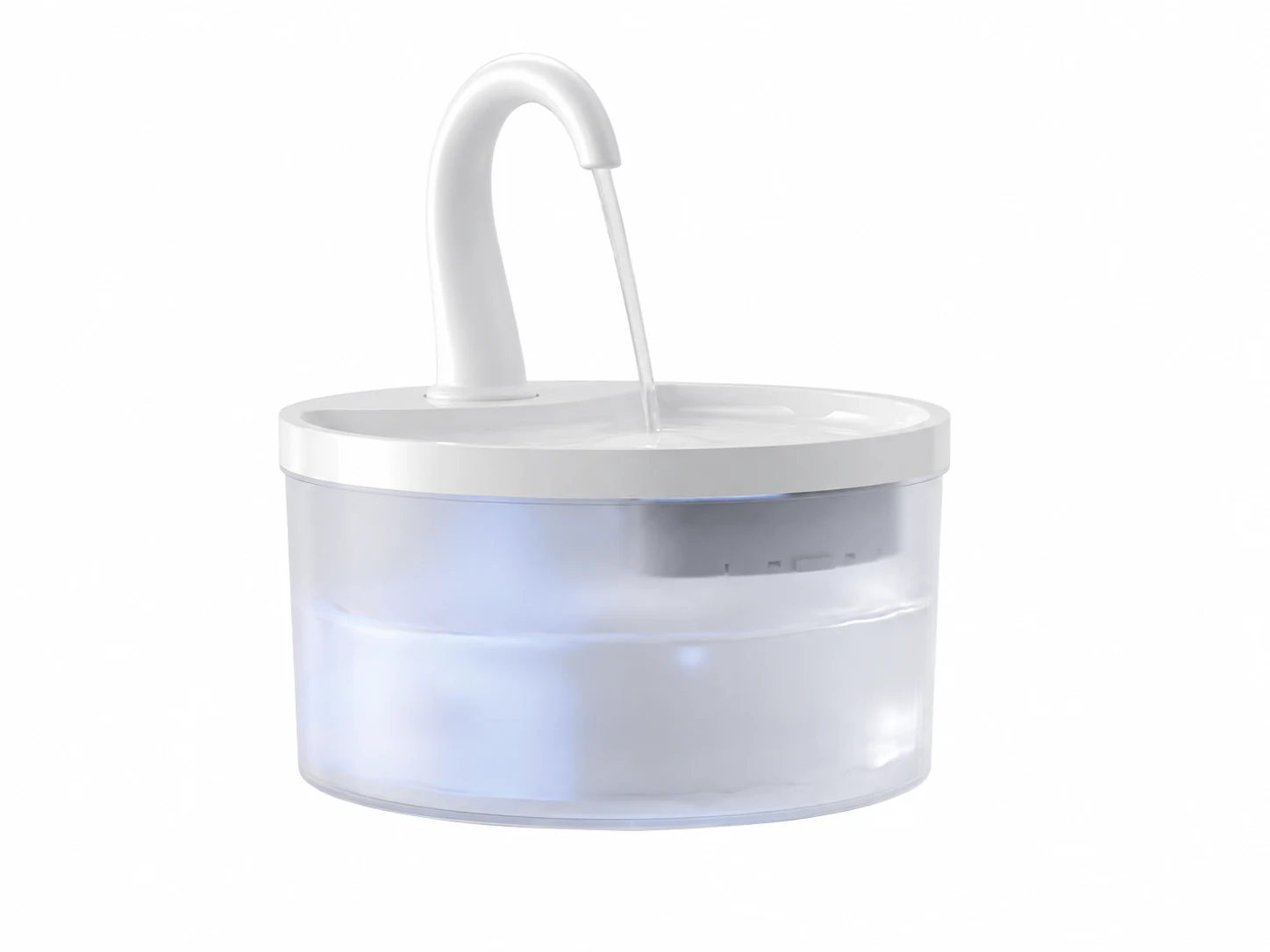 Plastic platform
Inspect scratches, cracks, clouding, clips and other molded features.
Stainless steel
Stainless steel surfaces are generally resistant to ordinary scratches and are straightforward to inspect, but the grade, forming, welds, edges and finish still matter. Look for corrosion-like marks that do not clean away, sharp damage, distorted interfaces and persistent residue around windows or seams. Do not assume every visible or hidden part is stainless because the headline body is.
Plastic
Plastic can be light and practical, but deep scratches, stress cracks, warped clips and cloudy or rough areas deserve attention. A superficial mark does not automatically end the product's life. Replacement becomes more sensible when damage traps residue, changes fit, causes leakage or prevents normal cleaning.
Ceramic
Ceramic can offer a stable, cleanable surface when the glaze remains intact. Chips, cracks and damaged glaze can create hygiene and handling concerns, and a heavy ceramic fountain can still contain plastic pump and power parts with separate life cycles. Material choice should therefore be assessed as a complete product, as explained in the stainless steel vs plastic cat water fountain guide.
Cordless and Battery-Powered Fountains: What Ages Differently?
A rechargeable fountain adds battery capacity, charging contacts, control electronics and operating modes to the normal pump and water-path checks. Battery runtime usually declines gradually with cycles and age, but there is no honest universal month count. Chemistry, temperature, charging pattern, storage and the product's control logic all affect the result.
Cleanability, fit and physical condition
Flow, sound, debris and scale
Runtime, charging behavior and mode response
Dry contacts, correct fit and no visible damage
Separate the questions. A shorter runtime can indicate battery aging, but it can also reflect a changed mode, more sensor triggers or incomplete charging. Weak water flow is more likely to point toward the pump, water level, filter or water path. Failure to charge can involve the cable, contact, base, adapter or battery. Do not open sealed battery or electronic compartments unless the manufacturer explicitly permits it.
A wireless-pump fountain is also different from a fountain that merely operates on a rechargeable battery. The pump module, reservoir and powered base may form one matched architecture. Verify the exact version before ordering a pump or charging component. The cordless vs plug-in cat water fountain guide and wireless pump vs cordless fountain comparison explain those distinctions in more detail.
Signs Your Cat Water Fountain Is Wearing Out
The useful warning is a change that remains after correct cleaning, filling and assembly. One noisy start after refilling does not prove failure. A recurring loss of flow, a crack that opens under normal handling or a damaged power lead is much more significant.
| What you notice | Possible cause | What to do first | Replace when |
|---|---|---|---|
| Flow is weaker | Low water, dirty intake, loaded filter, scale or pump wear | Fill, clean and reassemble to the manual | Verified pump cannot restore normal flow |
| Pump is newly noisy | Air, low water, impeller debris, scale or wear | Unplug, fill and inspect permitted parts | Noise remains after correct service or damage is visible |
| Water appears below the body | Splash, overflow, bad assembly, crack or seal issue | Dry and isolate the source | Body or non-serviceable seal is confirmed damaged |
| Slime returns quickly | Hidden water-path residue or inaccessible buildup | Deep-clean every permitted wet part | Contamination remains inaccessible or recurs because of damage |
| Deep scratches or cracks | Wear, impact or stress | Inspect cleanability, fit and leakage | Damage traps residue, leaks or weakens the part |
| Cord or adapter is damaged | Chewing, bending, heat or moisture exposure | Stop use and unplug safely | Use only an approved replacement; do not continue damaged |
| Battery runtime is shorter | Mode, incomplete charge or battery aging | Confirm charging and operating mode | Manufacturer-supported service is unavailable or operation is unreliable |
| Parts no longer fit securely | Warping, worn clips, wrong version or seal wear | Verify model and assembly | Correct parts cannot restore safe, stable fit |
Use related symptoms to narrow the cause. Persistent residue belongs in the cat water fountain slimy or moldy guide. Air and surface changes belong in the cat water fountain foaming or bubbling guide. Water beneath the unit belongs in the cat water fountain leaking, splashing or tipping guide. These checks avoid treating every maintenance issue as old age.
Clean First, Replace Later: Repair or Replace?
When there is no immediate electrical or structural hazard, clean and diagnose before buying a whole new fountain. Unplug it, provide fresh backup water, confirm the exact manual and then inspect only the parts the user is permitted to remove. Start with water level, filter fit, pump intake, impeller access, outlet and reassembly.
Hair, scale, trapped air, a misplaced cover or low water can imitate pump failure.
Use the exact pump, filter, seal or accessory reference where separate supply is supported.
Stop using it for cracks, damaged power parts, inaccessible contamination or unresolved water intrusion.
Clean and keep using when normal flow and sound return, all surfaces can be cleaned, fitted parts remain secure and the power system is undamaged. Continue monitoring rather than assuming the issue is permanently solved.
Replace a part when the fault is isolated and the manufacturer supports a verified service item. Common candidates can include a filter, pump, seal, tube, cable or outlet, depending on the platform. Match the model, connector, dimensions and electrical specification. A pump that physically fits can still be electrically or hydraulically wrong.
Replace the fountain when damage affects water containment, electrical safety, stable assembly or hygiene and cannot be corrected with an approved part. If a cat stops drinking, provide another clean water source while you diagnose the product. The cat water fountain safety guide covers power, placement and backup-water decisions.
When Should You Replace the Whole Fountain?
Replace the complete fountain when its structure, electrical condition or cleanability can no longer support safe, reliable use. Age alone is a weak reason. Condition and repairability provide a clearer decision.
- The reservoir, tray or housing is cracked, leaking or distorted and no verified replacement is available.
- A cord, adapter, charging base or protected electrical area is damaged or has had water intrusion.
- Deep scratches, damaged glaze, corroded areas or inaccessible seams prevent satisfactory cleaning.
- The correct pump, filter or essential fitted part is no longer available and alternatives cannot be verified.
- Repeated repair attempts do not restore stable flow, charging, sensing or assembly.
- A product change or unknown version makes continued parts matching unreliable.
Do not keep a damaged fountain running simply because the pump still turns. Likewise, do not discard an intact body because a replaceable pump has reached the end of its service life. The whole-product decision should follow the failed function and the service options available for that exact model.
How to Make a Cat Water Fountain Last Longer
Consistent, model-safe maintenance protects more of the fountain than an occasional deep clean after flow has already declined. The aim is to keep debris and deposits from reaching the point where they restrict a pump, damage a finish or hide inside a wet interface.
- Keep the correct water level. Check it more often in warm rooms, multi-cat homes and small reservoirs.
- Follow the exact cleaning route. Wash the reservoir, tray, outlet, filter holder and permitted pump parts. The cat water fountain cleaning guide explains a part-by-part routine.
- Replace filters by condition and model guidance. Do not force water through an overdue or mismatched cartridge.
- Address scale early. Use only cleaning methods and agents allowed by the manual, then rinse thoroughly.
- Prevent dry running. Do not rely on a low-water shutoff unless the exact model includes it and it functions correctly.
- Protect the power system. Keep adapters and dry-only contacts away from spills, and stop using damaged cords.
- Record replacement references. Keep the model, pump and filter identifiers before packaging or documentation is lost.
More frequent cleaning is not automatically better if aggressive tools scratch the surface or if parts are disassembled beyond the instructions. Use correctly sized brushes, non-abrasive methods and the manual's approved cleaning agents. Maintenance should preserve the water path and materials, not introduce new damage.
What Brands and Retailers Should Plan Before Launch
A fountain program is easier to support when the pump, filter and other service references are defined before the first order ships. Customers will describe weak flow, noise, a missing charger or a filter that "looks the same." Support teams need a model map that turns those descriptions into safe, version-specific next steps.
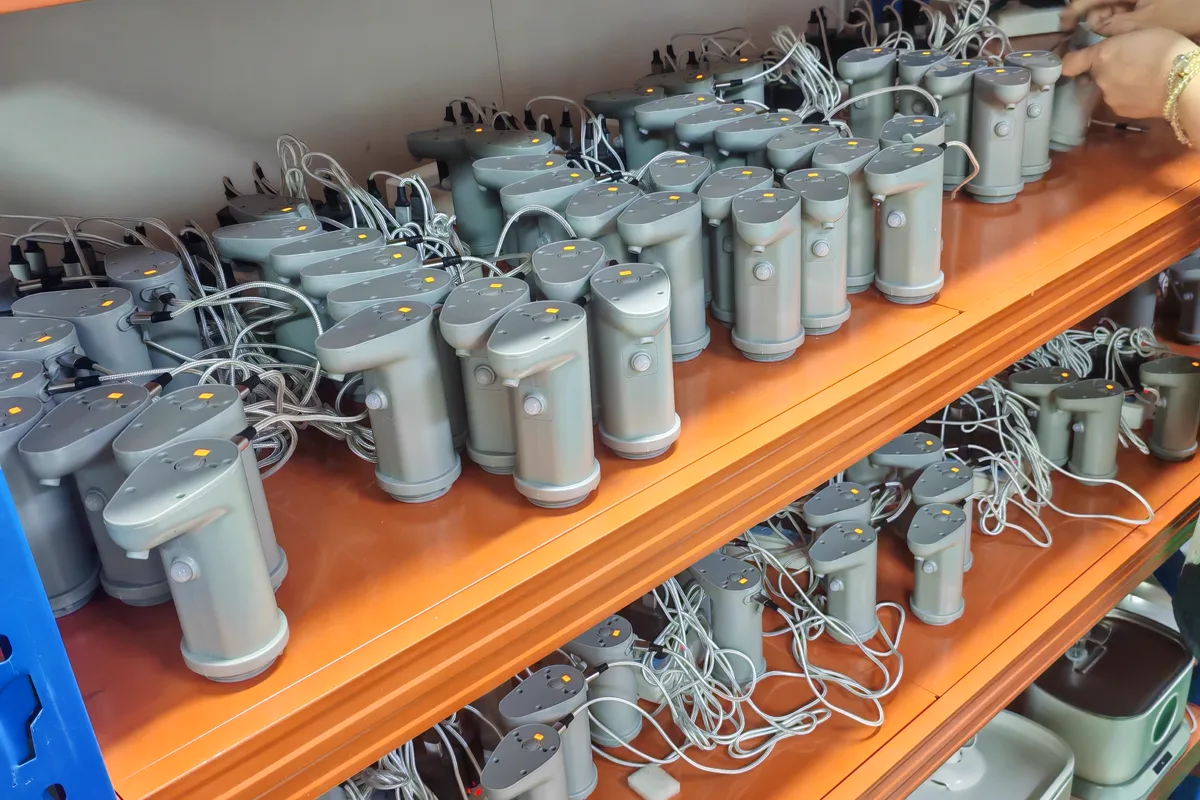
In the projects we handle, we prefer to separate consumables, possible service parts and non-user-serviceable assemblies during product selection. That helps the manual state what a buyer may clean, what a consumer may replace and what requires support. It also avoids promising permanent stock or universal compatibility.
| Planning item | Confirm before launch | Why it matters later |
|---|---|---|
| Fountain reference | Exact model and configuration | Prevents visual-only parts matching |
| Filter reference | Format, pack count and reorder path | Supports consumable continuity |
| Pump reference | Fit, connector, voltage and separate-supply status | Separates pump replacement from whole-product replacement |
| Power parts | Adapter, cable, base and regional version | Prevents unsafe substitutions |
| Cleaning scope | User-accessible parts and instructions | Reduces avoidable flow and hygiene complaints |
| Change control | Notification, transition stock and backward compatibility check | Keeps repeat orders and after-sales parts aligned |
| Support decision tree | Clean, replace a part, stop use or replace product | Gives customer service a consistent response |
A public warranty can help buyers understand coverage, but it should never be rewritten as expected service life. PETLIBRO, for example, currently lists a 24-month warranty for fountains while excluding normal wear items such as batteries and filters. That distinction reinforces why brands should document each component's role. The filter and spare-parts planning guide covers private-label SKU and reorder planning in depth.
Frequently Asked Questions
How long does a cat water fountain usually last?
There is no dependable universal number. The body may remain useful for years, while the filter, pump, battery or power parts have shorter or condition-based life cycles. Judge the exact model and affected part.
How long do cat water fountain pumps last?
Pump life varies with design, use, water level, debris, scale and maintenance. GEX publishes about 1 to 1.5 years for one Pure Crystal pump family, but that must not be applied to every fountain pump.
Should I replace a noisy pump?
Not immediately. First check water level, trapped air, the filter, intake and user-accessible impeller parts. Replace the verified pump if correct cleaning and assembly do not restore normal operation, or stop use if power parts are damaged.
How long do cat water fountain filters last?
Many are planned in weeks, but schedules are model-specific. PetSafe's Seaside instructions use 2 to 4 weeks for its carbon filter and 1 to 2 months for its foam filter. Follow your fountain's instructions and actual conditions.
Does a stainless steel cat fountain last longer than plastic?
Not automatically. Stainless steel and plastic have different wear patterns, but construction, finish, pump, seals, joints, cleaning and damage matter. Inspect the complete fountain rather than relying on one material label.
How long does a cordless cat water fountain battery last?
Battery aging is cycle and model dependent. Declining runtime can be a sign of aging, but first confirm charging, mode and sensor activity. Do not open a sealed battery assembly unless the manufacturer permits service.
Can I replace only the pump?
Where the manufacturer supports separate pump supply, yes. Match the exact fountain, physical fit, connector and electrical specification. A similar-looking pump is not automatically compatible.
When should I replace the whole fountain?
Replace it when cracks, leakage, electrical damage, inaccessible contamination, unstable assembly or unavailable essential parts prevent safe and reliable use. Age alone is not the best test.
Does a longer warranty mean the fountain will last longer?
No. Warranty coverage and product lifespan are different. A warranty defines the covered period and conditions; it does not guarantee that every component will last that long or fail when coverage ends.
The Practical Answer
A cat water fountain can remain useful for years, but its useful life should be judged part by part. Replace filters on the model's schedule, clean and diagnose a weak pump before replacing it, inspect material damage and stop using compromised power parts. Replace the complete fountain when its structure, hygiene, electrical condition or parts availability no longer supports reliable use.
The best time to think about lifespan is before purchase. Check whether the filter and pump can be identified, which parts the manual allows you to clean, whether replacement parts are supported and how the power architecture changes the maintenance plan. Those questions are more useful than a single promised number.
Sources and Editorial Notes
This guide combines product-architecture experience with current manufacturer documentation. Product-specific intervals are presented only for the named product and are not generalized to the whole category.
- GEX official Pure Crystal pump-life FAQ
- GEX official P-3 pump product guidance
- PetSafe official Seaside filter replacement instructions
- PetSafe official return and warranty information
- PETLIBRO official warranty policy
- Catit Stainless Steel Flower Fountain manual
Author: Tony Kong, R&D Engineer at Fountelio. Tony works on cat water fountain structure, component fit, pump and filter configuration, sample review and technical troubleshooting. This article provides general maintenance and product-selection guidance; the exact fountain manual controls model-specific service and replacement decisions.